Blizzard: Passion at the Core of Game Design
December 1995. Warcraft II arrives on PC.
This gaming monument remains deeply rooted in discussions, memories, and the way countless players learned to master RTS games. Looking back at this absolute classic in 2026 helps us understand the legacy of a title that fascinated an entire generation of PC strategy enthusiasts.
Back then, the video game landscape was still taking shape.
PC gaming was structuring itself, real-time strategy was finding its footing, and Blizzard Entertainment still retained its human-scale studio DNA. Around forty people, developers included, were working relentlessly on the sequel to Warcraft: Orcs & Humans.
This development context is fundamental. It explains the very essence of Warcraft II: Tides of Darkness. The game was born from a constant exchange with players of the first installment. Feedback poured in, precise and demanding. The team listened, sorted, tested, and transformed those comments into concrete game mechanics.
Development took about ten months, a very short timeframe even by the standards of the era. This velocity illustrates an impressive, direct method: identifying the strong elements, analyzing the friction points, and improving the whole package with ruthless efficiency.
A Readable, Living, and Dynamic Strategy
Warcraft II profoundly changed the way we approached a strategy game.
The fog of war introduced by Blizzard remains one of the genre's most striking innovations. Explored areas stayed in memory under a dark veil. The map became a space of constant tension that had to be monitored at all times.
💡 This design choice altered the entire tactical approach. It demanded observation, patrolling, and anticipation. It forced players to stay active to avoid getting absolutely crushed by an army coming out of nowhere. If you played "Knights and Merchants", you understand the difference. In that title, a revealed map stayed completely visible. Warcraft II's innovative mechanic would establish itself as the absolute gold standard for RTS games.
The Logistical Evolution: Black Gold
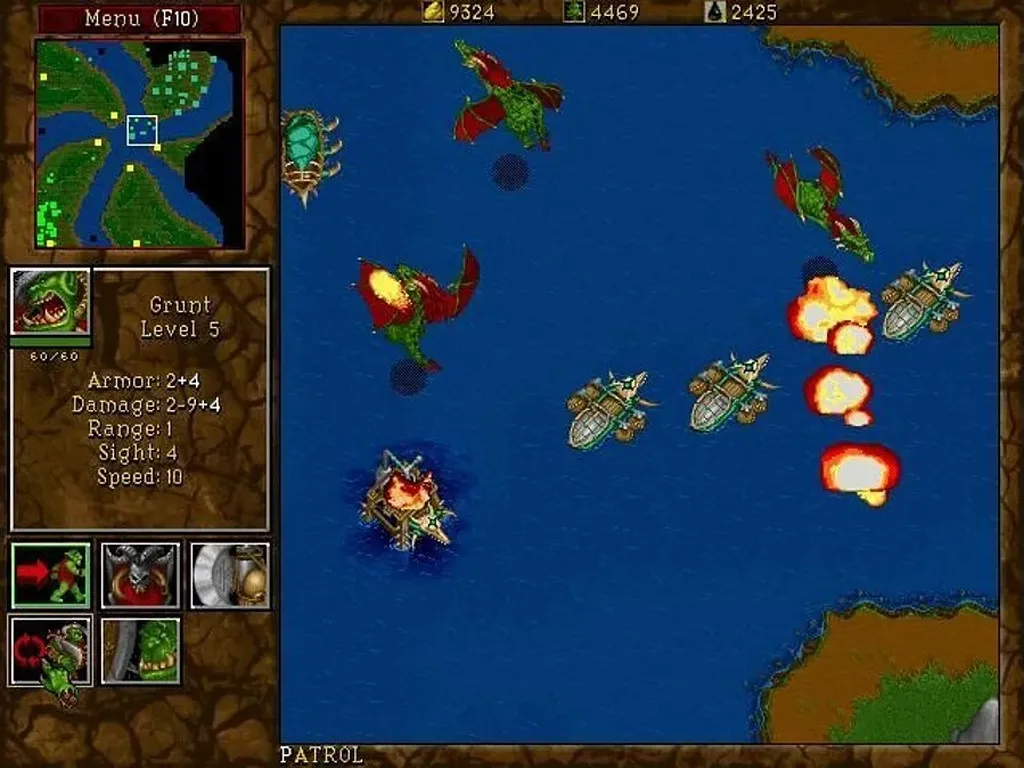
With the arrival of naval and aerial units, the economy moved beyond dry land. Offshore rigs, oil tankers, and their protection became vital. This logistical dimension intensely enriched the clashes. Building a fleet of battleships or dragons required a fragile, exposed infrastructure, often located far from the main base. Failing to defend an oil patch hastened defeat. Losing naval control doomed your access to the gold mines on neighboring islands and signaled game over.
Decisive Interface Choices
Warcraft II refined the interface and unit control with brilliant intelligence.
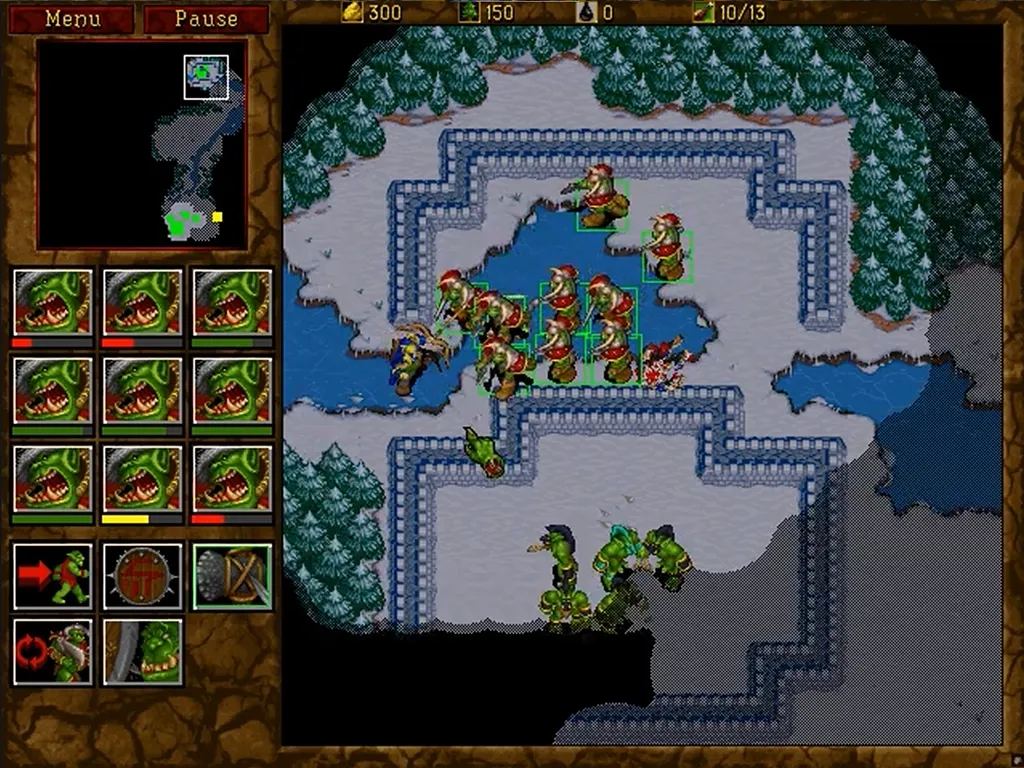
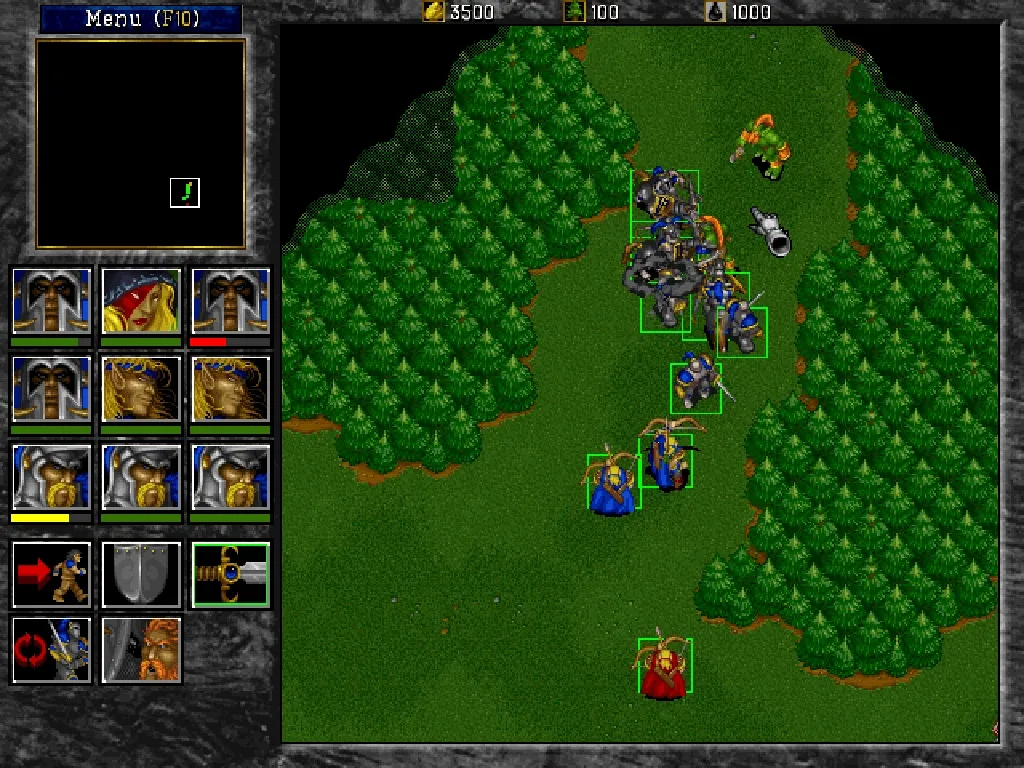
Expanding unit selection to nine units allowed for broader, more organized, and clearer combat (remember that Warcraft I limited selection to a maximum of 4 units!). Battles gained in scale while maintaining their readability. Players could focus their attention on the action, giving absolute priority to tactical decisions.
Taken individually, these adjustments might seem minor. Together, they transformed the entire experience and explained the thrill of our very first online victory, or the exact reason why Kevindu57 steamrolled us so masterfully in the next match.
Playing Together, With Passion
Warcraft II was deeply designed around sharing and community.
The Local Area Network (LAN) multiplayer was built with a flexibility that was rare for its time, allowing two people to play against each other using a single CD-ROM. This technical simplicity encouraged impromptu matches, gatherings at a friend's house, and those legendary after-school gaming sessions.
The game established itself as a true meeting point. We played side-by-side, commented on the action, gently trash-talked our opponents, and analyzed disastrous attacks. Strategy was discussed just as much as it was played on screen. This social, intimate, and thrilling dimension cemented the players' visceral attachment to this masterpiece.
Beyond the Dark Portal: Narrative Intensity
With the Beyond the Dark Portal expansion, Blizzard added even more depth to the gaming experience.
The introduction of heroes with unique characteristics transformed the approach to missions. Their presence generated constant tension. Their death resulted in immediate failure. Every order mattered a hundredfold, and every tactical mistake was paid for in full.
The storyline left Azeroth behind to explore Draenor and the consequences of the Second War. The dark and relentless conclusion left a lasting mark on a whole generation. It anchored Warcraft II within a powerful narrative continuity, which would find memorable echoes much later in the World of Warcraft universe.
The Eternal Legacy of Warcraft II
Warcraft II stands as a testament to a fantastic era when games were built through a direct dialogue between creators and their community. Ideas progressed through trial, adjustment, and intuition. Technical constraints pushed developers to double down on ingenuity, making every new feature immediately palpable with a keyboard or mouse in hand. Everything could evolve with a touch of magic.
For many enthusiasts, this adventure taught resource management, the art of observation, the sense of anticipation, and the wisdom to accept getting totally pwned before understanding one's flaws. It forged a taste for sharing and justified those long nights spent restarting a mission until that final moment of glory.
💾 This article aims to pay a vibrant tribute to those hours of our youth. In an era where digital downloads dominate and physical media is slowly fading from our lives, our hearts ache a little when thinking back to those massive cardboard big boxes that sat proudly on our shelves. What a joy it was to actually hold your game in your hands! The true ritual consisted of pulling out those famous manuals, richly illustrated with magnificent artwork and filled with fascinating lore about the universe we were about to explore. Reading those booklets from cover to cover was an adventure in itself, a wonderful prelude to fierce gaming sessions with family members and loyal friends. Memories permanently etched in our minds.
Released in December 1995, Warcraft II thoroughly deserves our respect today for everything it helped build. It revives memories of a time when Blizzard thrilled crowds through its pure passion for gaming. An incredibly precious approach to game development, a flame that may flicker but still survives today within a few rare, dedicated indie studios.
It is precisely this community-driven and creative energy that Little Big Campus explores, preserves, and shares every single day.
Thank you, Warcraft II, for everything you have accomplished.
Which retro PC game marked your greatest gaming nights? Share your LAN party and cybercafe anecdotes with us in the comments!