The era when "managing" was just as fun as "destroying"
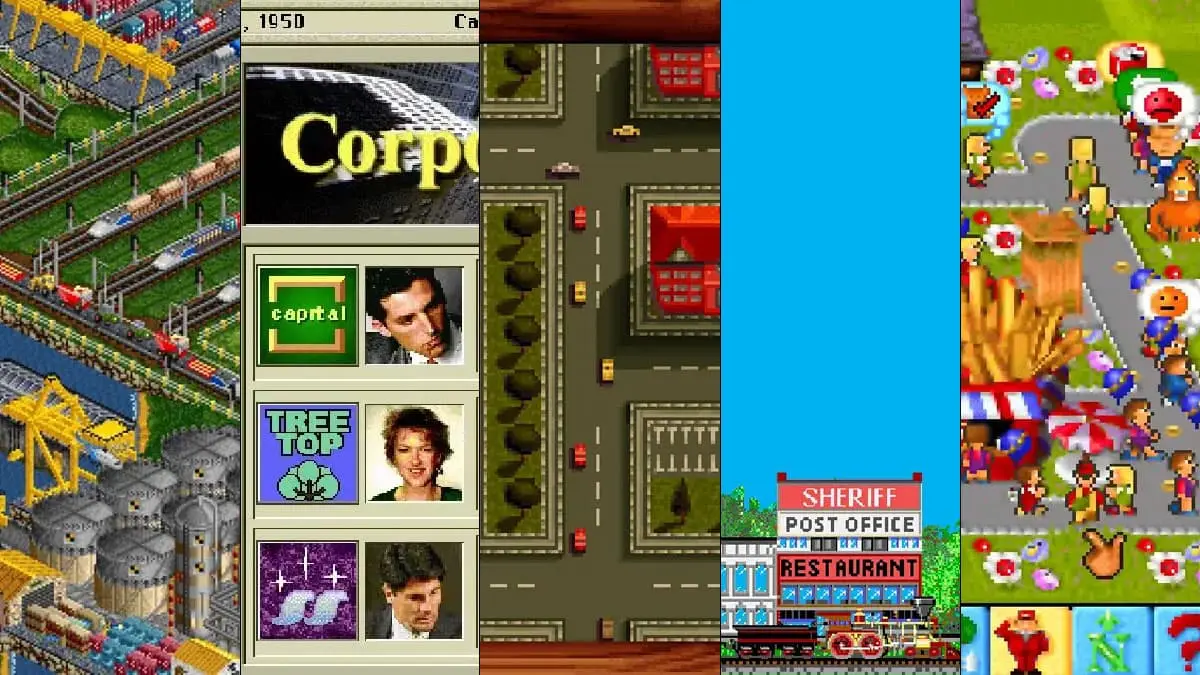
In middle school, while some kids were spending their evenings blasting zombies in Doom, there was another tribe — quieter, perhaps more tactical — busy building empires. Empires of trucks, pizzas, steam trains, and roller coasters. The golden age of PC management games was 1990 to 1995. And it's no coincidence that this period laid the foundations for everything.
The word "Tycoon" itself, as we use it in gaming, has a very precise origin : it was Sid Meier who launched it in 1990 with Railroad Tycoon. Without him, that word might never have carried the same resonance in our industry. Then Chris Sawyer picked it up, Peter Molyneux painted it in colour, and others followed with humour, the Mafia, and business management lessons no school had ever given us.
These five games are all available today for under $10 each in 2026. Some are even free via OpenTTD or as legal abandonware. It's one of the best value-for-fun ratios in the entire history of gaming, and an outstanding alternative to modern PC games that cost ten times as much.
🕹️ Quick Top : The best PC management games (1990-1995) under $10 :
Transport Tycoon Deluxe (1995) • Theme Park (1994) • Railroad Tycoon (1990) • Pizza Tycoon / Connection (1994) • Capitalism Plus (1996)
All compatible with Windows 11, available on GOG and/or Steam. OpenTTD (fan rewrite of TTD) is 100% free.
The 5 Best PC Management Games (1990-1995)
1. Transport Tycoon Deluxe (1994 / 1995) — The masterpiece coded in assembly
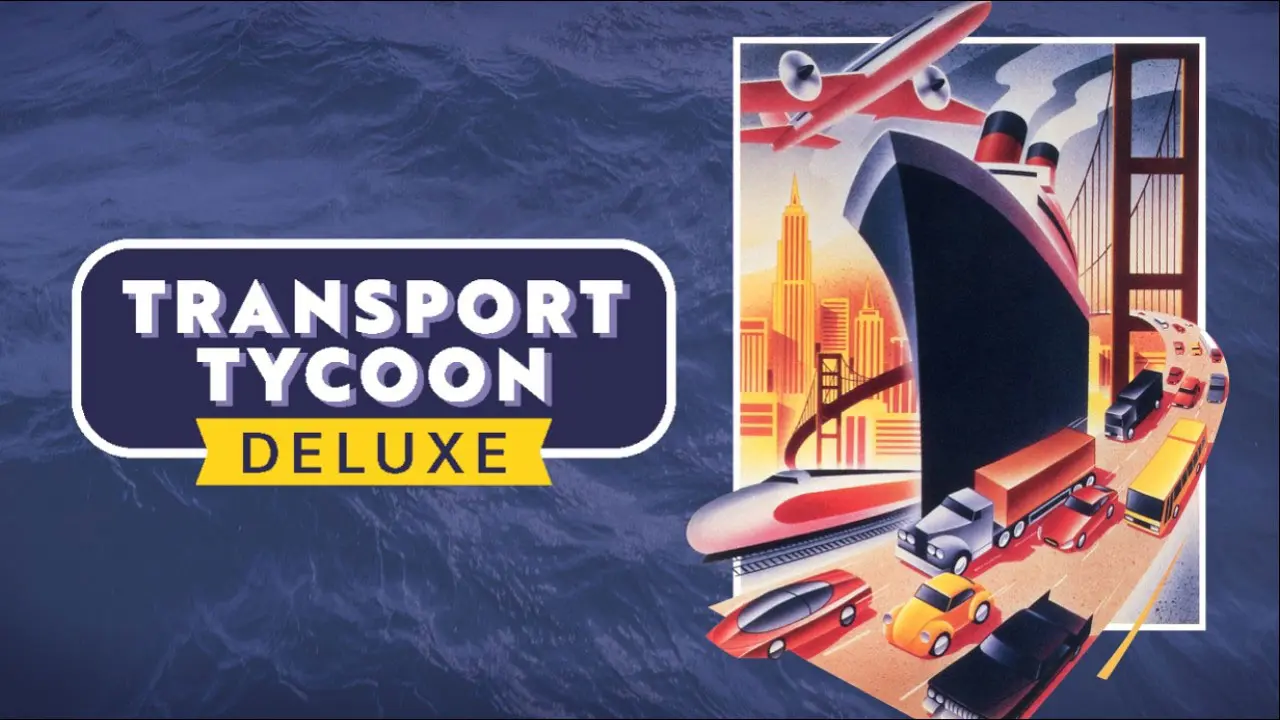
💾 Score : 10/10 | Genre : Transport Management Simulation | Developer : Chris Sawyer / MicroProse
Transport Tycoon. You probably know it as Transport Tycoon Deluxe, or today as OpenTTD. It was brilliant, impossibly smooth, and that smoothness had a very concrete explanation : Chris Sawyer, the Scottish developer behind the game, coded almost the entire thing in x86 assembly. That's pure machine language, and he did it almost entirely alone. At a time when everyone else had already moved to C++, Sawyer was carving rock with a surgeon's scalpel. The result was a game of an efficiency and responsiveness his contemporaries simply couldn't match, even with hundreds of vehicles moving simultaneously across the map.
The story of how the game came to be is delicious : Sawyer was fascinated by Sid Meier's Railroad Tycoon, which he found brilliant, but in a flat 2D view. He wondered whether an isometric perspective and additional transport modes might make it even better. He started tinkering on his own, between Amiga-to-PC conversions he was doing to pay the bills. MicroProse discovered the project, signed it, and Transport Tycoon launched in 1994. At release, Julian Gollop, the creator of X-COM, described the interface as "incredibly sophisticated" compared to anything else available at the time. That means something.
My brother and I played it over a local network, building small empires of resource and passenger transport. Our house rule : we split the map's cities between us to avoid devouring each other too quickly. And once we'd accumulated enough, we bought out the AI-controlled rivals — something Chris Sawyer had deliberately built into the mechanics — a kind of economic revenge on artificial intelligence.
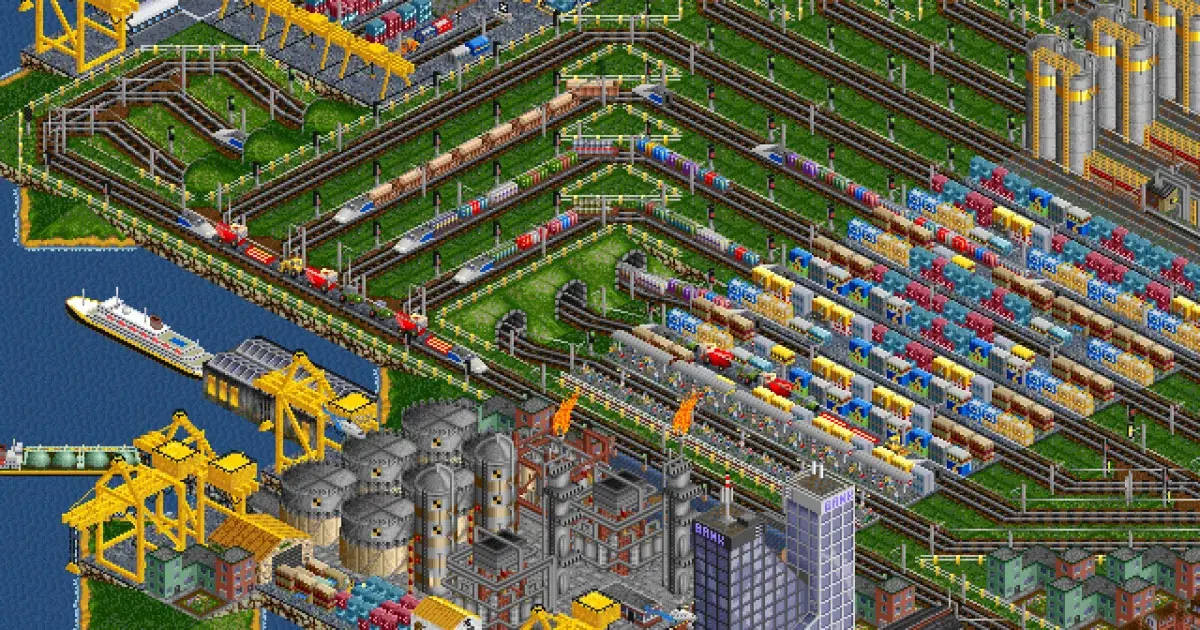
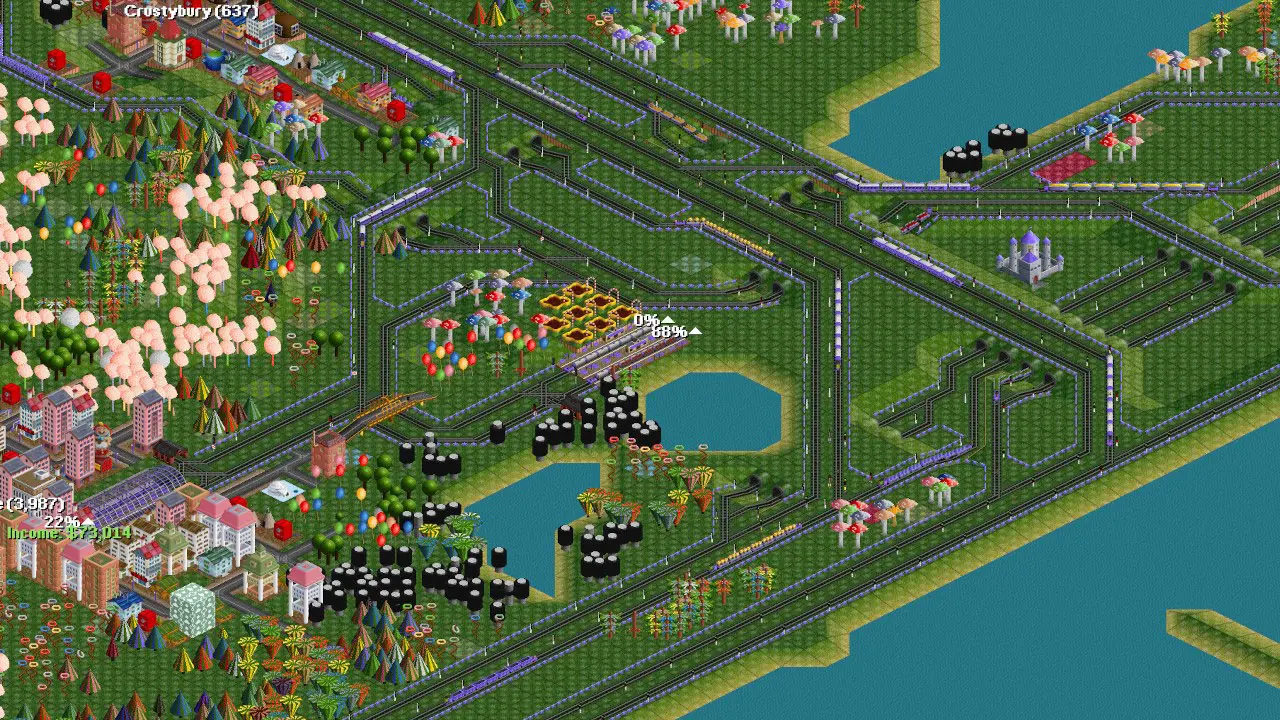
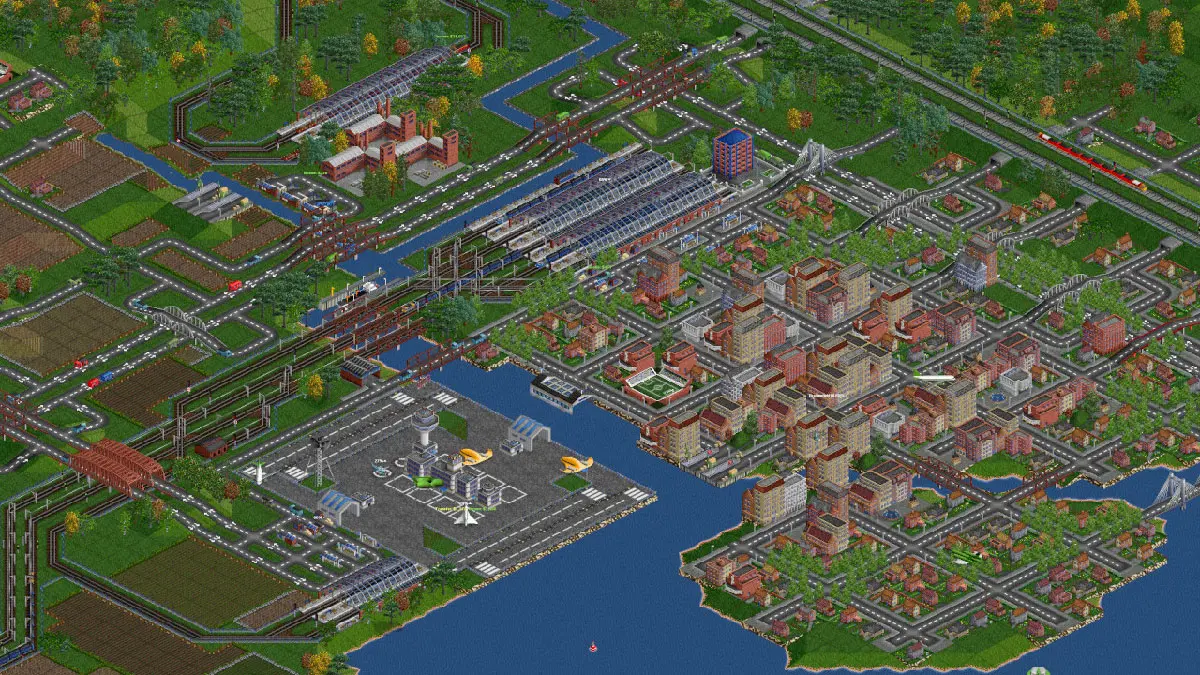
What made the game extraordinary was its progression through time. You started with a small truck barely carrying resources between two towns, then a steam train took over for larger-scale deliveries. Aircraft arrived later, more expensive to set up but the most profitable on long distances. The great chaos was watching your trucks end their lives on a railway line, destroyed by a passing train you'd planned badly. Or watching them pull over in a cloud of smoke, breaking down, growing old. Time to replace them — a natural cycle that made your company feel genuinely alive and breathing.
Old planes crashed too, and your company's reputation took the hit. And arriving in 2010 with a bus that dated from the 1950s still in your fleet... that bus must have had quite a story. Long-game management in TTD was something entirely unique. By the end of a session, the map became an absolute anthill. Trainless rails, hypersonic aircraft, ships cutting across at wild speeds, and the cities you'd fed for decades had ended up swallowing the surrounding villages — exactly like in real life. And I haven't even mentioned corruption, which added a thoroughly satisfying layer of political-economic realism. Oh, and in late advanced play, a UFO could fly over the map. Because Chris Sawyer was that kind of developer.
Transport Tycoon Deluxe (1995) is the definitive version of the original game, featuring more vehicles, new landscapes, and an extended play period running to 2050. It's the reference version.
OpenTTD : the perpetual resurrection
OpenTTD deserves its own paragraph. It's not a patched version of the original game — it's a complete rewrite of the source code in C++ by a community of fans. Since they don't use Chris Sawyer's code, they have every right to distribute their software for free. And they've done more than copy : they've improved, added features, fixed bugs, and the project is still active and updated in 2026. It's one of the longest-maintained open-source projects in gaming history. It's free, cross-platform, and downloadable from openttd.org!
Transport Tycoon Deluxe runs perfectly via the GOG/Steam version which includes DOSBox. But in 2026, OpenTTD is the best way to play : modernised interface, native Windows 11 compatibility, infinite mods, online multiplayer, all for free. The community is still very active, with multiplayer servers running around the clock. It's today an excellent alternative to modern PC management games that cost far more, with a depth that few recent titles can match.
💡 Price and where to buy Transport Tycoon Deluxe at the best price :
Transport Tycoon Deluxe : $9.99 on GOG and $9.99 on Steam.
OpenTTD : 100% free at openttd.org, a complete fan rewrite, legal and actively maintained in 2026. The best option if you want to dive in without spending a cent.
2. Theme Park (1994) — Peter Molyneux's amusement park
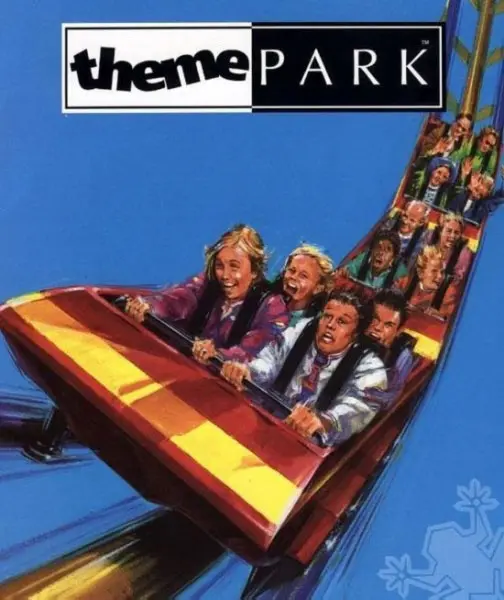
💾 Score : 8.5/10 | Genre : Construction and Management | Developer : Bullfrog Productions
Does Bullfrog ring a bell? This British studio founded by Peter Molyneux — the mind behind Populous, Dungeon Keeper, Theme Hospital, and dozens of other games that shaped gaming history — released in 1994 one of those titles you simply don't forget. Theme Park was having an amusement park at home, shaping it exactly as you wanted, and then watching people have the time of their lives inside it. Or suffer. Depending on how you set your prices.
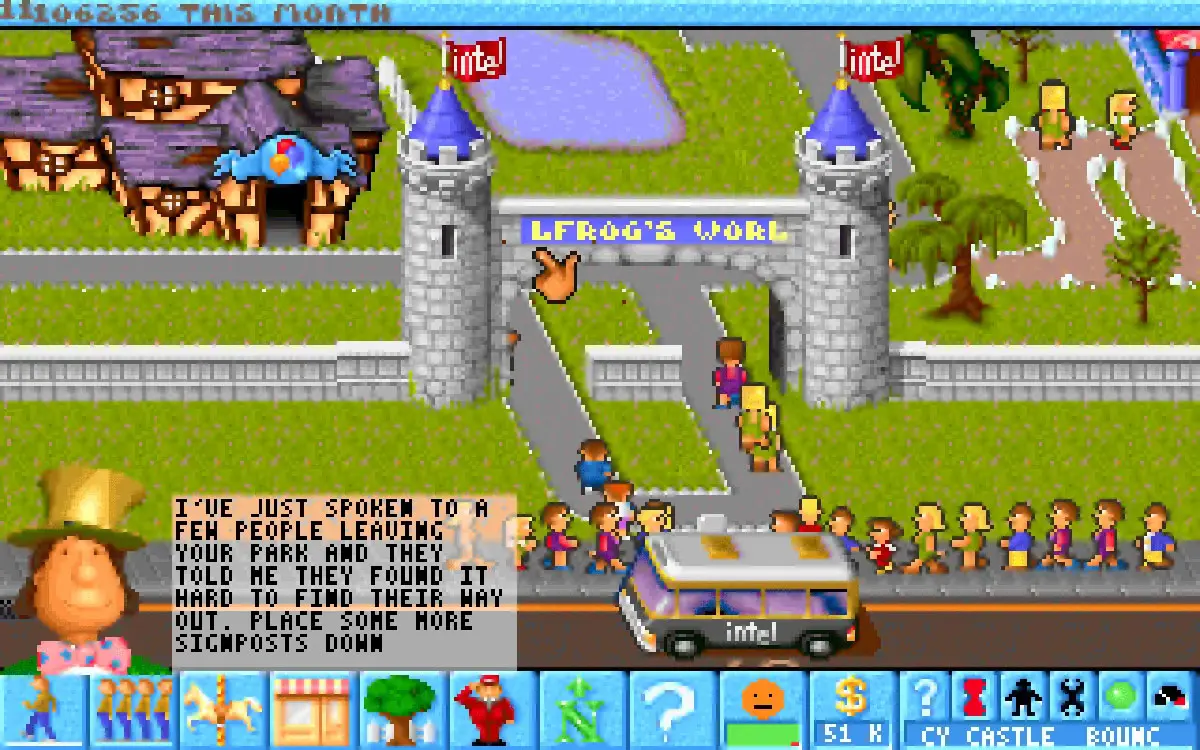
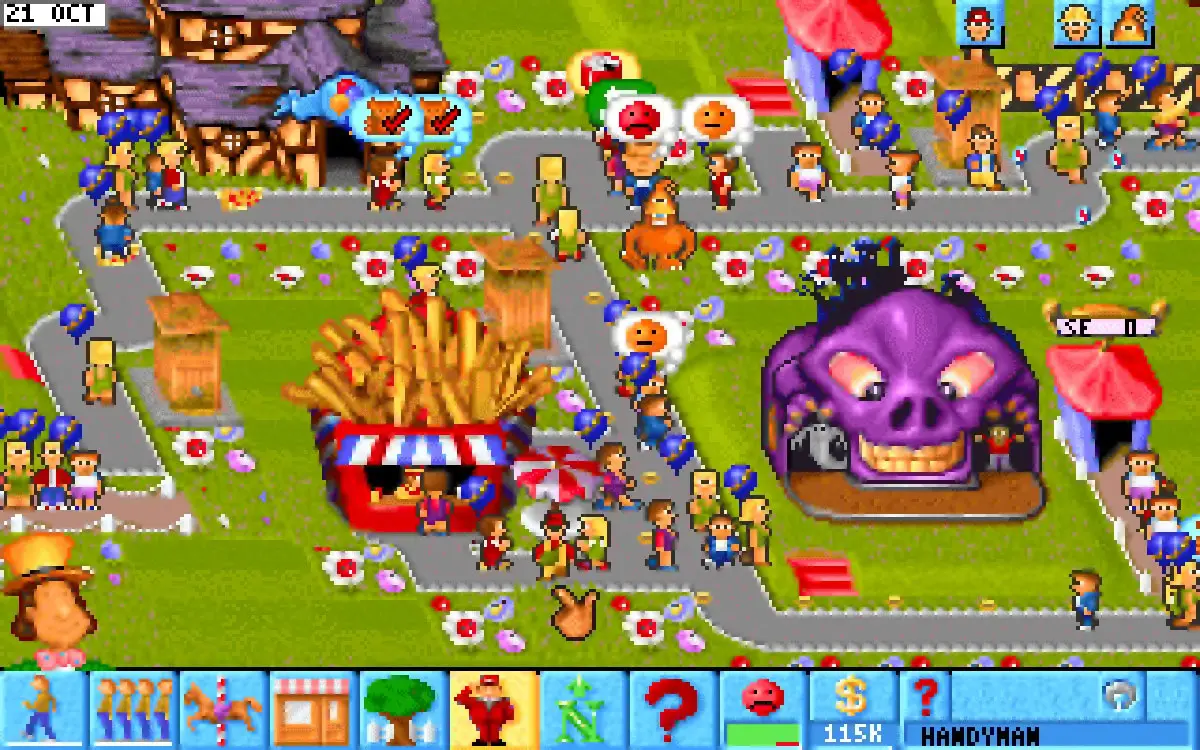
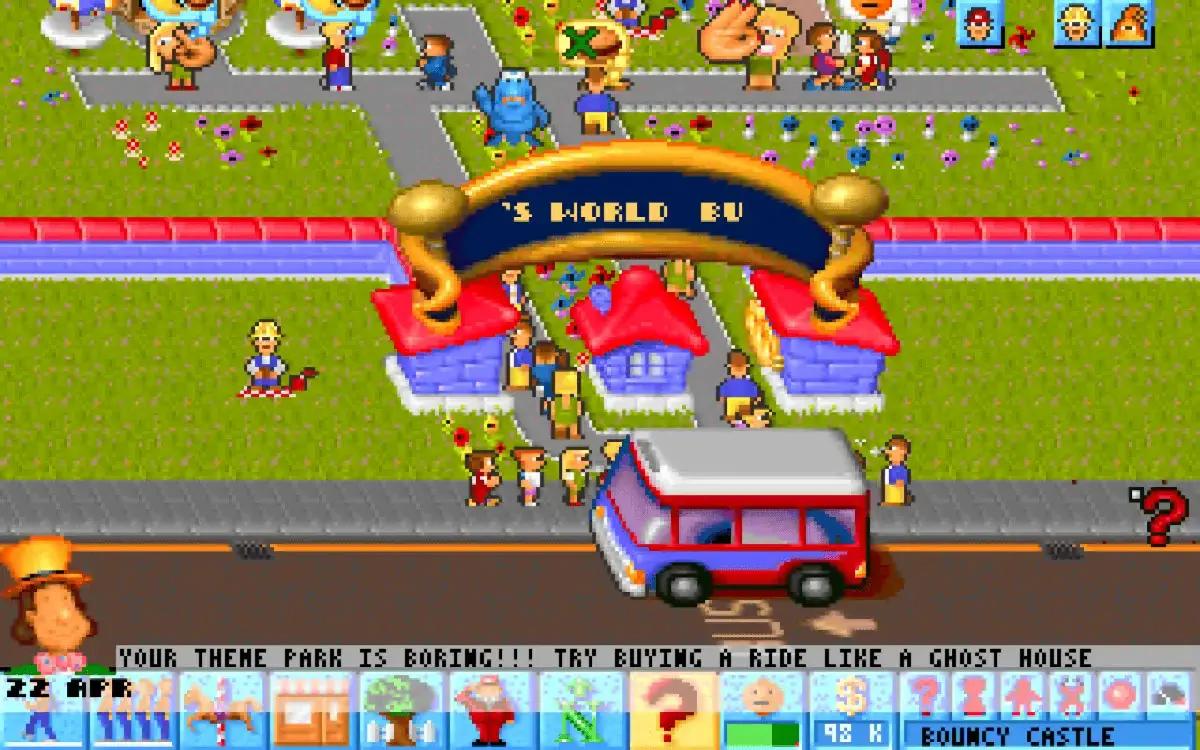
I didn't play it as much as I would have liked, because RollerCoaster Tycoon arrived at around the same time and pulled me in that direction. But the visual side of Theme Park was wonderfully charming for kids of our generation : vivid colours, loads of activities, rides to unlock one after another through research. It's clearly the father of the entire genre : Planet Coaster, the RollerCoaster Tycoon series, Two Point Hospital — they all owe an enormous debt to this game.
Behind its colourful visuals and childlike atmosphere, Bullfrog's title concealed a fairly sharp economic satire. Peter Molyneux wanted to "create something fun to build, and for players to understand the work involved in running a park." The reality the game offers you is considerably more cynical : you can literally drain families dry by inflating the price of fries, selling hyper-sugary drinks that make visitors thirsty again, and charging people to use the toilets. All of this plays out against a backdrop of circus music and fireworks. Absolutely wonderful.
And then there were the staff. The costumed mascots dancing around, ignored by visitors. The maintenance technicians who needed to be paid properly, otherwise — STRIKE. Never forget to pay your employees in Theme Park. It ended badly, every single time. It's a management lesson that plenty of real companies still haven't absorbed, isn't it?
The game was co-developed by Demis Hassabis — yes, the same Demis Hassabis who is today CEO of Google DeepMind and 2024 Nobel Prize in Chemistry for his work on AlphaFold. Theme Park was his first major professional project. Not a bad opening act.
Theme Park sold over 15 million copies worldwide, with particularly strong success in Japan and Europe. The American market was less convinced : Molyneux felt that the overly "cartoonish" visuals didn't match US audience tastes. That says something about cultural differences in gaming.
Theme Park runs via DOSBox on GOG. The interface has aged, but the construction pleasure is completely intact. Note : it's only available on GOG, not Steam. If you're after a modernised experience, Two Point Hospital (and Two Point Campus) are the direct spiritual heirs, same original Bullfrog team, same biting British humour.
💡 Price and where to buy Theme Park at the best price :
Theme Park : $5.99 on GOG (currently on sale at $2.99). Not available on Steam.
Direct link : GOG.com - Theme Park
3. Railroad Tycoon (1990) — Sid Meier's industrial epic
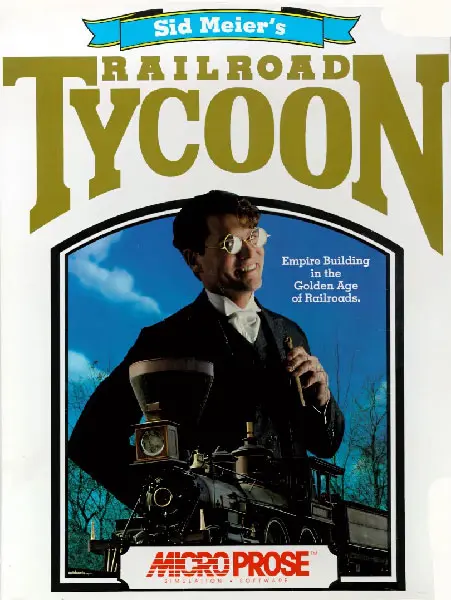
💾 Score : 9/10 | Genre : Railway Simulation and Management | Developer : Sid Meier / MicroProse
We shift scale completely with Railroad Tycoon, brought to us by none other than Sid Meier himself, the father of Civilization, Pirates!, and a string of other extraordinary titles. The man who probably generated more lost hours on PC in the 90s than any other living developer.
He's the one who launched the "Tycoon" craze in the modern gaming sense. Without him, the word might never have existed in our gaming vocabulary. Railroad Tycoon arrives in 1990, and it's the first entry in a series that would directly inspire Chris Sawyer for Transport Tycoon, which in turn inspired dozens of others. A direct, well-documented lineage : Sawyer himself said that Railroad Tycoon was "his favourite game at the time, the one that inspired him."
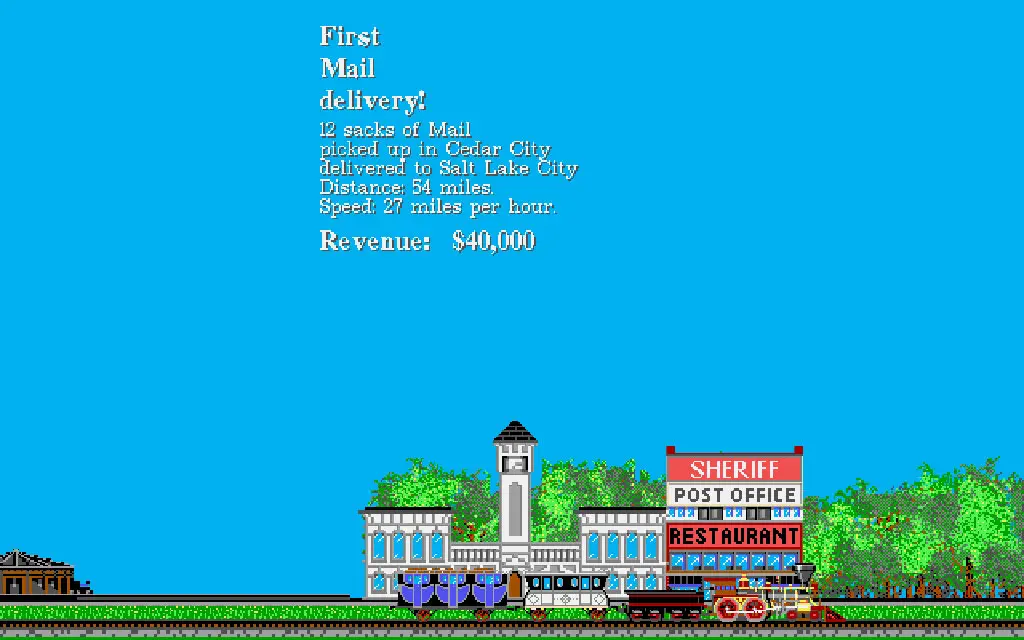
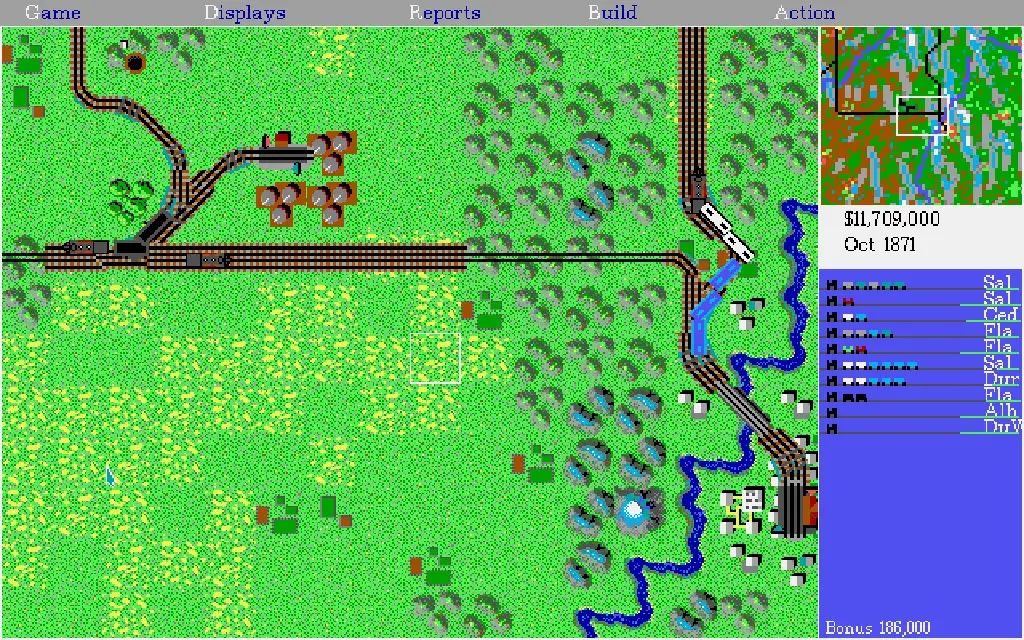
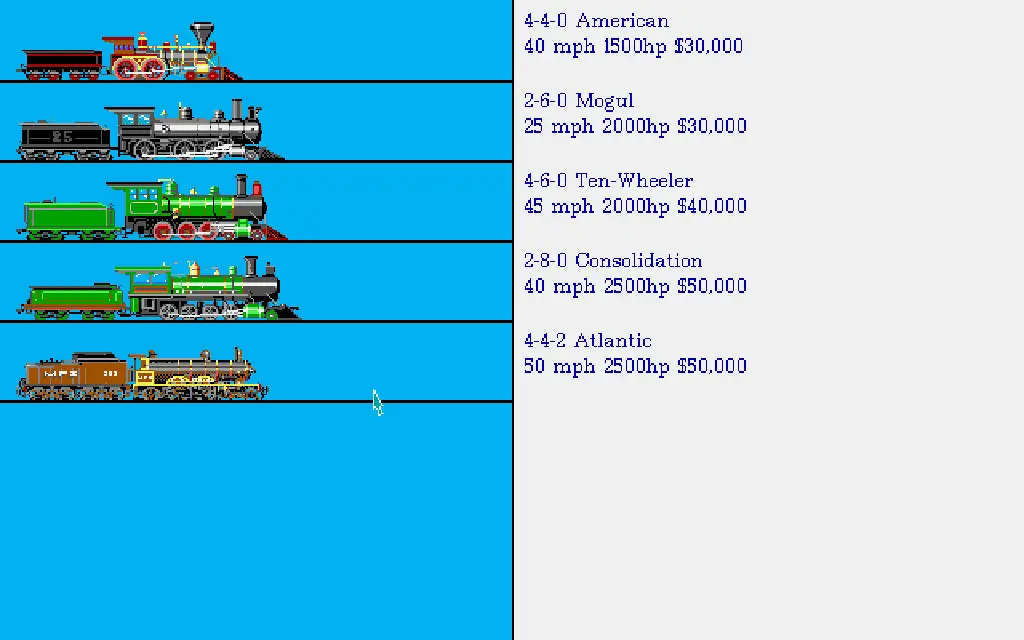
The objective? Build and manage a railway company. You chose an era and a geographic region (Eastern US, Western US, Great Britain, or Continental Europe) and built a rail network from scratch. Every decision mattered : the route layout (terrain slowed trains and was expensive to overcome), the choice of locomotives per era, the goods to transport, the stations to build.
But what truly elevated the game beyond its contemporaries was the economic dimension. You could buy out your competitors, play the stock market with your rival companies' shares, or with your own. There was a genuine entrepreneurial logic : the more resources you brought to cities, the more they grew, which created new demand, which justified expanding the network. At the time, as a kid, certain concepts we'd never really thought about — bonds, shareholders, share value — suddenly clicked in a very concrete way.
Computer Gaming World named it Game of the Year 1990, awarding the maximum five stars out of five. Dragon Magazine did the same. The Software Publishers Association gave it the Best Strategy Game award in 1991. Sid Meier himself didn't yet carry the weight of "Sid Meier" as a quality guarantee — that marketing machine didn't exist yet — but the game changed everything.
Railroad Tycoon (1990) is abandonware : it's no longer sold commercially, and Sid Meier's Railroads!, the 2006 remastered version, actually made the original game an officially downloadable freeware. For a modern play experience, Railroad Tycoon II is available on Steam and GOG for $4.99. It's a significantly modernised version that preserves the spirit of the original while offering a much more accessible interface. Even today, Railroad Tycoon remains a reference for anyone looking for a cheap PC strategy game with extraordinary depth.
💡 Price and where to buy Railroad Tycoon at the best price :
Railroad Tycoon (1990) : Legal abandonware, free to download.
Railroad Tycoon II (for a modern experience) : $4.99 on Steam and GOG (currently on sale at $1.25 on GOG).
4. Pizza Tycoon / Pizza Connection (1994) — The pizzeria with a Mob twist
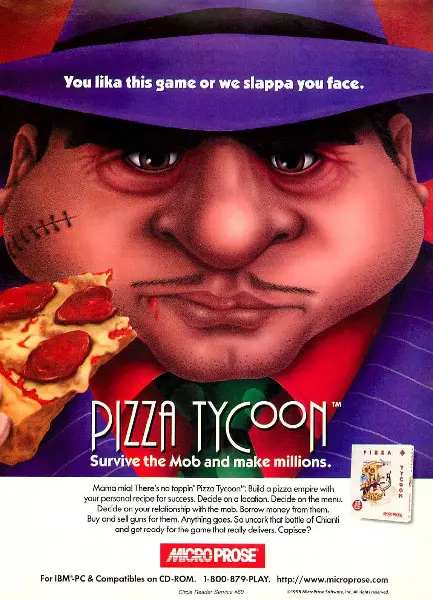
💾 Score : 8/10 | Genre : Restaurant Management Simulation | Developer : Cybernetic Corporation / Software 2000
Running your own pizzeria with a splash of Mob flavour — completely wild. Pizza Tycoon, known as Pizza Connection in Europe, came out in 1994, developed by a small German team and published by MicroProse outside Germany. And I can tell you, for the time, it was both a surprise and an absolute banger.
The visuals are genuinely charming for 1994 : colourful, animated, with a cartoon style that stood out sharply from the sobriety of most PC management games. You managed everything : buying ingredients, designing your own pizza recipes (with a real recipe creation mini-game), hiring chefs and waiters, decorating the dining room, running marketing campaigns... And the pizzas you created could enter competitions against rival restaurants. Each neighbourhood had its own preferences : a sweeter pizza crushed it in family areas, a more elaborate recipe dominated the wealthy districts.
But what made Pizza Tycoon truly unique among all the management games of the era was what happened at night. Because staying within the law was entirely optional. You could hire muscle to go sabotage rival restaurants, launder money, do small "favours" for the local Mob. Street vendors offered "joke items" (for sabotage) and "ice" (weapons). The game was coded carefully enough that it slipped through, but everyone understood perfectly well what was going on.
The dual reputation system was also a stroke of genius : you could be perfectly respected by the public while operating as a notorious gangster in the shadows. All of this wrapped in a generous dose of humour : the pre-made characters included a certain "Diamond Trump" with a hefty starting capital advantage, and the faces of famous figures (Nixon, Reagan, Lenin) appeared on the NPCs you interacted with. The game loved to poke fun at the world, and it landed beautifully.
This offbeat spirit laid groundwork that other games went on to exploit fully : Street Wars, Constructor, Gangsters... That whole vein of PC simulation games with a criminal undercurrent owes a great deal to Pizza Tycoon and its so-90s humour. If you're after something more recent in the same spirit, look into "Definitely Not Chicken." But even today, this remains an absolutely unmissable PC gaming deal for anyone wanting to discover the golden age of the genre.
💡 Price and where to buy Pizza Tycoon / Pizza Connection at the best price :
Pizza Tycoon / Pizza Connection : $5.99 on GOG and $5.99 on Steam, currently on sale at $0.59 (yes, fifty-nine cents) on both platforms.
Direct links : GOG.com - Pizza Connection | Steam - Pizza Connection
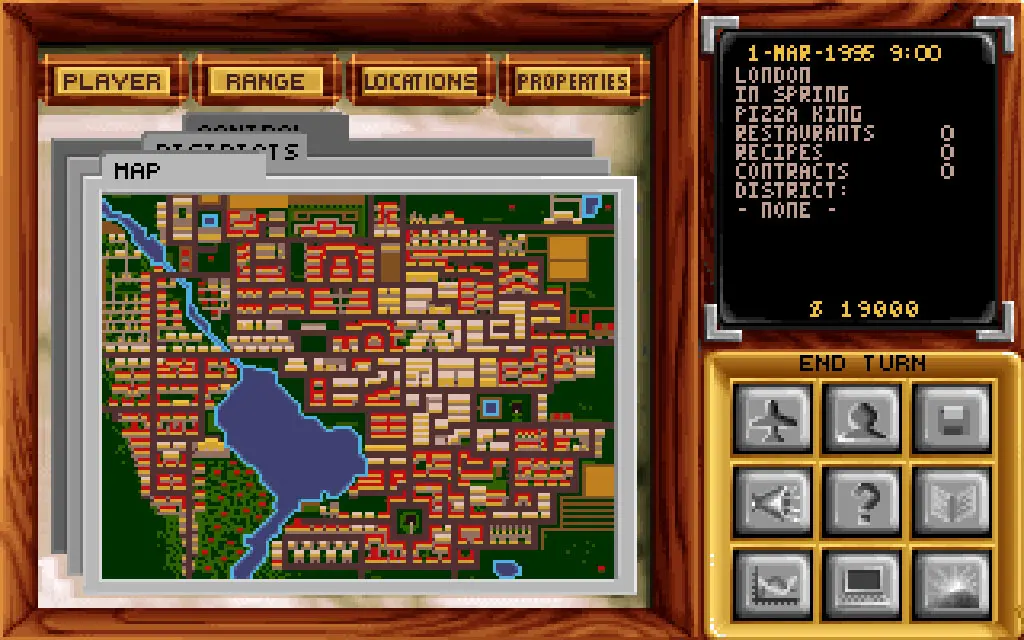
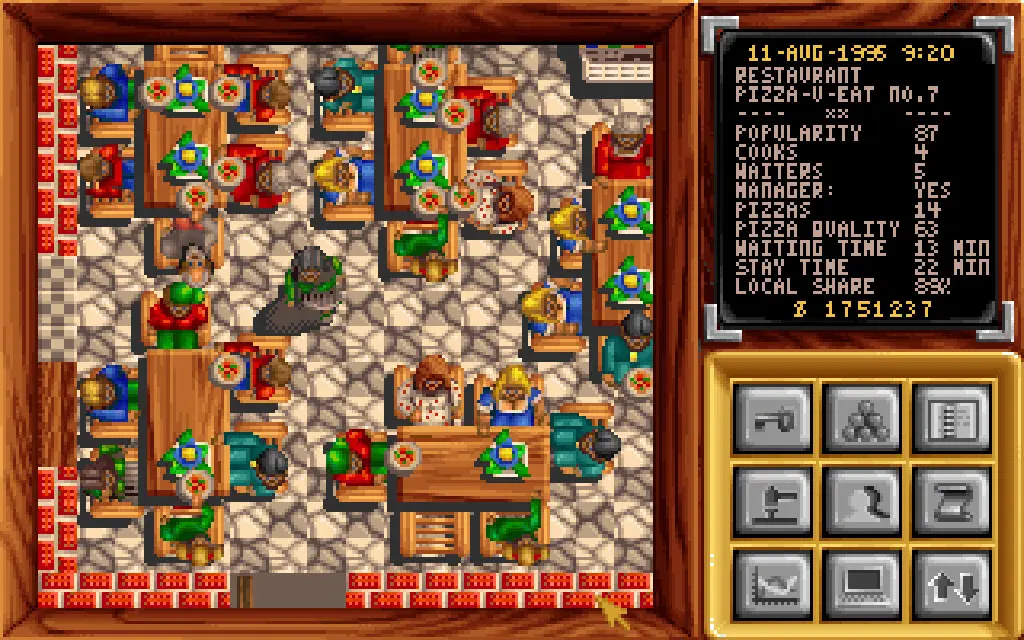
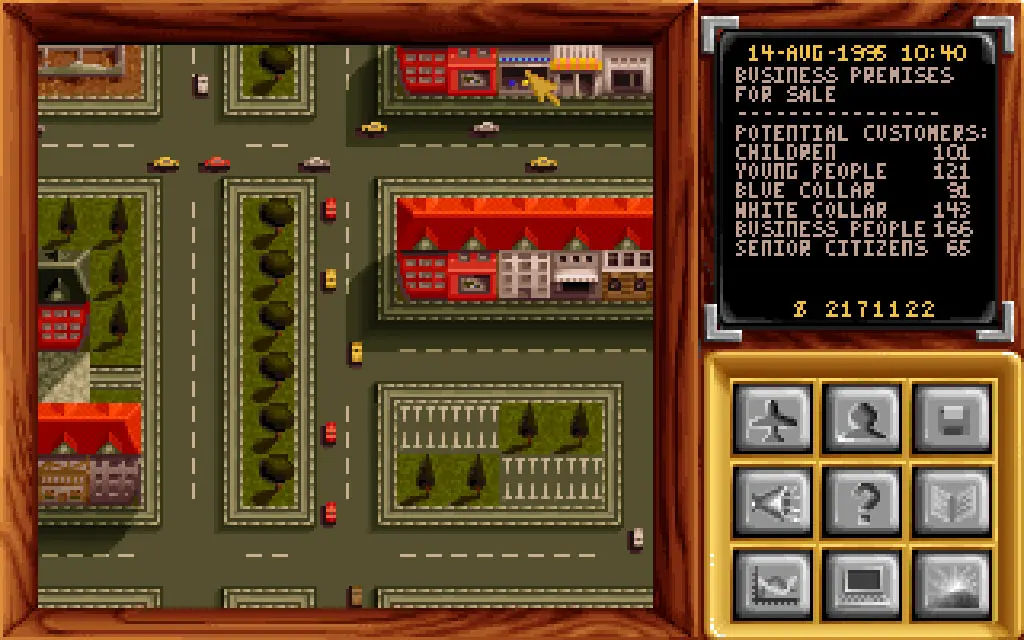
5. Capitalism (1995) — The ultimate simulator that taught you about life
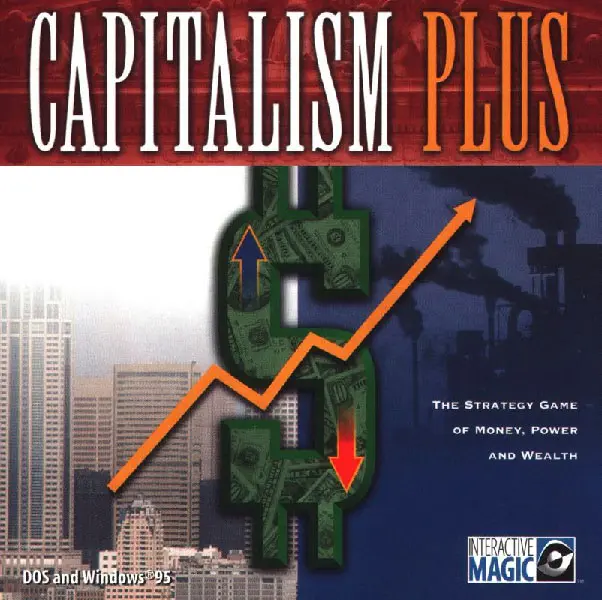
💾 Score : 8/10 | Genre : Total Economic Simulation | Developer : Enlight Software / Trevor Chan
How could this top end without Capitalism? It was something of the ultimate simulator, and even if the name was a little intimidating at the time (honestly, I wasn't entirely sure what "capitalism" meant when I first discovered it), it taught us the basics of business in a way neither school nor our parents had ever tried.
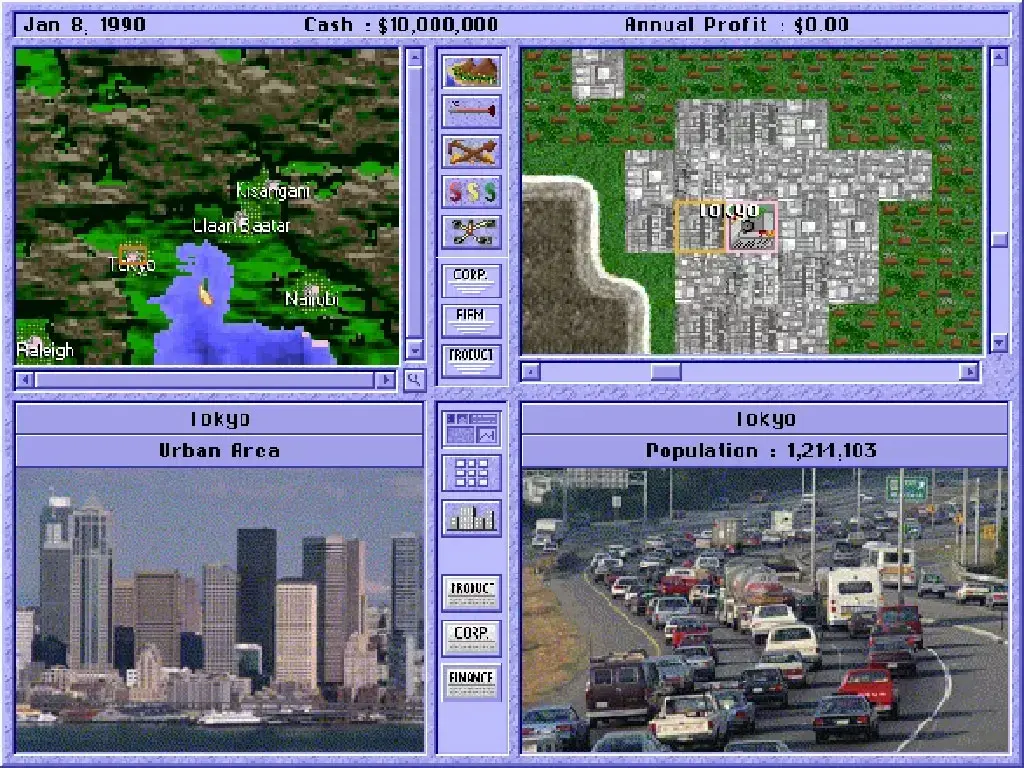
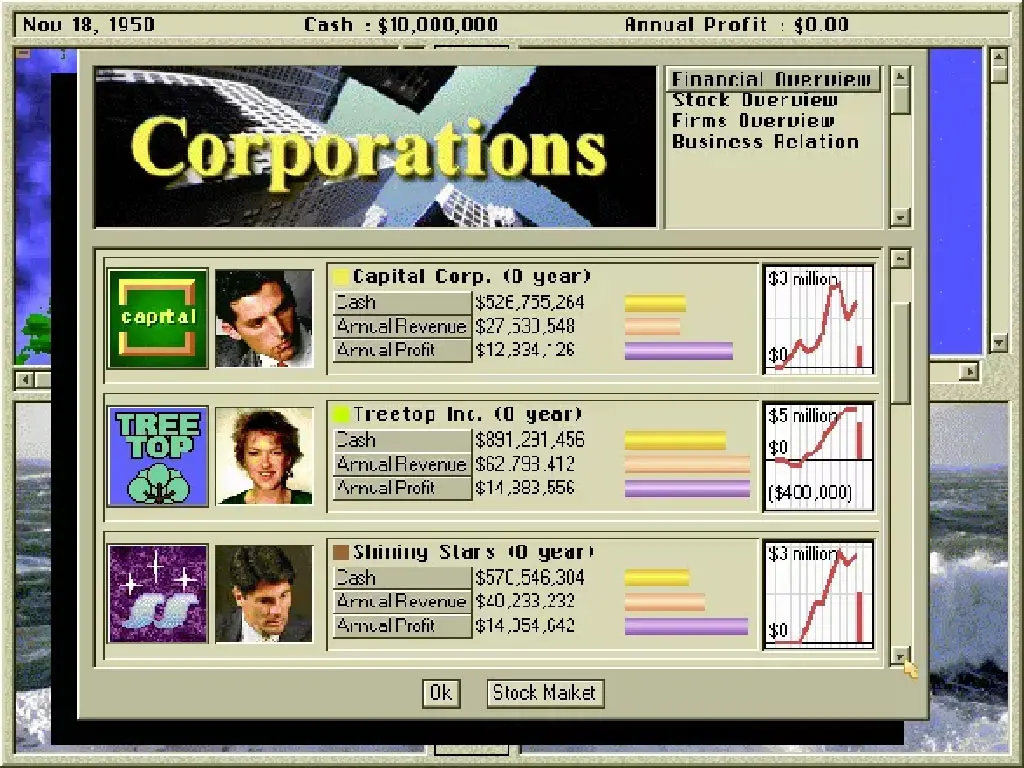
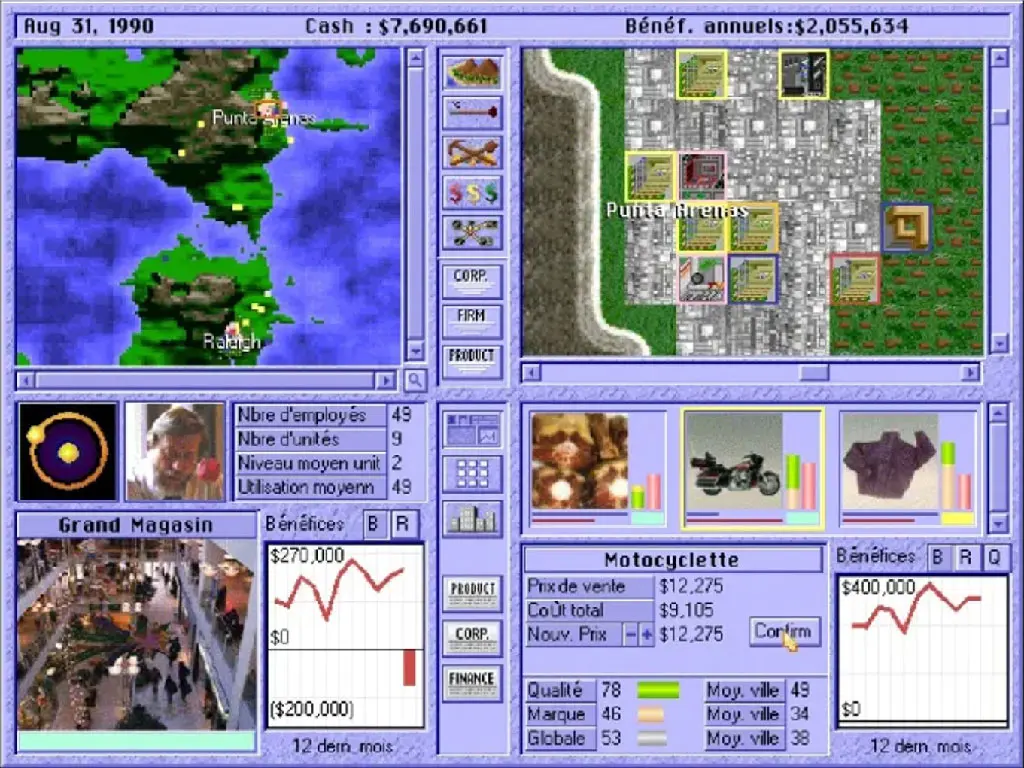
Capitalism is the work of Trevor Chan, a Hong Kong-based developer who founded his own company Enlight Software in 1993 specifically to release this game. It put you at the helm of a corporation. You decided everything : building factories, farms, and shops, managing your supply chains, setting prices, investing in R&D to create new products, running marketing campaigns, playing the stock market with your rivals' shares, launching hostile takeovers to buy out competitors... The complexity was dizzying, but perfectly coherent. Every decision had a visible impact on your margins, your market share, and your competitors' reactions.
What I loved, though I couldn't have articulated it this way at the time, was that Capitalism gave us a vocabulary. R&D, marketing, the stock exchange, shareholders, the balance sheet : this is where some of us encountered these words for the first time, and above all understood roughly what they meant. Thank you, video games.
And it wasn't a minor thing. In 1996, Harvard University and Stanford University began using Capitalism in their courses. Professor Tom Kosnik of Stanford declared that Capitalism was "a world-class learning experience" used to teach "the nuances of entrepreneurial growth and leadership." BusinessWeek dedicated a full article to it. PC Gamer named it Best Simulation of 1995. Not bad for a game signed by a solo developer from Hong Kong.
The Capitalism Plus (1996) version added real-world maps, more products, random events, and a scenario editor. It's the version available today on Steam and GOG. Capitalism Plus runs natively on Windows 11 without any tinkering — the Steam and GOG versions are perfectly compatible. If you want to go deeper, Capitalism Lab (2012) is the most complete entry in the series, with even greater depth and ongoing updates from Trevor Chan himself. But Capitalism Plus remains the best affordable entry point for discovering the spirit of the original, and an absolute reference for any fan of PC management simulation.
💡 Price and where to buy Capitalism Plus at the best price :
Capitalism Plus : $5.99 on GOG (currently on sale at $2.99) and $5.99 on Steam.
Direct links : GOG.com - Capitalism Plus | Steam - Capitalism Plus
Comparison Table — The Best 90s PC Management Games
Here are the best PC management games between 1990 and 1995 for under $10 :
- Transport Tycoon Deluxe (1995) — $9.99 on GOG / Steam, OpenTTD free
- Capitalism Plus (1996) — $5.99 on GOG / Steam (on sale $2.99)
- Railroad Tycoon II (1998) — $4.99 on GOG / Steam (on sale $1.25)
- Theme Park (1994) — $5.99 on GOG only (on sale $2.99)
- Pizza Tycoon / Connection (1994) — $5.99 on GOG / Steam (on sale $0.59)
| Game | Year | Price 2026 | Platform | Win 11 |
|---|---|---|---|---|
| Transport Tycoon Deluxe | 1995 | $9.99 | GOG / Steam | ✓ |
| OpenTTD (fan rewrite) | active 2026 | Free | openttd.org | ✓ |
| Theme Park | 1994 | $5.99 (on sale $2.99) | GOG only | ✓ |
| Railroad Tycoon II | 1998 | $4.99 (on sale $1.25) | GOG / Steam | ✓ |
| Pizza Tycoon / Connection | 1994 | $5.99 (on sale $0.59) | GOG / Steam | ✓ |
| Capitalism Plus | 1996 | $5.99 (on sale $2.99) | GOG / Steam | ✓ |
← Scroll to see the full table →
How to Play These Games on a Modern PC in 2026?
The good news is that 90s PC management games age better than FPS or RTS titles, precisely because their isometric keyboard-and-mouse interfaces haven't suffered the same kind of wear. Here's how to play them cleanly on a modern or budget PC setup.
Transport Tycoon Deluxe on GOG and Steam ships with pre-configured DOSBox. But the real answer is OpenTTD : download it for free at openttd.org, install it, and it's a native Windows 11 application. Zero tinkering. Modernised interface. Online multiplayer. It's clearly the best experience in 2026 for playing Transport Tycoon on Windows 11.
Theme Park on GOG runs with integrated DOSBox, one double-click is all it takes. The only notable drawback in 2026 is that the interface hasn't been modernised, so there's a moment of adjustment. But the construction pleasure is entirely intact.
Railroad Tycoon (the 1990 original) runs via DOSBox if you find it as abandonware. For Version II on GOG and Steam, installation works like any modern game.
Pizza Tycoon / Connection on Steam and GOG integrates DOSBox automatically. The Steam and GOG versions are identical in content.
Capitalism Plus runs natively on Windows 11 without DOSBox — the digital versions are perfectly optimised.
💡 Tip : For abandonware titles (Railroad Tycoon 1990), check My Abandonware or Abandonware-France — legal preservation sites that keep these games accessible when publishers have abandoned their commercial rights. And to track Steam and GOG promotions on these titles, IsThereAnyDeal and GOG Deal Notifier are your best allies.
Where to Buy These Games at the Best Price in 2026?
For these cheap retro PC management games, GOG is particularly recommended : the platform specialises in retro titles, guarantees compatibility, and runs frequent promotions on these games. The current PC gaming deals are genuinely extraordinary : Pizza Tycoon at $0.59, Railroad Tycoon II at $1.25, Theme Park at $2.99, and Capitalism Plus at $2.99. If you're hesitating, now is the time.
To never miss a Steam sale or GOG discount on these classics, add them to your wishlist on both platforms. These games also regularly appear in "Retro Gaming" Humble Bundles, where you can get several of them for $5-10 the lot — a Steam or GOG key at a slashed price.
And don't forget : OpenTTD is free. If you could only download one today without spending a cent, make it that one.
Why Are These Games Still Played in 2026?
The short answer : because they laid foundations that modern games haven't surpassed, only dressed differently. Transport Tycoon Deluxe via OpenTTD has an active community still releasing updates in 2026. Trevor Chan's Capitalism Lab still receives regular patches. These titles remain excellent alternatives to modern PC games that cost far more, with a depth and replayability that $60 productions sometimes struggle to match.
There's also a more structural reason : these management games are built on mechanics rooted in universal economic logic. Supply chains, competition, time and resource management... These are timeless concepts. That's why you can still lose hours to them in 2026 without feeling a single thing is missing : the core gameplay is as relevant, as demanding, and as satisfying as it ever was.
FAQ — Frequently Asked Questions
Is OpenTTD really free and legal?
Yes, completely. The fans rewrote the source code from scratch in C++, without using Chris Sawyer's proprietary code. They therefore have every right to distribute their software for free. Since 2021, the base game even includes graphics and sounds recreated by the community, so you no longer even need the original TTD. Download at openttd.org.
What's the difference between Pizza Tycoon and Pizza Connection?
It's the same game under two different names depending on the market. Pizza Connection is the European title (Germany, France...), Pizza Tycoon is the American title (published by MicroProse). On Steam and GOG today, it's sold under the name "Pizza Connection."
Capitalism Plus or Capitalism II to start?
Capitalism Plus (available on Steam/GOG) is the best entry point. It's closer to the spirit of the original 1995 game with a few improvements. Capitalism II (2001) is more modern visually but different in structure. If you get hooked, Capitalism Lab (2012) is the most complete version and is still being updated.
Do these games work on Mac or Linux?
OpenTTD : yes, natively on Mac, Linux, and Windows. For the others, GOG sometimes offers Mac versions. Otherwise, Wine or CrossOver allow the vast majority of these titles to run on Linux/Mac.
The great era when management was an adventure
Between 1990 and 1995, these five games invented, structured, and popularised an entire genre. Railroad Tycoon launched the word and the concept. Transport Tycoon proved you could build something extraordinarily rich using x86 assembly and a single well-organised mind. Theme Park made management fun and colourful. Pizza Tycoon threw the Mob into the mix. And Capitalism turned a video game into a classroom used by Harvard and Stanford.
And today? These classic PC Tycoon games cost between $0 and $10. Some are even free, maintained by communities that have been active for thirty years. It's an extraordinary legacy, and it would be a shame to let it pass you by.
If you enjoy strategy games from this era, our article on the Top 5 PC Strategy Games (1991-1995) Under $5 is the perfect companion to this selection : Civilization, Dune, Command & Conquer, the good old days.
And you — what was your first management game? Team Transport Tycoon or team Theme Park? Have you ever tried the Mob side of Pizza Tycoon? Drop it in the comments, I'm genuinely curious.
Coming next week : the management and simulation games of the 1995-2000 period — Theme Hospital, RollerCoaster Tycoon, Anno 1602...? A new generation, a new round of sleepless nights!
Related Articles on LittleBigCampus
- Top 5 PC Strategy Games (1991-1995) Under $5
- Top 12 Best Budget PC Games to Play with Friends ($5-$20 max)
- 5 Steam Games to Watch in 2026 — Our Original Selection
- Star Wars Dark Forces and the entire Kyle Katarn saga (Dark Forces, Jedi Knight, Mysteries of the Sith, Jedi Outcast, Jedi Academy) — it all starts here
💡 Join the community!
Want to talk games, find people to play with, or share your pop culture discoveries? Come join us on the Little Big Campus Discord 👾