Blizzard : When Ideas Replaced Budgets
December 1995. Warcraft II arrives on PC.
Thirty years later, the game is still present in discussions, in memories, and above all in the way many players learned to play RTS. This anniversary is a good excuse to stop for a moment, not to look at the game with eyes frozen by nostalgia, but to understand why it still matters.
At the time, the video game landscape was still taking shape.
PC gaming was barely structured, real-time strategy was finding its feet, and Blizzard Entertainment remained a studio at a human scale. About forty people, including developers, were then working on the sequel to Warcraft: Orcs & Humans.
This context is not insignificant. It largely explains what Warcraft II: Tides of Darkness truly is. The game was born from a permanent exchange with the players of the first episode. Feedback poured in, sometimes very precise, sometimes frankly demanding. The team listened, sorted, tested, and transformed these remarks into real mechanics.
Development lasted about ten months, and even back then, that was short. This speed did not come from sloppy work, but from a direct method : identifying what works, understanding what gets stuck, and improving without beating around the bush.
A strategy that becomes readable, alive, and shifting
Warcraft II profoundly changed the way to approach a strategy game.
The fog of war as it is introduced here remains one of the most striking innovations. Already explored areas do not disappear ; they become camouflaged. The map ceases to be a comfortable given and becomes a space under tension, to be monitored constantly.
💡 This design choice changes everything. It imposes observation, patrolling, and anticipation. It pushes you to stay active, at the risk of being surprised and literally crushed by an army coming out of nowhere. If you have known « Knights and Merchants », for example, you know exactly what I'm talking about. In that game, once you have revealed the map with your units, it stays entirely revealed. If the enemy is preparing troops, you are aware of it even before they start moving. This new mechanic would become a reference for the RTS genre.
Another major evolution : oil
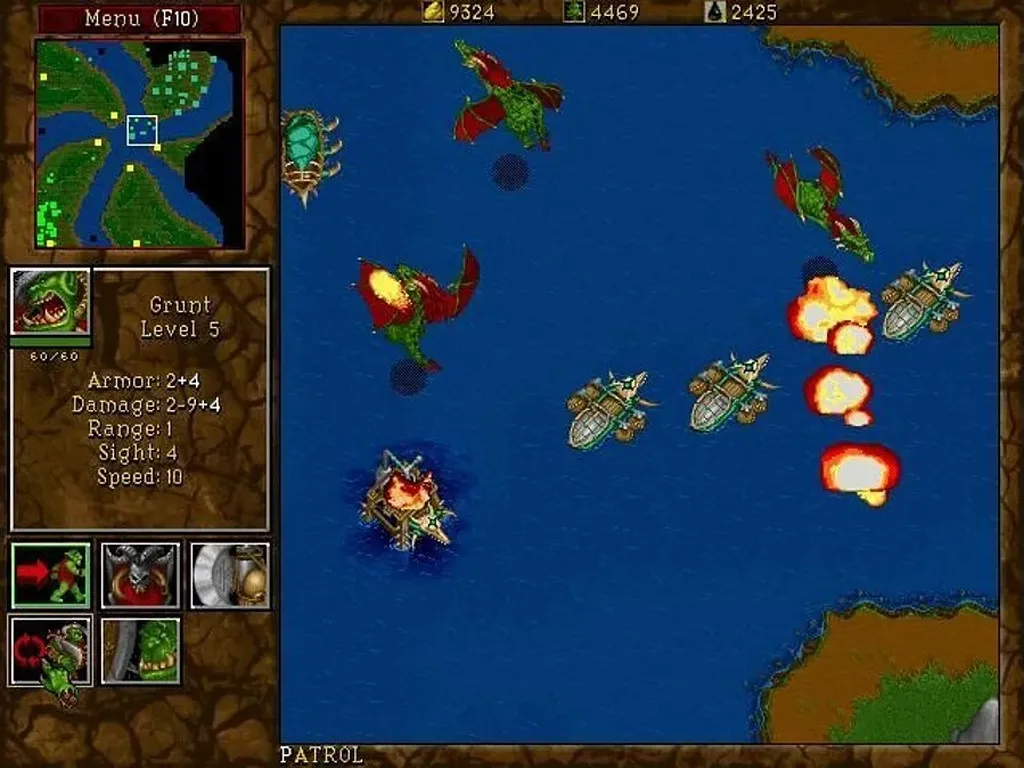
With the arrival of naval and aerial units, the economy leaves dry land. Offshore platforms, tankers, and their protection become vital. Strategy is no longer limited to clashes ; it becomes logistical. Setting up a fleet of battleships or dragons requires a fragile infrastructure, exposed, and often far from the base. Miss the defense of an oil field, and the game can tip very quickly. Lose naval control, and you can no longer go fetch other gold mines on a nearby island... game over.
Design choices that change the way we play
Warcraft II also refines the interface and unit control.
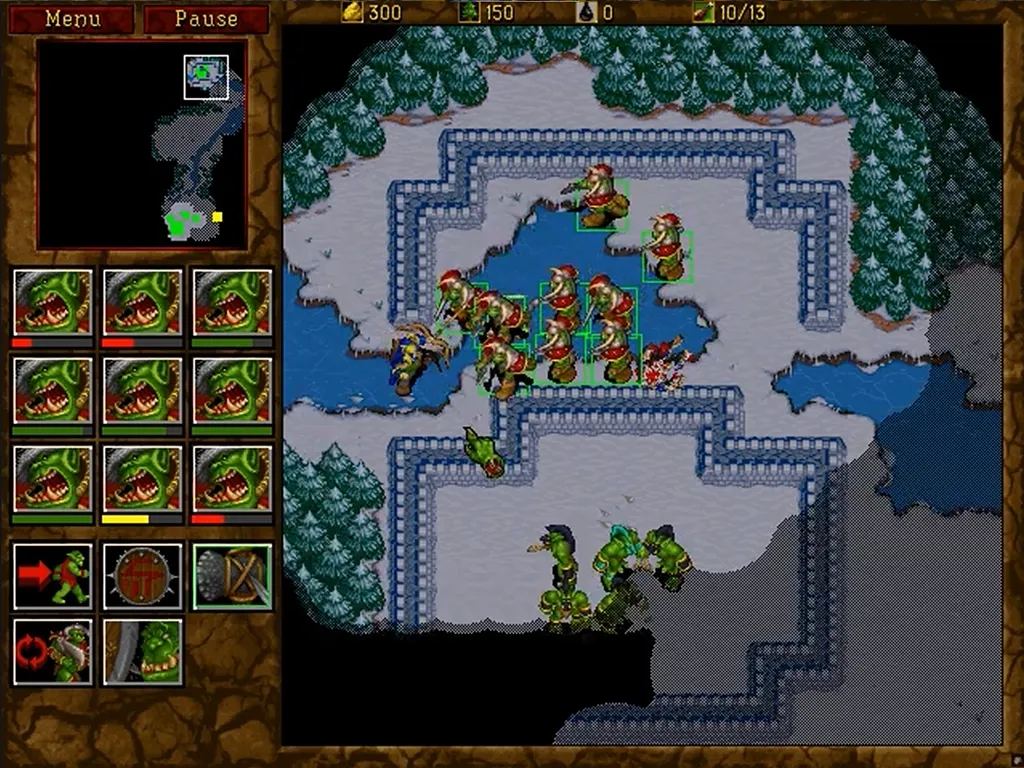
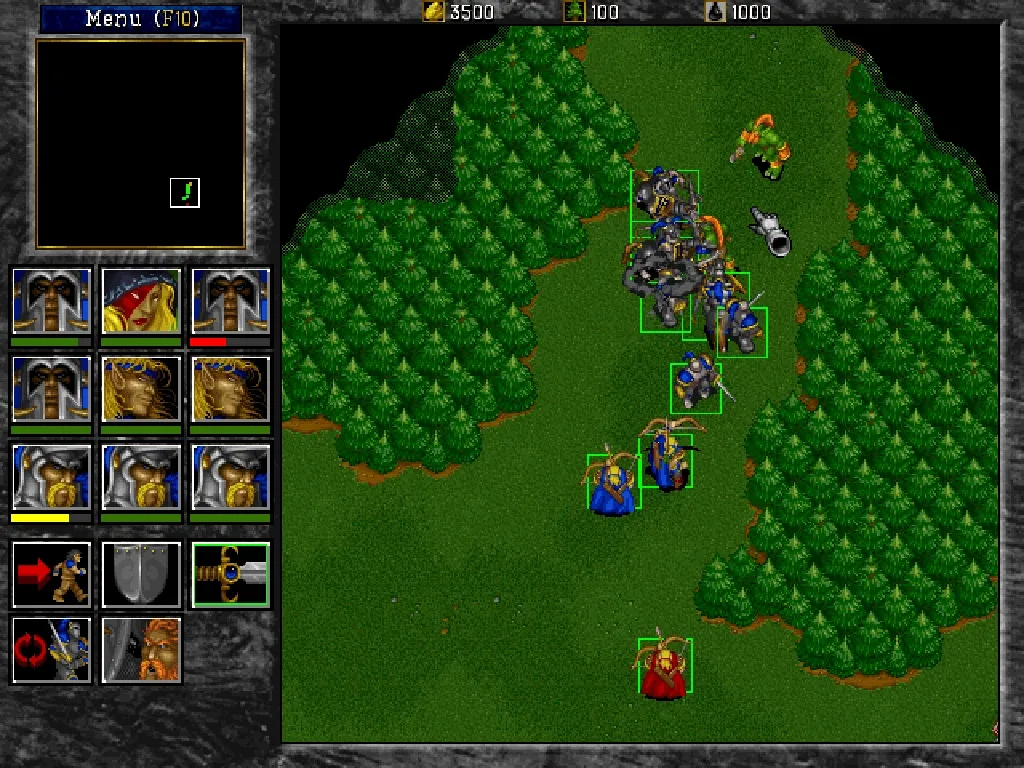
Selecting up to nine units finally allows for thinking about larger, more organized, and more readable battles (remember that Warcraft I was limited to selecting a maximum of 4 units !). The clashes gain in scale without becoming unreadable. The player spends less time fighting the interface and more time thinking about their decisions.
Taken separately, these adjustments might seem minor. Together, they radically change the experience, as these innovations help us understand why we finally won our first online game, or why Kevindu57 rolled over us.
Playing together, simply
Warcraft II was also designed to be shared.
Local area network (LAN) multiplayer was designed with a flexibility rare for the time, to the point of allowing two players to play together with a single CD-ROM. This simplicity encouraged improvised games, evenings at friends' houses, and « snack afternoons » spent together.
The game becomes a meeting point. We play side by side, comment on actions, mock mistakes, and analyze why that attack was a bad idea. Strategy is discussed as much as it is played. This social dimension, discreet but essential, largely contributes to the lasting attachment many keep for the game.
Beyond the Dark Portal : a denser narration
With the Beyond the Dark Portal expansion, Blizzard densified the experience even further.
The introduction of heroes with unique characteristics changes the nature of the missions. Their presence creates constant tension. Their loss leads to immediate failure. Every decision counts more, every mistake is paid for in cash.
The story leaves Azeroth for Draenor and explores the direct consequences of the Second War. The conclusion, dark and blunt, leaves a lasting mark on players. It places Warcraft II in a strong narrative continuity, which would find echoes much later in World of Warcraft.
Why Warcraft II still matters to us
Warcraft II still matters because it comes from an era where games were built in a direct dialogue between those who made them and those who played them. An era where design advanced through trials, adjustments, and intuition, where technical constraints forced one to be clever, and where every improvement was immediately felt in-game. Nothing was fixed. Everything could evolve.
For many, this game didn't just teach resource management or moving units. It taught how to observe, to anticipate, and to accept getting sometimes totally pawned before understanding what went wrong. It gave a taste for strategy, for sharing, and for those long evenings spent restarting a mission until, finally, it worked.
💾 This article also exists for that. To pay a simple tribute to those hours spent when we were younger, often together, in a friend's room, in front of our good old CRT screens (which we don't miss), with Clan members, friends, or brothers-in-arms. Moments that have left a lasting trace.
Thirty years after its release, in December 1995, Warcraft II deserves our attention for a moment to recognize what it transmitted, and to remember a time when Blizzard was adored and not yet corrupted by scandals and overly greedy shareholders. A certain idea of video games that is unfortunately found all too rarely today, even if it still exists in some studios.
It is this energy that Little Big Campus seeks today to explore, preserve, and transmit in its turn.
Happy birthday Warcraft II, and thank you for everything you have sown.
Whichever game has marked you, don't hesitate to talk about it in the comments ; we are very fond of these small personal stories !