The Trial that Saved Mario: When Nintendo Toppled Universal’s Empire
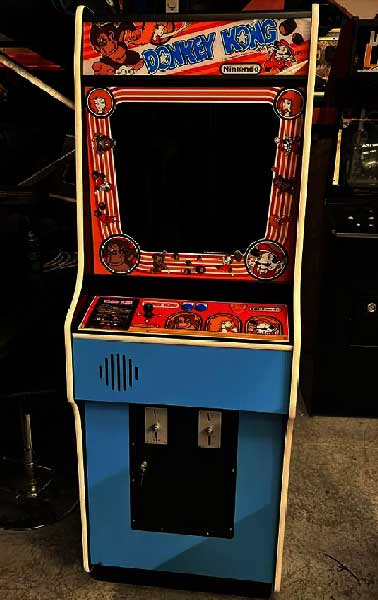
In 1982, Nintendo was barely a blip on America's radar. The company's arcade smash Donkey Kong, released in July 1981, was printing money in arcades across the country, and everybody wanted a cut. Including a certain Sidney Sheinberg, president of Universal City Studios, who spotted an opportunity... and decided to pounce. What happened next became one of the most important legal battles in gaming history, and one of the most deliciously ironic stories the geek world has ever produced.
One Gorilla, One Film, and a Hollywood Shakedown
When a media giant decided to cash in on an arcade hit
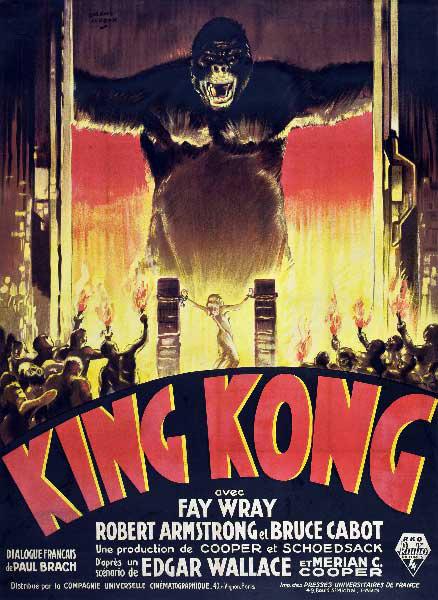
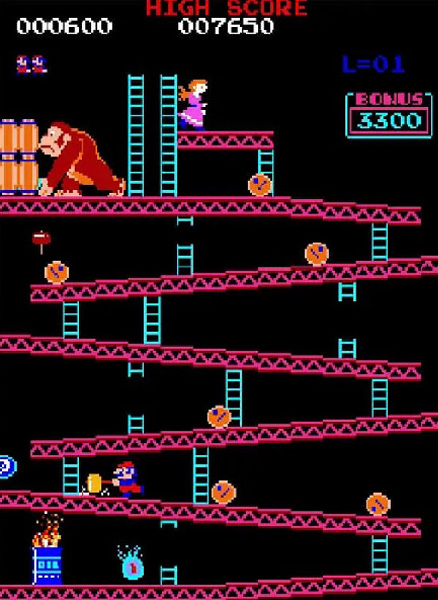
In April 1982, Sheinberg got word of the Donkey Kong phenomenon and dispatched his man, Robert Hadl, to investigate. Hadl's verdict was swift : the game looked too much like King Kong. A giant ape, a damsel in distress, a hero scrambling up platforms to save her... As far as Universal was concerned, this was straight-up plagiarism, and it had to stop.
Universal went on the offensive immediately. They cornered Coleco, the console maker that had signed a licensing deal with Nintendo to bundle Donkey Kong with its ColecoVision, and made it crystal clear that things were going to get very expensive if they didn't play ball. Coleco folded within a week, agreeing to pay 3% royalties on every sale, a deal worth roughly $4.6 million across six million units.
💾 Donkey Kong also happens to be Mario's very first appearance, back when he was still called "Jumpman." He's the guy scrambling up those platforms to rescue Pauline from the gorilla. Without this lawsuit, the entire Mario franchise might never have had the chance to plant its flag in America...
Nintendo then received its own ultimatum by telex : 48 hours to stop selling Donkey Kong, destroy all existing stock, and hand over profit records. Nintendo's U.S. attorney, Howard Lincoln, initially weighed settling for somewhere between $5 and $7 million. Something stopped him. He kept digging... And what he found changed everything.
The Twist : Universal Trapped by Its Own Argument
The secret weapon : a forgotten lawsuit Universal wished nobody remembered
Lincoln brought in John Kirby, a sharp New York attorney from the firm Mudge, Rose, Guthrie, Alexander and Fredon, known for winning landmark cases on behalf of PepsiCo, General Foods, and Warner-Lambert. Kirby knew nothing about video games. He didn't need to.
Digging through case archives, Kirby uncovered something devastating : in a prior case, Universal City Studios v. RKO General Inc., Universal had itself successfully argued that King Kong's story belonged to the public domain. That argument had been used to greenlight a new King Kong remake and had been upheld by the court. In other words, Universal had already sworn, in a court of law, that King Kong belonged to no one.
⚠️ Universal's own contradiction : the studio had simultaneously argued in one courtroom that King Kong was public domain, and in another that Nintendo owed them royalties for using it. That legal double-talk was about to cost them everything.
The case Universal City Studios v. Nintendo opened in 1982 before the U.S. District Court for the Southern District of New York, presided over by Judge Robert W. Sweet. The trial ran seven days. Universal hammered away : the name "Donkey Kong" was too close to "King Kong," the story was a rip-off, consumers were being misled. Kirby dismantled every single argument.
The two properties have nothing in common but a gorilla, a captive woman, a male rescuer, and a building scenario. U.S. Court of Appeals, Second Circuit, October 1984
On the naming issue, Kirby pointed out that "Kong" was already a generic term for large apes, and that "King" and "Donkey" share absolutely nothing. On the story, Judge Sweet was equally blunt : Donkey Kong was "comical" and "childlike," its ape "farcical and nonsexual," in stark contrast to King Kong, described as "a ferocious gorilla in quest of a beautiful woman." Sweet went so far as to call Donkey Kong a mere parody of King Kong. Nintendo wins round one.
🕹️ 2026 update : in April 2026, a trove of original 1982-1983 court documents was made public via the Internet Archive. Among the revelations : Shigeru Miyamoto's earliest name ideas for his gorilla included "Build On," "Bill Kong," and "Kong Holiday." He also described Donkey Kong as a "human in a gorilla suit" during his deposition, a detail that further cemented the characters' differences in court.
The Appeal, the Rigged Survey, and the Counterpunch
Universal doubles down... and keeps losing
Universal appealed. To prove consumer confusion, they presented a telephone survey of 150 arcade, bowling alley, and pizza restaurant managers who owned Donkey Kong machines. The result : 18% believed the game had been made with the approval of the King Kong rights holders. But when asked who actually made Donkey Kong, not a single respondent named Universal. The survey also used leading questions and was only conducted among people who already owned the game. The court tossed it out.
In October 1984, the U.S. Court of Appeals for the Second Circuit upheld the original verdict. Nintendo owed Universal nothing. Even better : the court found that Universal had acted in bad faith by sending cease-and-desist letters to Nintendo's licensees while knowing full well it had no legal claim over King Kong. Nintendo could now go after damages.
🕹️ The financial reckoning : Universal was ordered to pay Nintendo $1.8 million in damages and legal fees. Nintendo also chose to recover Universal's licensing profits, adding $56,689 on top. Coleco and several other Nintendo licensees filed their own counterclaims and were eventually compensated too.
The Most Unexpected Thank-You Gift in Gaming History
How a New York lawyer became immortalized in pixels
To thank John Kirby for pulling off the impossible, Nintendo treated him to a special dinner. The official gift : a $30,000 sailboat, christened Donkey Kong, along with exclusive worldwide rights to use that name... for sailboats. An oddly specific clause, but a genuinely heartfelt one.
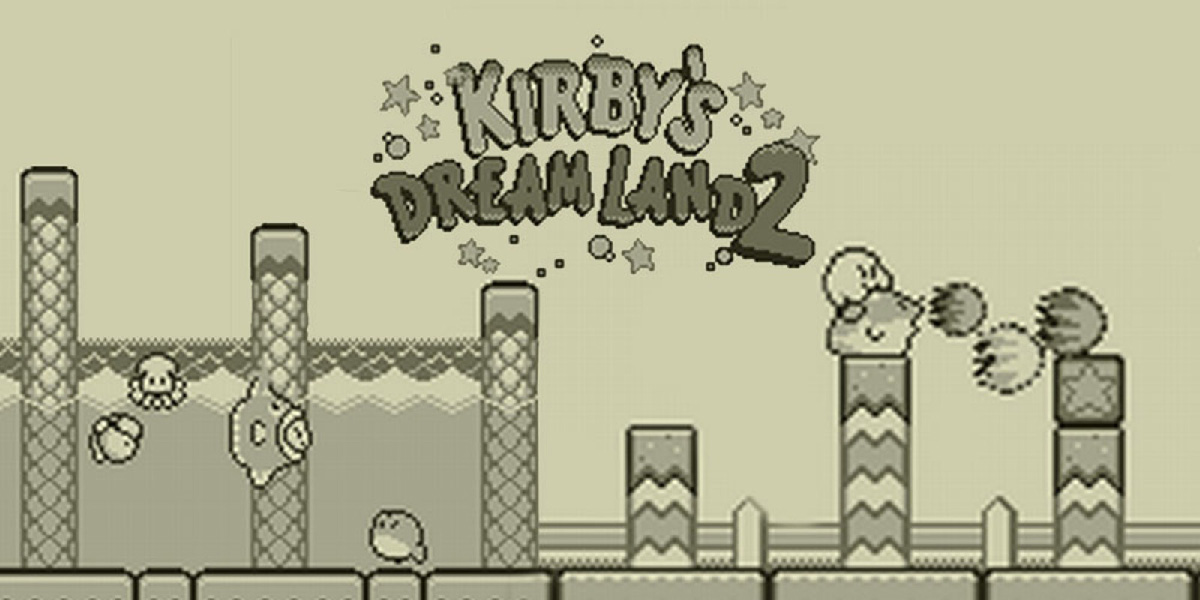
The more lasting gift, though, came from Shigeru Miyamoto himself. He decided that the next major character his studio developed would carry the lawyer's name. That character, built at HAL Laboratory and launched in 1992 on the Game Boy, was a round, pink little creature with the ability to inhale enemies and copy their powers. His name : Kirby.
💾 Legend has it that a copy of Kirby's Dream Land, the franchise's very first game, was eventually sent to John Kirby himself. The attorney is said to have found the tribute equal parts funny and deeply touching. Honestly, who wouldn't?
The Legacy : Way Bigger Than One Courtroom
This case isn't just a great story. It had real, lasting consequences for the entire video game industry. By standing its ground against Universal, Nintendo proved that a video game studio could hold its own legally against the biggest names in American entertainment. That precedent helped establish gaming as a legitimate creative medium, one with intellectual property worth protecting and defending in court.
What if Nintendo had lost ? The company was still finding its footing in the U.S. market, and the financial blow could have been fatal. No NES. No Super Mario Bros. No Zelda. And very likely, no Kirby either. The entire arc of modern gaming sometimes hinges on a single person in a New York courtroom refusing to back down.
John Joseph Kirby Jr. passed away on October 2, 2019 at the age of 79, following a battle with leukemia. He left behind his wife, four children, and three grandchildren. And a round, pink character known by generations of players all over the world.
Kirby saved Donkey Kong. In saving Donkey Kong, he saved Mario. And in saving Mario... well, you know the rest.
Did you already know this story ? And what's your first memory of Kirby or Donkey Kong, and which system were you on ? Drop it in the comments right below!
💡 Join the community!
Want to talk gaming history, find people to play with, or share your favorite retro memories ? Join us on the Little Big Campus Discord 👾