Those bots we loved (or hated) so much...
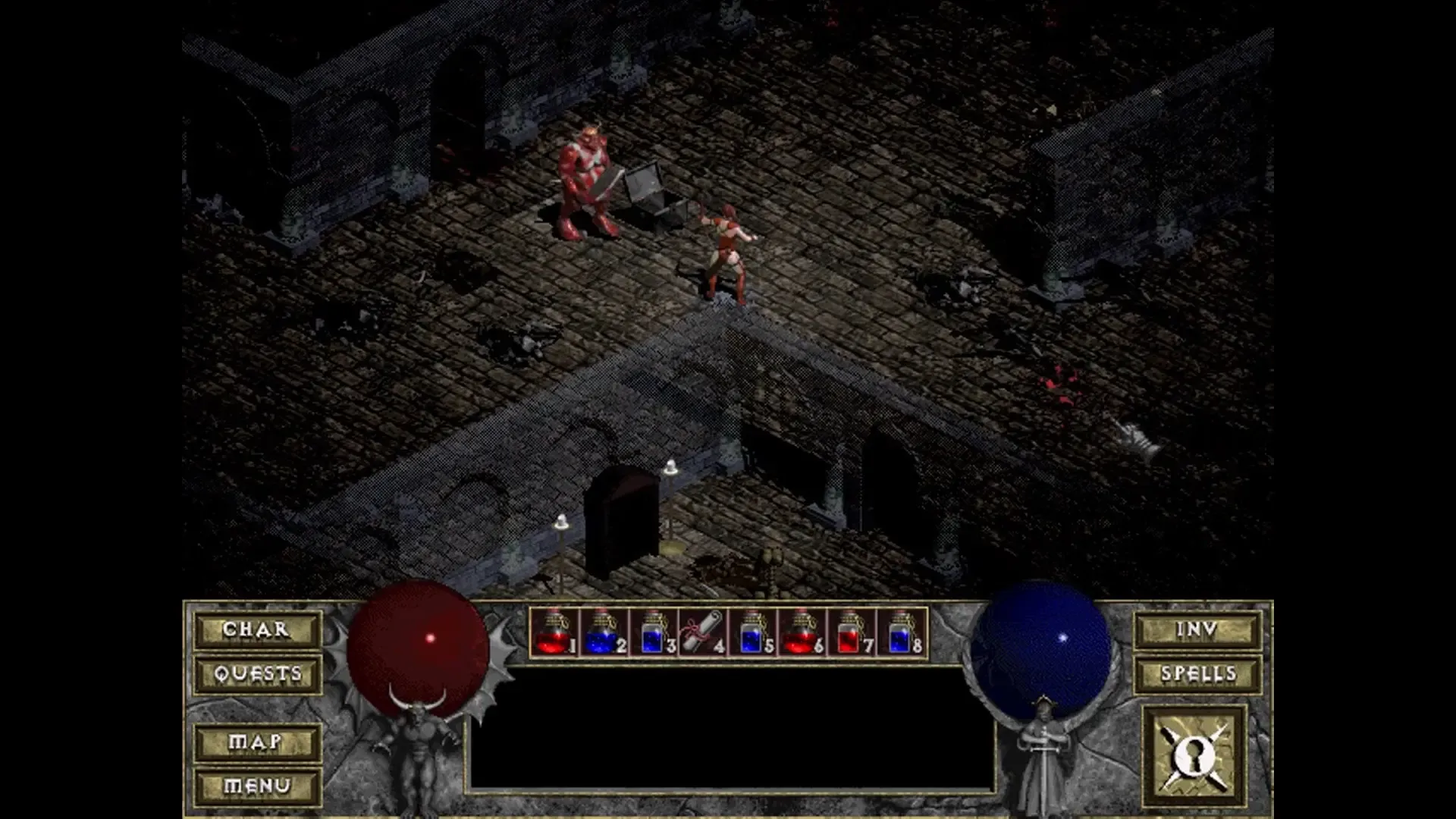
If we tell you "AAAHHH, Fresh Meat !", did you feel that shiver run down your spine ? Did it remind you of a Boss trying to carve you up with his Butcher Cleaver ? Yes ? Us too. And yet, we kind of liked the old brute.
Omnipresent bots, between companions and cannon fodder
Since the dawn of video games, bots have played a crucial role : replacing missing human players, making the world feel alive, creating challenges, or simply serving as cannon fodder. But their history is made of brilliant progress, hilarious failures, mythical bugs, and behaviors that are sometimes more human than human. Remember the clumsy clone spinning in circles in Perfect Dark, or those Star Wars : Battlefront soldiers shouting in unison : "Roger that ! Roger that !" while jumping like lemmings under your blaster fire. In this article, we’re going back in time (time-slap incoming, consider yourself warned), exploring the different generations of bots, analyzing their evolution, and laughing (or crying) over their most memorable blunders. Hang on, the journey into gaming AI begins here.
The evolution of bot programming : from frozen scripts to adaptive intelligence
The birth of gaming AI : scientific origins
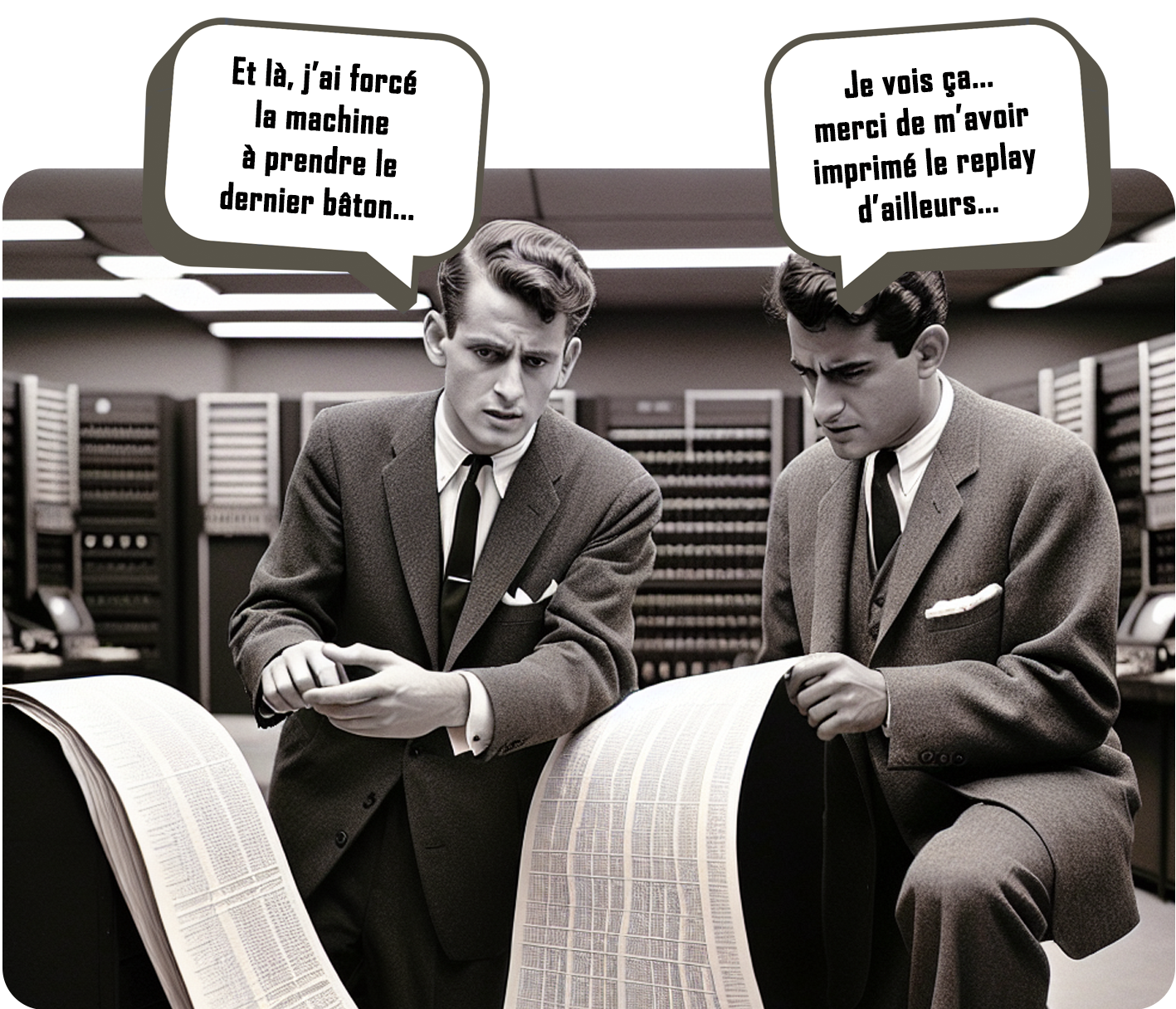
Just like for us, let's head back quickly to prehistory. The first video game with a bot (artificial intelligence) is generally considered to be Nim, created in 1951 by Christopher Strachey on the Ferranti Mark 1 at the University of Manchester. This game allowed a human player to face the computer in a game of Nim, a mathematical strategy game. A year later, OXO (1952), a version of tic-tac-toe, was created by Alexander Douglas and is often cited as one of the first video games with an opposing AI. Finally, the first computerized chess games of the 1950s-1960s also count among the pioneers.
The exact definition of the "first" depends on what is meant by "video game" (some consider true video games started later) and by "bot" (simple game algorithm or more sophisticated AI). But Nim from 1951 remains the most commonly accepted reference for the first computer game program with an opposing artificial intelligence.
Nim (1951)
- Support and context :
- Created on the Ferranti Mark 1, one of the first commercial computers in the world
- Located at the University of Manchester, UK
- The computer occupied an entire room and used vacuum tubes
- No screen : interactions via teleprinters and flashing lights
- The game :
- Based on the traditional game of Nim : piles of objects, each player removes one or more objects from a pile, the one who takes the last object loses (or wins depending on variants)
- Strachey's algorithm was formidable because Nim has an optimal mathematical solution
- The program could play perfectly if it went first
Anecdote : Christopher Strachey was a friend of Alan Turing and a computer science pioneer. He also created one of the first automatic love letter generators !
OXO (1952)
- Support and context :
- Created on the EDSAC at the University of Cambridge
- Developed by Alexander Douglas as part of his thesis on human-machine interaction
- The EDSAC used mercury delay lines for memory
- Display on a 35×16 point oscilloscope
- The game :
- Tic-tac-toe in 3×3
- The player used a rotary telephone dial to select their square
- The computer's AI was basic but functional
- Primitive graphics but the first game with a visual interface on a screen
Historical importance : OXO is often considered the first true "video game" in the modern sense, as it had an electronic graphic display and direct interaction with the user.
In short... our (great) grandfathers entertained themselves by... printing crosses, better than a computer the size of your living room. "The future is now, Old Man".

When gameplay begins to adapt to the player
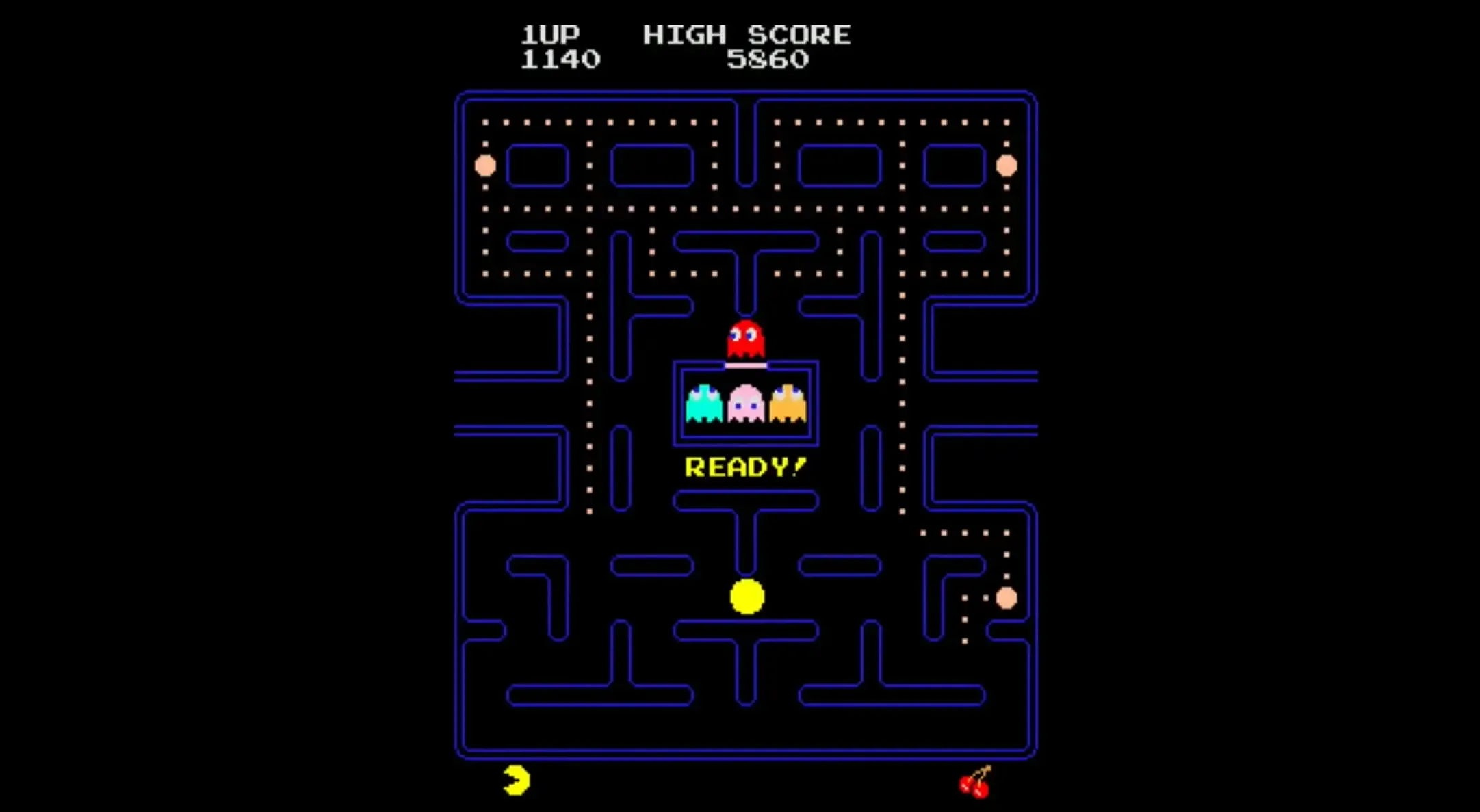
A little later, we can mention Pac-Man (1980), often considered a major turning point. Each of the four ghosts (Blinky, Pinky, Inky, and Clyde) had its own programmed behavior :
- Blinky directly pursued Pac-Man
- Pinky tried to ambush Pac-Man by heading to where he was going
- Inky had a more complex behavior based on the position of both Pac-Man AND Blinky
- Clyde alternated between pursuit and flight
Before Pac-Man, we can mention :
- Space Invaders (1978) : aliens with a predictable movement pattern
- Pursuit (1977) on Atari 2600 : one of the first games where the computer actively "hunted" the player
Our little Bots
From rigid scripts to adaptive AI
The major milestones of artificial intelligence in video games
Over the decades, certain evolutions marked decisive turning points in game AI design, and it’s truly interesting to look at them to understand the process. Here is how our dear bots were shaped, based on players and their habits :-
🔹 Rigid Scripts
Originally, bots were simply linear scripts : "go to a point, shoot, die". No link to the environment. The bot executes without thinking.
Example : enemies in Doom or Wolfenstein 3D. -
🔹 Appearance of Conditions
With the advent of more sophisticated engines, the famousif... then...were introduced :
if "player_visible" then "shoot" ;
It was still very limited, but it allowed a first form of reactivity. -
🔹 Navigation Meshes (NavMesh)
Rather than following predefined paths, bots use an automatically generated navigation mesh, allowing them to adapt to any map by recognizing walkable surfaces and obstacles.
Key games : Half-Life 2, Left 4 Dead, CS:GO -
🔹 Finite State Machines (FSM)
Developers adopt FSMs, allowing the bot to switch from one state to another according to events :
- Patrol
- Alert
- Attack
- Flee
-
🔹 Decision Trees and Behavior Trees
More readable and modular, Decision Trees then Behavior Trees take over. The AI evaluates a situation and chooses an action based on priority :
- Do I have a target ?
- Do I have enough ammo ?
- Am I injured ?
-
🔹 Influence Maps
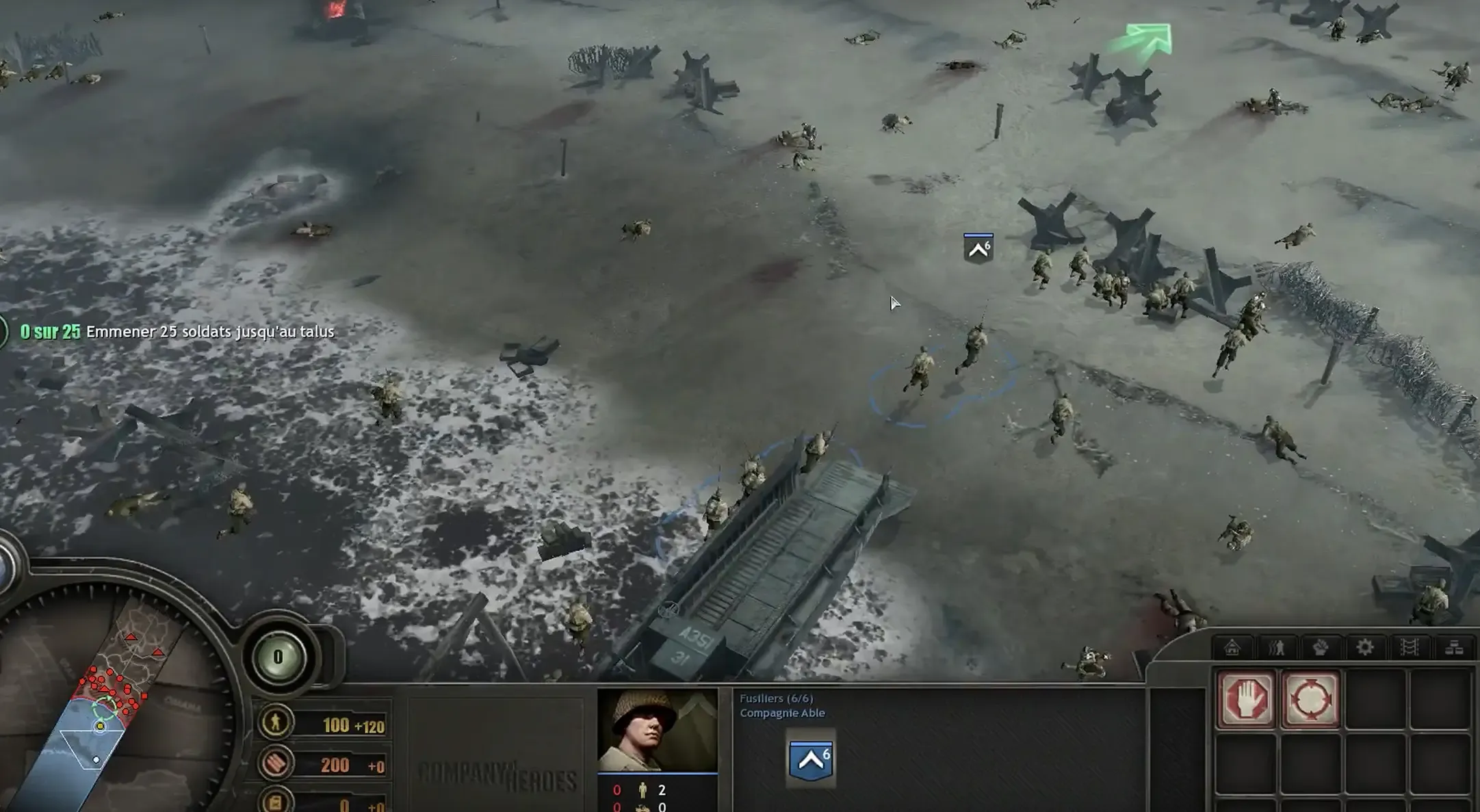
Used in RTS or simulations, these "influence maps" allow AIs to cooperate on a large scale. They "feel" where the enemy is strong/weak and adapt their strategy accordingly.
Games : Supreme Commander, Company of Heroes -
🔹 AI Directors
A revolutionary concept introduced by Valve in Left 4 Dead : a system that regulates the game's pacing based on your stress level. It decides when to launch a horde, when to offer a respite, by analyzing your health, progression speed, etc. -
🔹 Planners (GOAP)
With games like F.E.A.R. or Killzone, AI starts to plan : it chooses a sequence of actions to reach a goal, like a mini tactical brain.
GOAP : Goal-Oriented Action Planning -
🔹 Perception Systems
Some modern engines (like Unreal Engine 4/5) integrate perception systems (visual, auditory) : a bot no longer acts "omniscient", but based on what it sees or hears, according to its field of view, virtual hearing…
Example : in The Last of Us, an enemy can lose your trail if they haven't seen you for a while. -
🔹 Machine Learning and NLP
Today, AI sometimes embeds trained models, as in Alien : Isolation (hierarchical AI with limited learning), or generative vocal AIs (like in The Finals). We also talk about bots driven by language models, like with Nvidia ACE or Convai.
Bots and narration : the soul in the machine
When NPCs come to life : the illusion of living narration
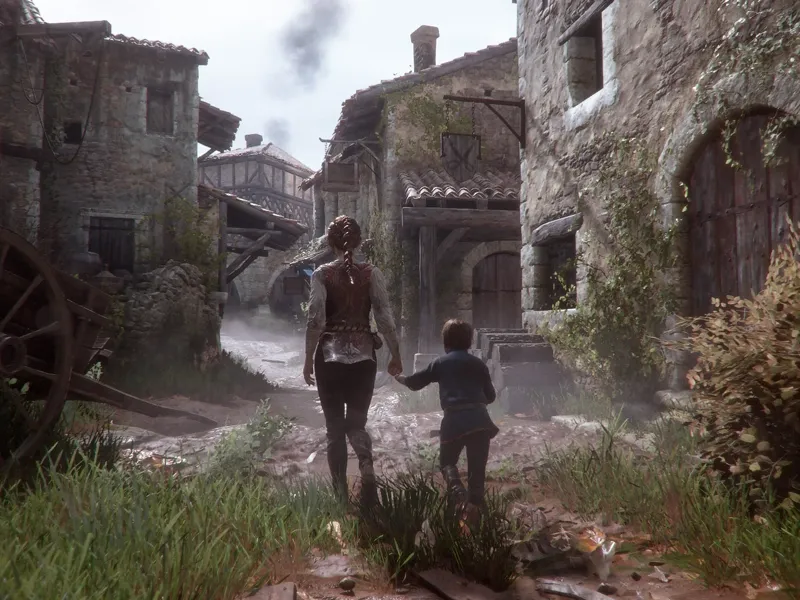
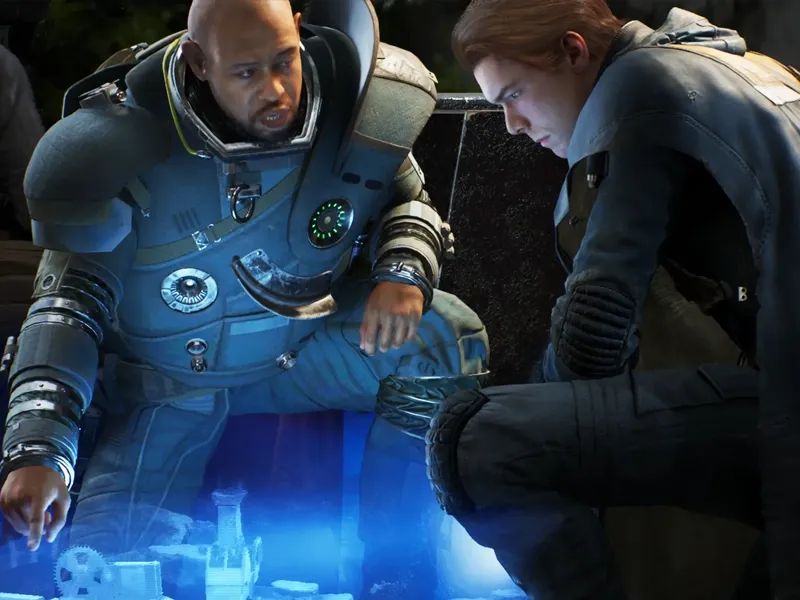
Unlike the first bots scripted to be opponents, others were quickly created to become allies and/or narrators. Indeed, AIs also tell stories. In Left 4 Dead, your bot teammates heal you, talk to you, scream at your death. In Red Dead Redemption 2, NPCs have routines, a nearly credible life. But the prize perhaps goes to Shadow of Mordor and its Nemesis System. Orcs remember you, return, and rank up. You create a story with them. The AI becomes a dramaturg.
When bots become our teammates (or our punching bags)
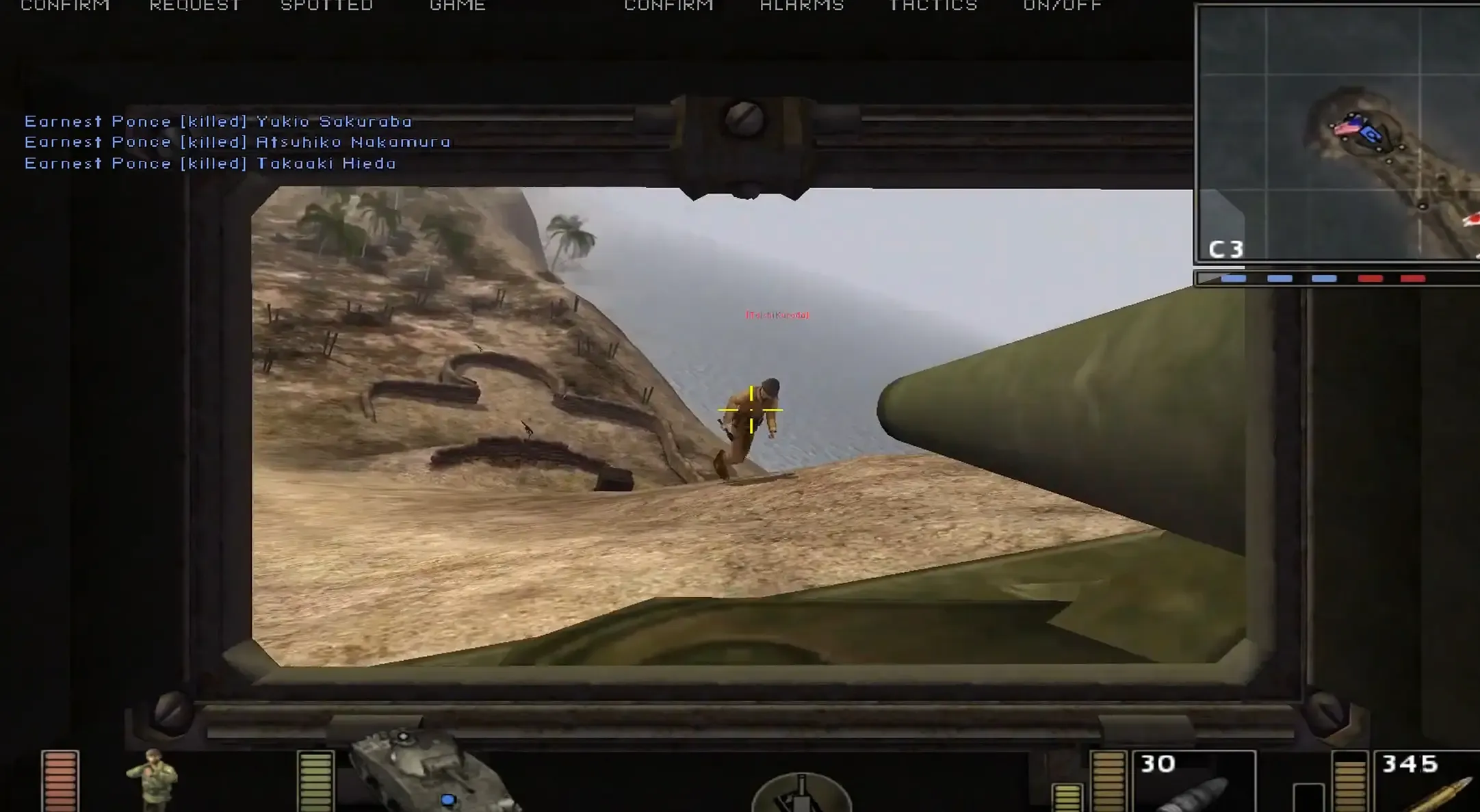
The arrival of Unreal Tournament (1999) and Counter-Strike 1.6 changed everything. Some bots were no longer just enemies : they became sparring partners. PodBot, ZBot, RealBot, or JoeBot were cult extensions. We added them to our LAN servers. They didn't crash too much, pretended to follow strategies ("Rush B, cyka blyat !"), and sometimes even planted the bomb. But their limits were visible : bots that camped too much, got stuck on a crate, or stayed in a loop on a footstep sound. In Battlefield 1942, bots could fly planes... or dive straight into a cliff, set to "involuntary kamikaze" mode. And yet, these mistakes made the battles incredibly funny.
We can notably mention :
- Reversing dragons in Skyrim
- NPCs in Assassin's Creed falling into dialogue loops
- The Alien in Alien : Isolation tracking you via a semi-dynamic AI
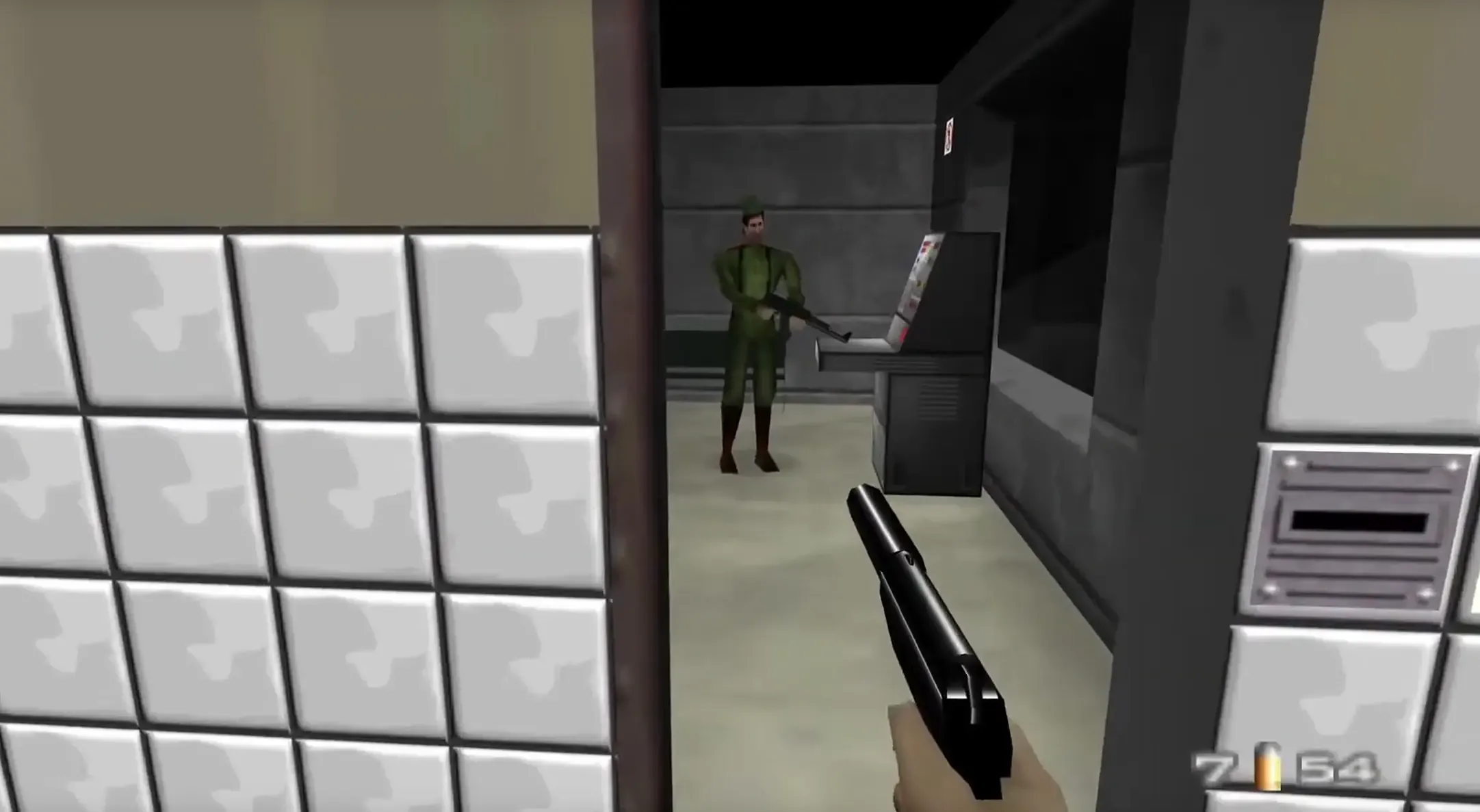
- GoldenEye bots on N64, crouching repeatedly under a door
And yet, each of these moments created an unplanned narrative. The player remembers these absurdities. They share them, film them, and turn them into memories.
When AI bluffs : emergent behavior and learning
When behavior surprises : the illusion of a conscious AI
Some games crossed a line. The AI was no longer there to feign intelligence : it learned, or gave the illusion. In F.E.A.R. (2005), enemies use the environment, radio in your position, and flank you. It’s a staging effect, but it works. The illusion is brilliant. In Halo, Grunts flee if their leader dies. In The Last of Us, humans communicate and call for backup. And in Alien : Isolation, a double-AI system : a "director" AI knows where you are, but a "xenomorph" AI learns as it goes. The player lives a hunt where the danger becomes plausible.
And tomorrow ? Toward creative and organic bots
Tomorrow : intelligences that improvise and feel ?
With models like ChatGPT, bots could soon answer by voice, improvise quests, tell a joke, and remember you. In The Finals (2023), AI is already used to animate commentators in real-time. Nvidia ACE is preparing conversational NPCs. You walk into a shop in an RPG and... you talk. The AI manages mood, desire, tone. But where is the limit ? Some studios are already limiting the use of "too creative" AI. Because a bot that decides is also a bot we no longer control.
Conclusion : we saw you glitch, we saw you shine
From comic failure to invisible mastery : what bots teach us
From the bot that can't climb a ladder to the nemesis that reappears with a personal grudge, bots have changed. They evolve, becoming more present, more emotional, more realistic. But we will never forget the fails, the jokes, the moments where the machine got tangled up.
A small ranking of bots from "dumbest" to "smartest"...
- Doom Zombies (1993) – Shoot repeatedly without thinking. Pure "if player visible → shoot".
- GoldenEye 64 bots – Walk into walls. React 5 seconds too late.
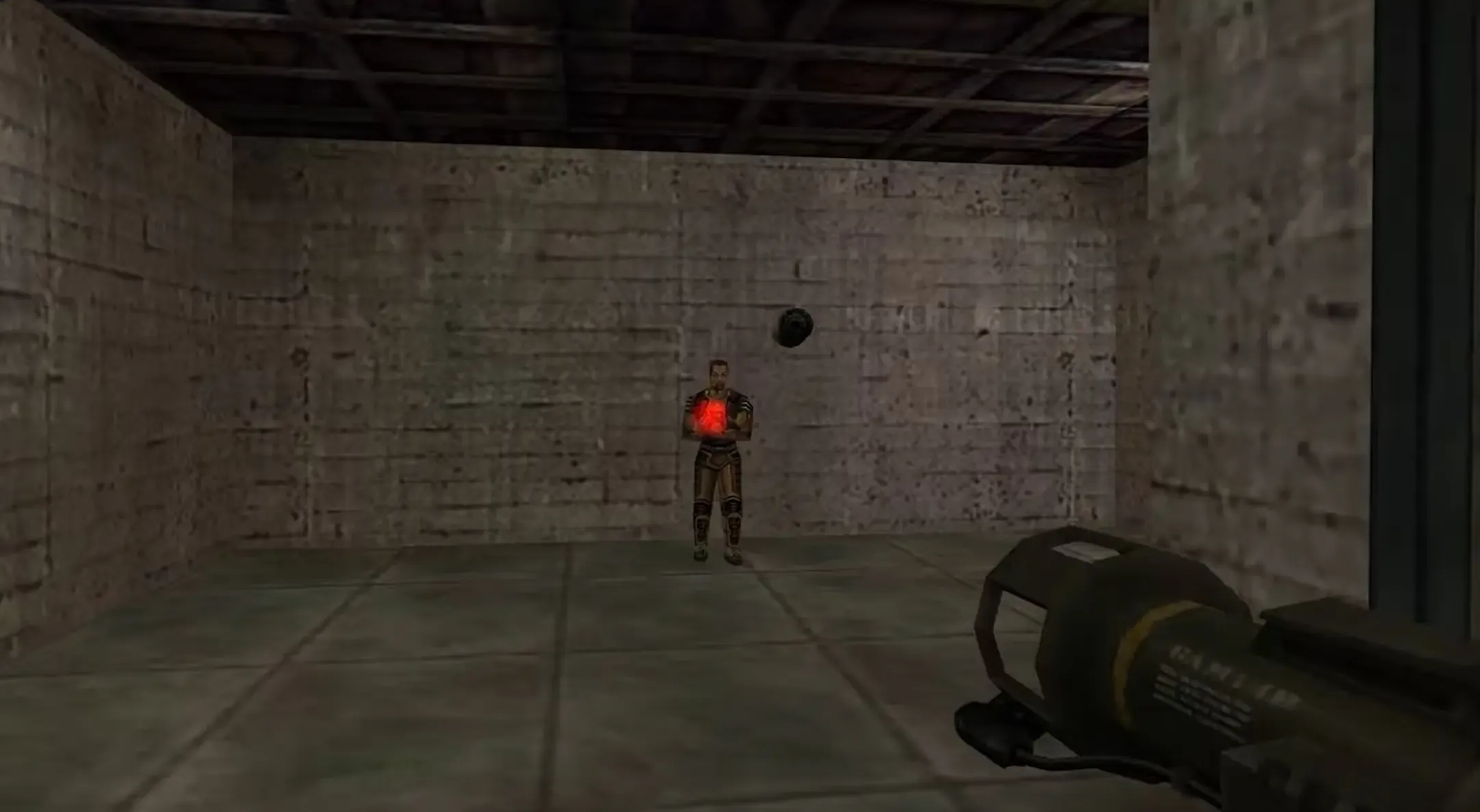
- PhineasBot (Half-Life) – Sometimes useful, sometimes stuck on a ladder for eternity.
- PodBot (CS 1.5) – Can headshot you, but might camp for 10 min as CT without moving.
- Battlefield 1942 Bots – Steal planes but forget to take off !
- Halo Grunts – Flee when the leader dies. Simple but well thought out.
- F.E.A.R. (2005) – Take cover, flank, communicate (scripted, but effective).
- Alien : Isolation AI – Partially learns your routines. Terrifying.
- Nemesis System (Shadow of Mordor) – Gives the illusion of memory and long-term adaptation.
- Generative AIs (NVIDIA ACE, Convai) – Speaks, answers, invents. Close to human improvisation.
And somewhere, perhaps that’s the essence of gaming AI : not to perfectly imitate the human, but to remind us how difficult it already is to imitate.
What would a highly advanced AI of 2025 think, looking back at the first models that, little bit of code by little bit of code, year after year, led to them ? You could think it would be a bit like an astronaut looking at the Wright brothers' first flight...
Game bots are their ancestors because they marry :
- Behavioral logic
- An attempt to emulate the human
- A role as an interface between algorithm and emotion
There is still a major philosophical difference : bots are predictable. They live in state grids and decision trees. Our current AIs are statistical, linguistic, probabilistic. They don't react to a player in 3D. They react to text, intention, and context.
But our old bots and they share an ambition : that of understanding and dialoguing with a human. And sometimes, surprising them.
Have you crossed paths with any Bots that did some crazy things In-Game ? Tell us your story !