Half-Life and Black Mesa : the FPS that changed everything, finally worthy of our screens in 2026
Some games were popular. Others redefined an entire era. Half-Life belongs to the second category. Released in 1998, in the middle of fierce competition from Doom, Quake and Unreal, each with their own distinct identity, Half-Life did something nobody really expected : it reached everyone. When I say everyone, I really mean it, not just the hardcore crowd, but genuinely everyone. In middle school hallways, in gaming cafés, at home with family. We were all talking about the same game, comparing our progress, debating the G-Man. It was THE THING at the end of the 90s. And twenty-five years later, Black Mesa, its community-built remake turned official Steam release, gave it a second life that very few games ever deserved that much.
Half-Life 1998 : why it was different from everything else
A FPS with a real story, real characters, and real surprises
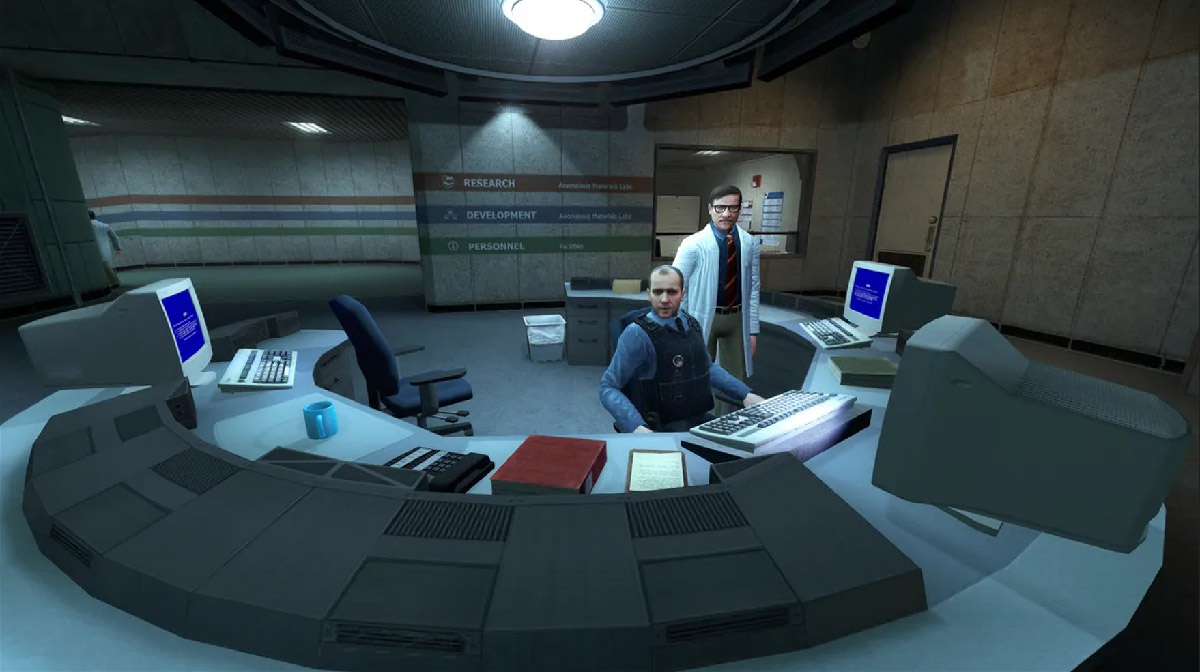
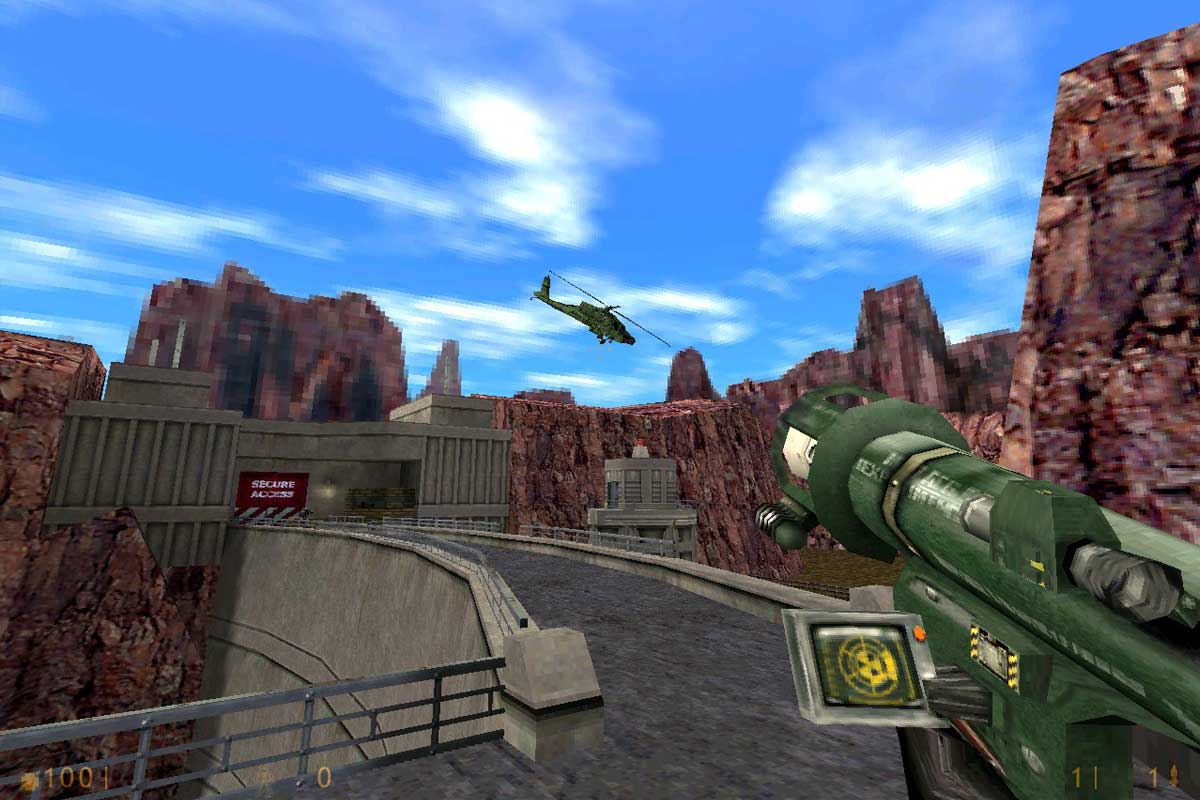
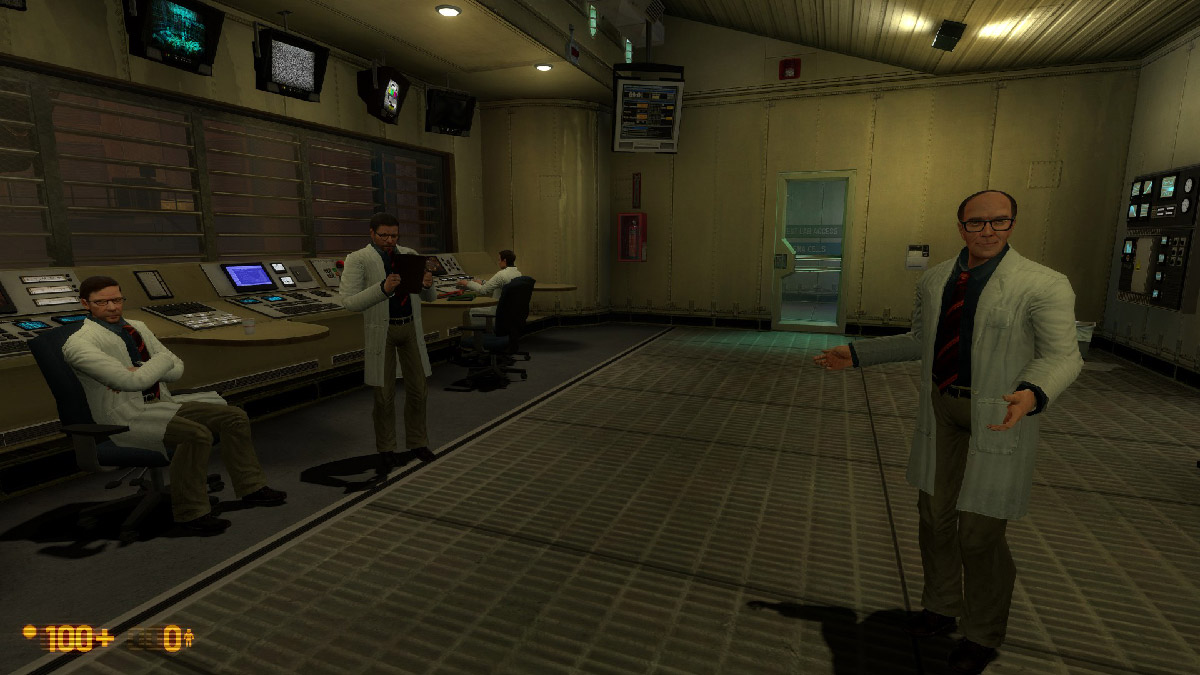
The big shift Half-Life brought to the late 90s FPS scene was this : it wasn't just a series of corridors to clear. There was a real story unfolding as you played, with no forced cutscenes pulling you out of the experience. You were Gordon Freeman, a researcher inside the underground Black Mesa facility, watching a catastrophe build from the inside out. Aliens flooding the base, a military cover-up grafting on top when you least expected it, Die Hard-style crawling through ventilation shafts, tanks and helicopters waiting outside. The game kept shifting register without ever losing the thread. That kind of narrative construction hadn't been seen in a FPS before, and you felt it immediately.
The cultural context helped too. The X-Files was running at full speed, and Half-Life drew from it clearly : the conspiracies, the military trying to bury a catastrophe, a mysterious man in a suit who knows everything and can never be caught. The G-Man. That character stayed with all of us from the very first run. He appears, watches, disappears, and keeps doing it throughout the entire game. You can never touch him, never catch him. He even shows up on Xen, the game's parallel dimension, which was genuinely mind-blowing at the time. You sensed he was part of something far larger than what you were seeing, pulling strings from somewhere beyond reach. Twenty-five years later, he remains one of the most mysterious characters in the entire history of video games.
💾 We used to rent out a LAN café for a whole evening, my brother, my dad, my uncle and I, just to spend four hours shooting each other on Counter-Strike (Militia, Assault, Aztec...) and Day of Defeat. On Deathmatch too, we'd gotten seriously good at bunny hopping, rocket jumping, claymore placement. Back before home internet was the norm, LAN sessions were just how you played together. An era everyone over thirty remembers, wherever they grew up in the world...
What Half-Life started
No Half-Life, no Counter-Strike, no Day of Defeat, no entire generation of mods
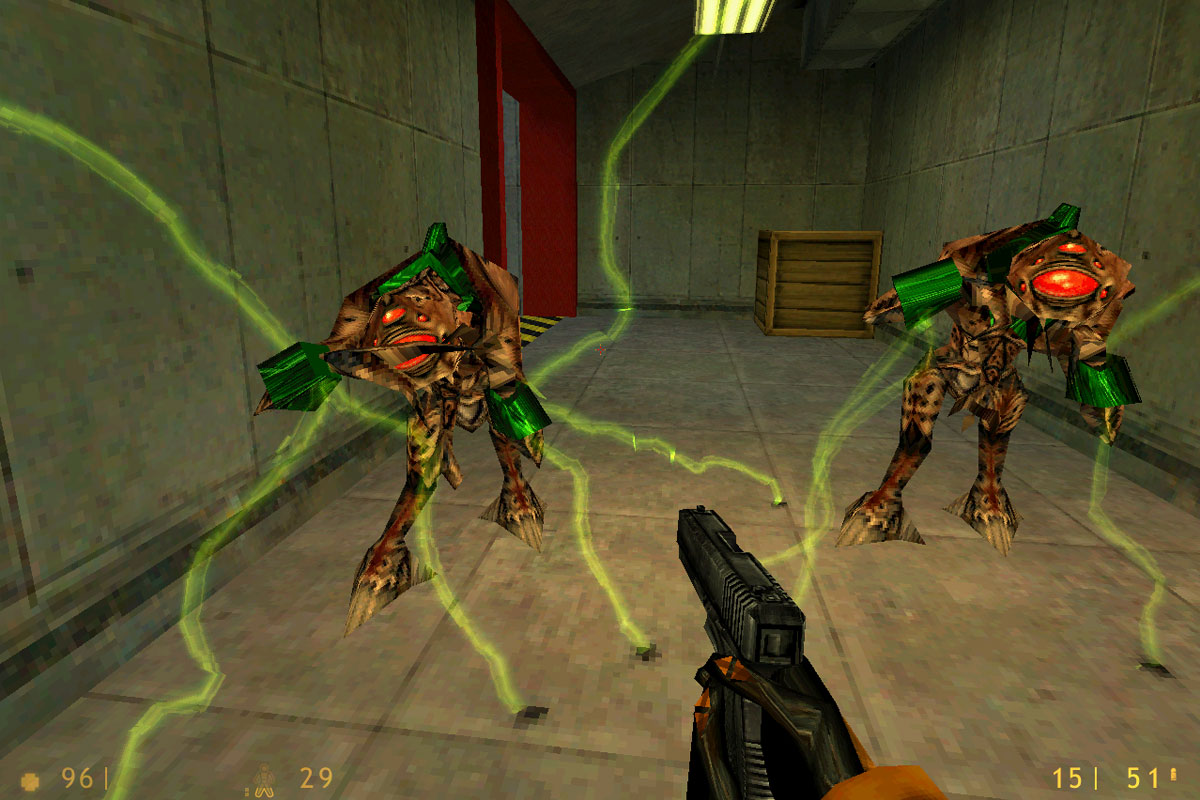
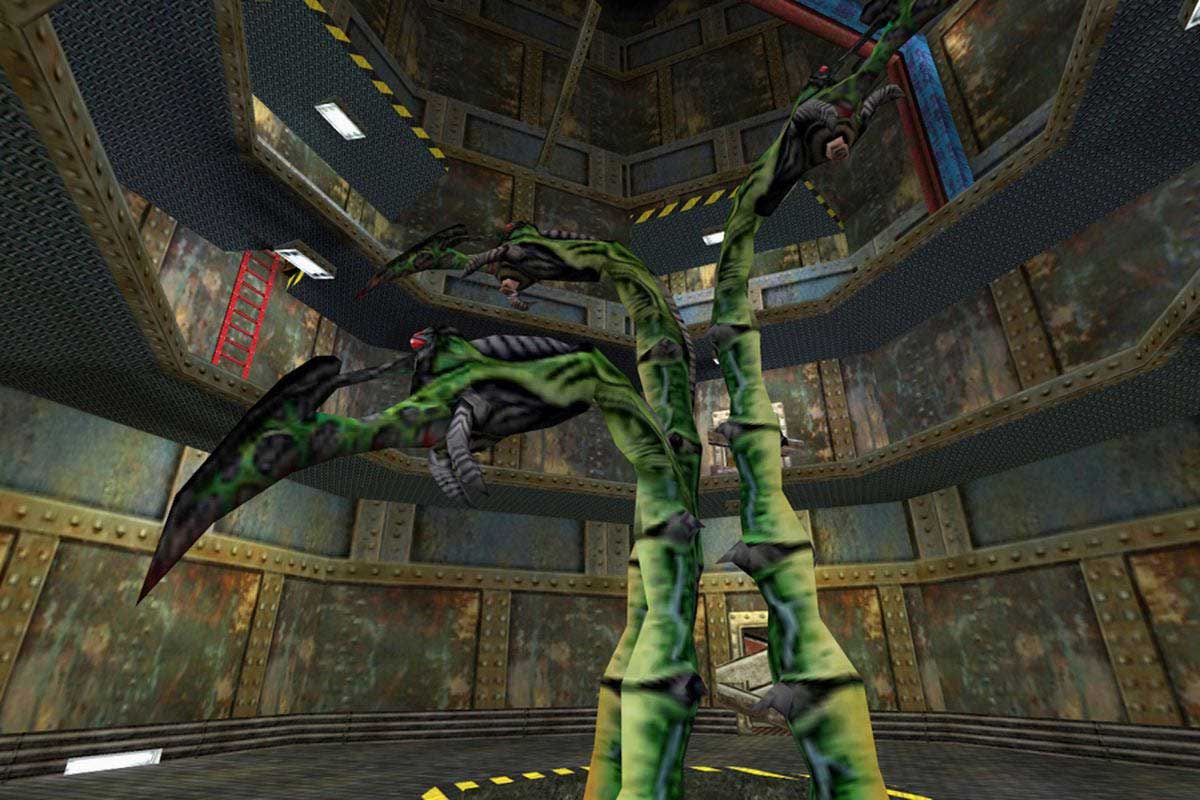
What's remarkable about Half-Life is that the game itself was only the starting point. The GoldSrc engine was open to modding, and the community ran with it in ways we'll probably never see again. Counter-Strike started as a Half-Life mod, built by two fans in their spare time. So did Day of Defeat. Sven Co-op, Team Fortress, Half-Life Deathmatch. A wave of community projects, each with their own dedicated playerbase, their own tournaments, their own legends. Without Half-Life, the entire multiplayer FPS landscape of the 2000s simply would not have existed in that form. It's a debt the industry can never fully repay.
And that's also what makes Half-Life genuinely unique in the history of the medium : it was a solo game at its core, one that we all played through in our own way, on our own timeline, before comparing notes and then jumping into its multiplayer mods together. We talked about our progress at school. We debated the G-Man. And on weekends, we met up at LAN cafés to shoot each other across its extensions. That red crowbar is legendary. On the same level as Age of Empires, on the same level as Zelda. A game that everyone has either played, watched, or at the very least heard about.
Black Mesa : the remake the community spent 16 years building
From fan mod to official Steam release
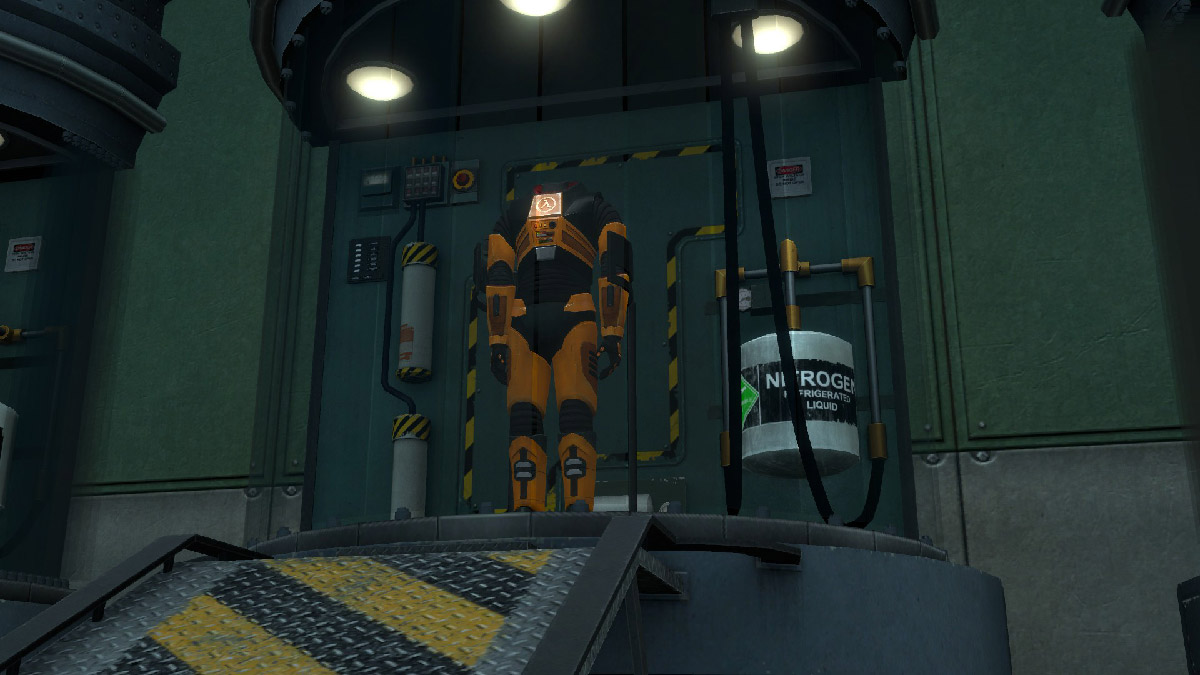
Black Mesa is the story of a fan team, Crowbar Collective, who decided in 2005 to rebuild Half-Life from scratch on the Source engine from Half-Life 2. What started as a community passion project became, sixteen years later, an officially sold game on Steam with Valve's full blessing. The result is available on Steam for $19.99.
The concept behind Black Mesa is straightforward and ambitious in equal measure : rebuild Half-Life level by level, using modern graphics and engine standards, without betraying a single moment of the original. No cuts to the story, no levels removed, no creative liberties that break continuity. Just Half-Life, exactly as we knew it, built as if it had been made in 2026.
🕹️ Worth knowing : Black Mesa was developed over sixteen years by a volunteer team before going on sale officially on Steam in 2020. The project received formal clearance from Valve, who allowed Crowbar Collective to use Half-Life's IP and assets. It's one of the only cases in gaming history where a studio officially greenlit a community remake of their own game.
What Black Mesa concretely delivers
4K, real physics, and a remarkable level of faithfulness
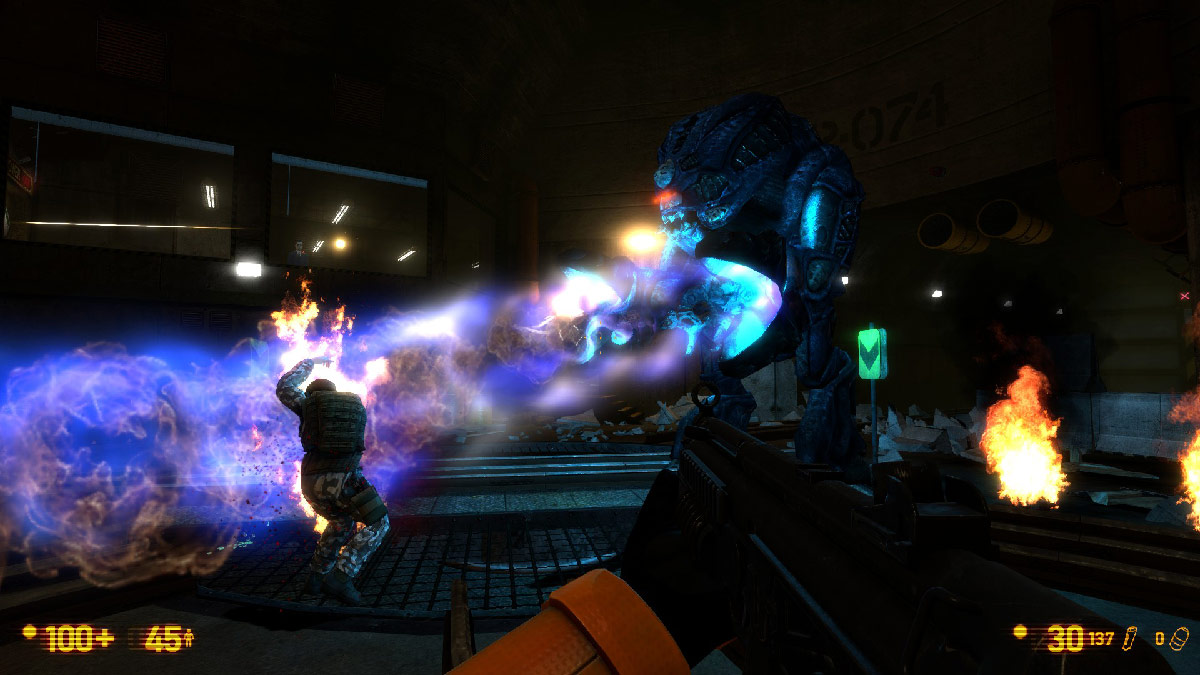
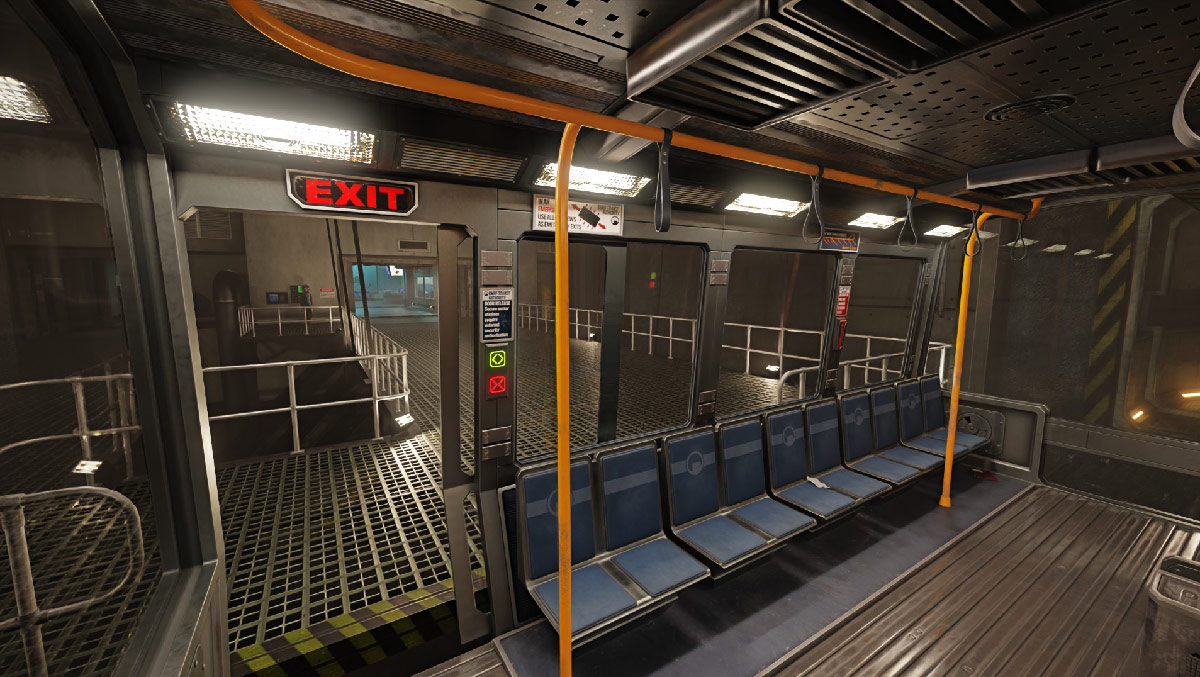
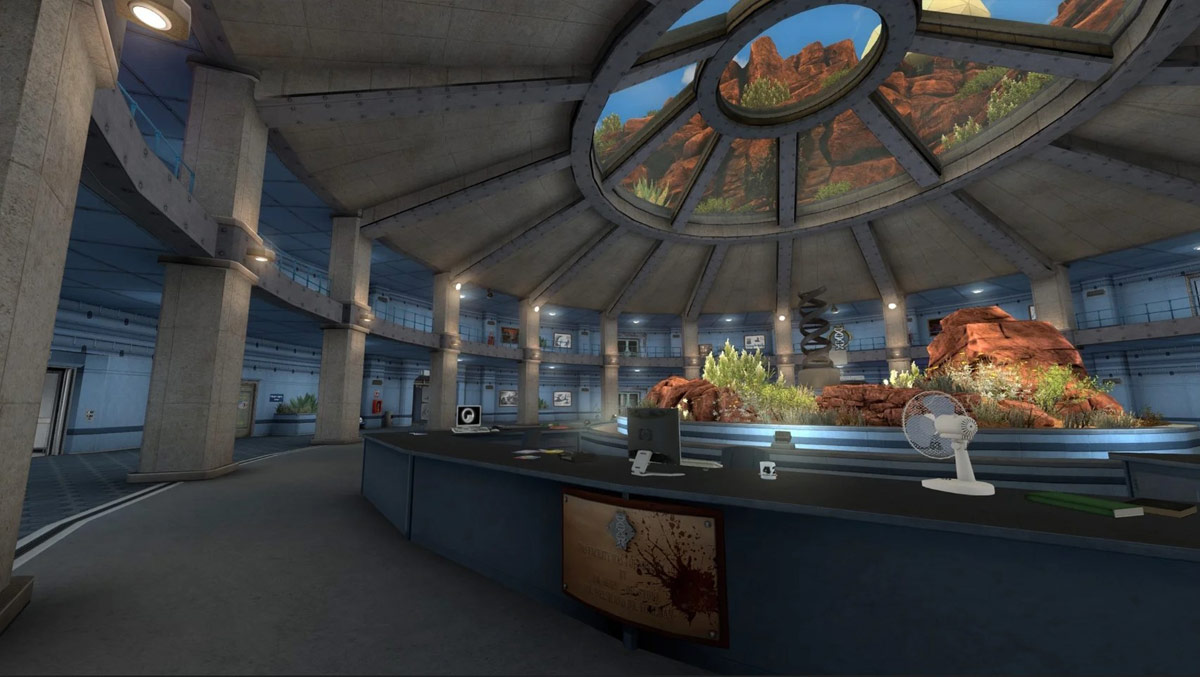
Moving from the GoldSrc engine to Source completely transforms the visual experience. The original ran at 640x480 or 800x600 in 4:3, with static lightmaps and 128x128 pixel textures. Black Mesa runs in native 4K, in 16:9, with Dynamic Shadow Mapping, Physically Based Rendering, and volumetric effects like God Rays pouring through ventilation shafts or radioactive mist filling the waste processing areas. The water, which was a simple transparent texture in the original, is now rendered with full real-time refraction and reflection. Community mods in 2026 even add experimental Ray Tracing to Black Mesa, making the metallic surfaces of the facility look absolutely incredible.
On the gameplay side, a few subtle adjustments worth noting. Weapon recoil is more pronounced in Black Mesa, making the MP5 harder to control at range. The Long Jump Module now triggers more intuitively with a double-tap of the jump key, where the original required a finicky "Crouch + Jump" timing that could frustrate newcomers. And thanks to the Source engine inherited from Half-Life 2, you can pick up and throw almost any object in the environment, adding a layer of interactivity the 1998 game never had.
What's genuinely remarkable though is the narrative and atmospheric faithfulness. Every level, every key moment, every G-Man appearance : it's all there, in the right place, carrying the same emotional weight as the original. I played Black Mesa through to the end, and every single time that suited figure appeared behind a window or at the end of a corridor, it landed exactly the same way. That mix of fascination and unease. You never know exactly what he wants, or why he keeps watching.
The G-Man remains one of the most mysterious characters in the entire history of video games. You can never touch him, never catch him. He knows everything, he's everywhere, and you find him on Xen too. Twenty-five years later, nobody has the real answers.
Xen, Blue Shift, Opposing Force : what's not in the base game
The section I haven't played yet, and can't wait for
An important note for anyone new to Black Mesa : the original Half-Life expansions, Opposing Force and Blue Shift, are not included in the base game. Crowbar Collective focused exclusively on Gordon Freeman's story. For those expansions, you'll need to look at community projects on the Steam Workshop. Black Mesa : Blue Shift, developed by HECU Collective, is now nearly complete and matches the quality of the base game. For Opposing Force, the Operation : Black Mesa project by Tripmine Collective is still in development, but absolutely worth keeping an eye on.
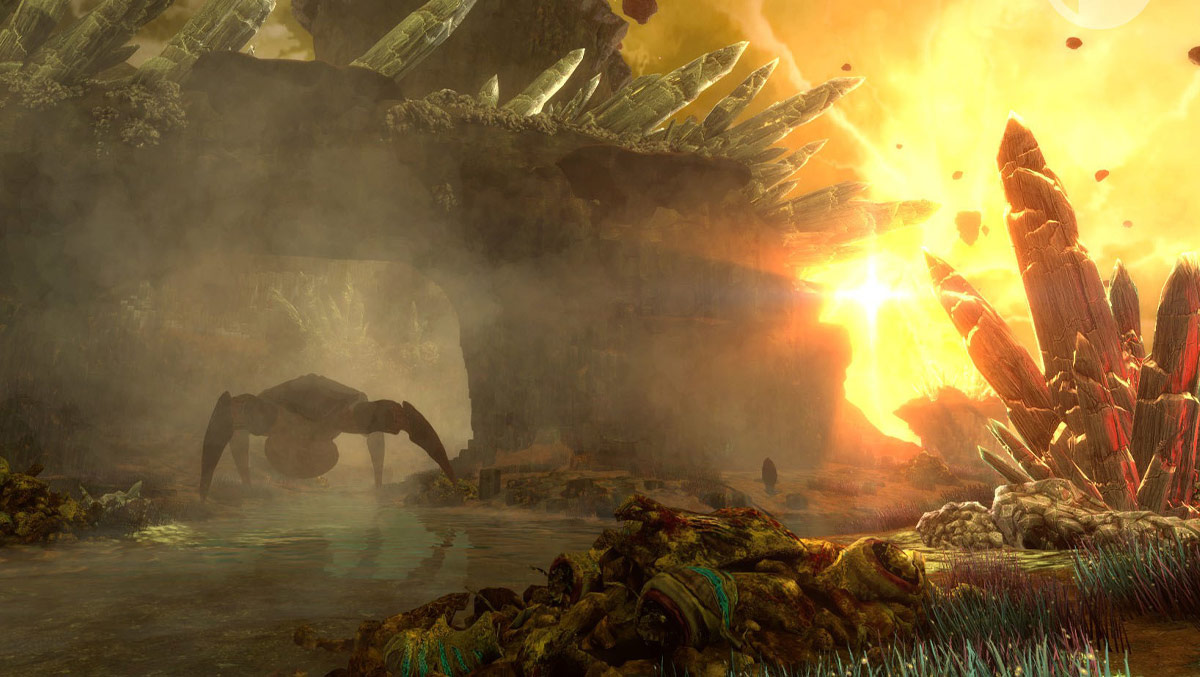
And then there's Xen. The game's parallel dimension, entirely reimagined by Crowbar Collective, which took years to develop and shipped separately. In the original, Xen was frequently criticized for feeling weaker than the rest of the game. In Black Mesa, it's the opposite : it's one of the most visually stunning and carefully crafted sections of the entire remake. I haven't played it yet. That's a deliberate choice, I kept it as an unknown to explore when the moment feels right. But I can't wait.
⚠️ If you're buying Black Mesa for the first time, Xen has been included in the base game since 2020. There's nothing to buy separately. The $19.99 price gives you the full game, Xen included.
Official Black Mesa trailer
Half-Life 25th Anniversary : the documentary you shouldn't miss
Valve released an hour-long documentary for Half-Life's 25th anniversary, featuring the original developers talking through the making of the game. You learn dozens of behind-the-scenes stories, the creative decisions that changed everything, and the moments where the project could have easily never made it out the door. I enjoyed every minute of it. If you missed it, it's the perfect companion to a playthrough of Black Mesa.
Verdict and price in 2026 : should you buy it ?
The answer is yes, clearly. Black Mesa is a full GO. It's outstanding work, remarkably faithful to the original, with everything smoothed out, rethought visually, and brought up to the standard our screens deserve in 2026. The original will always be a landmark in gaming history for what it gave an entire generation. Black Mesa honors it with exactly the care it deserved. At $19.99, Xen included, there's really not much left to debate.
💡 Where to buy :
Black Mesa on Steam : $19.99
Also worth watching :
Operation : Black Mesa (Opposing Force remake, still in development)
Black Mesa : Blue Shift (community mod, nearly complete, free)
FAQ
Is Black Mesa faithful to the original Half-Life ?
Yes, remarkably so. Every level, every key moment, every G-Man appearance is present and true to the spirit of the original. The gameplay adjustments are subtle and don't affect the overall experience. The standout addition in Black Mesa is the Xen section, completely reimagined and significantly better than its 1998 counterpart.
Do you need to have played the original Half-Life to appreciate Black Mesa ?
Not at all. Black Mesa works perfectly as a standalone experience for new players. For veterans of the original, it's a rediscovery with the visual comfort of 2026. For newcomers, it's the best possible way to experience one of the most important FPS games ever made.
Are the Blue Shift and Opposing Force expansions included in Black Mesa ?
No. Black Mesa covers Gordon Freeman's story only. For the expansions, look to Black Mesa : Blue Shift (community mod, nearly complete, free on Steam Workshop) and Operation : Black Mesa (Opposing Force remake, still in development by Tripmine Collective).
Did you play the original back in the day ? What's your strongest memory of Half-Life ? Drop it in the comments below.
Find all our verdicts on PC remakes and remasters in our complete 2026 PC remakes guide.
💡 Join the community!
Want to talk Half-Life, Black Mesa, Steam deals, or everything retro and modern gaming ? Come find us on the Little Big Campus Discord 👾