Pharaoh : A New Era, the city-builder that hooked two generations
1999. I'm around 16, and a game has just landed on my PC. Within a few hours, it swallows me whole. Pharaoh isn't just another city-builder : it's a full dive into ancient Egypt, its dynasties, its unpredictable gods, its Nile floods, and the enemy armies that storm your map when you least expect them. Hours upon hours of building, managing, surviving, starting over. What really stayed with me was that my dad played it too. I can still hear him talking about the Pharaoh who was "not happy" and threatening to raze his settlement. He was having just as much fun as I was. This game had that rare quality : it connected across generations. Twenty-five years later, Pharaoh : A New Era arrived. And I had one simple question : did they manage to keep that magic alive ?
What Pharaoh : A New Era actually is
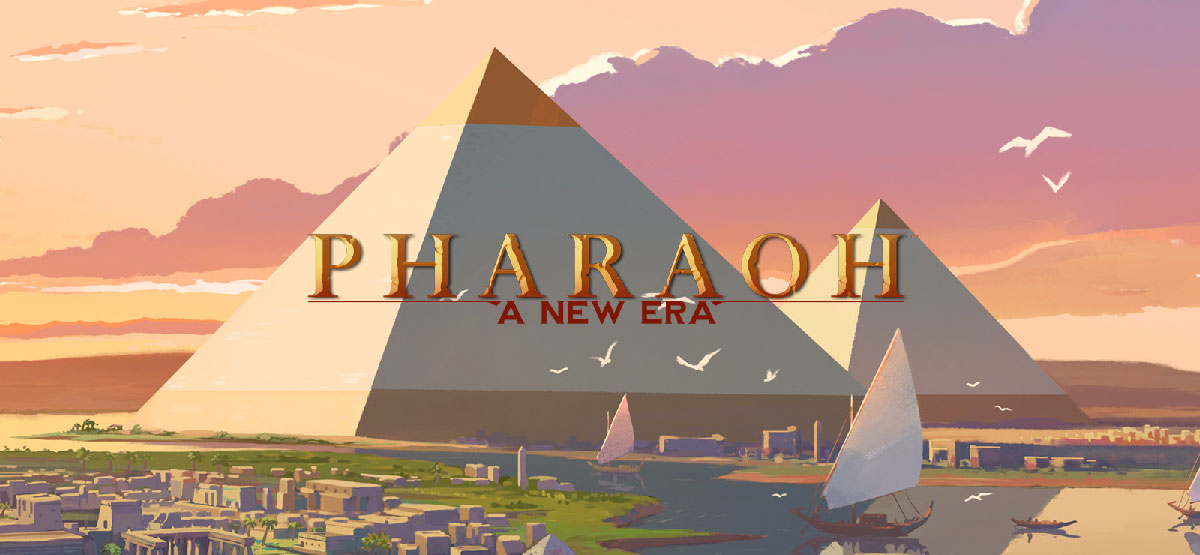
Pharaoh : A New Era is a full remake of the 1999 strategy and city management game originally developed by Impressions Games and published by Sierra Entertainment. The rebuild was handled by French studio Triskell Interactive, with Dotemu as publisher. It launched in February 2023 after several years of development followed closely by the original game's fan community. It is available on PC via Steam and GOG.
The core gameplay remains faithful to the original : you build and manage Egyptian cities across a campaign exceeding 100 hours, spanning multiple pharaonic dynasties. Housing your population, farming the Nile's fertile banks, managing river trade, navigating diplomacy with neighbouring cities, appeasing the gods... and defending against military threats. All while balancing resources that can unravel the moment a Nile flood arrives late.
💾 The original 1999 Pharaoh also had an expansion : Cleopatra : Queen of the Nile. My dad and I kept pushing through the campaigns long after finishing the base game. I still don't know which of us got further. He'd already pulled the same trick on me with Age of Empires I...
The visual leap : from 1024x768 to full widescreen
What the resolution upgrade actually changes
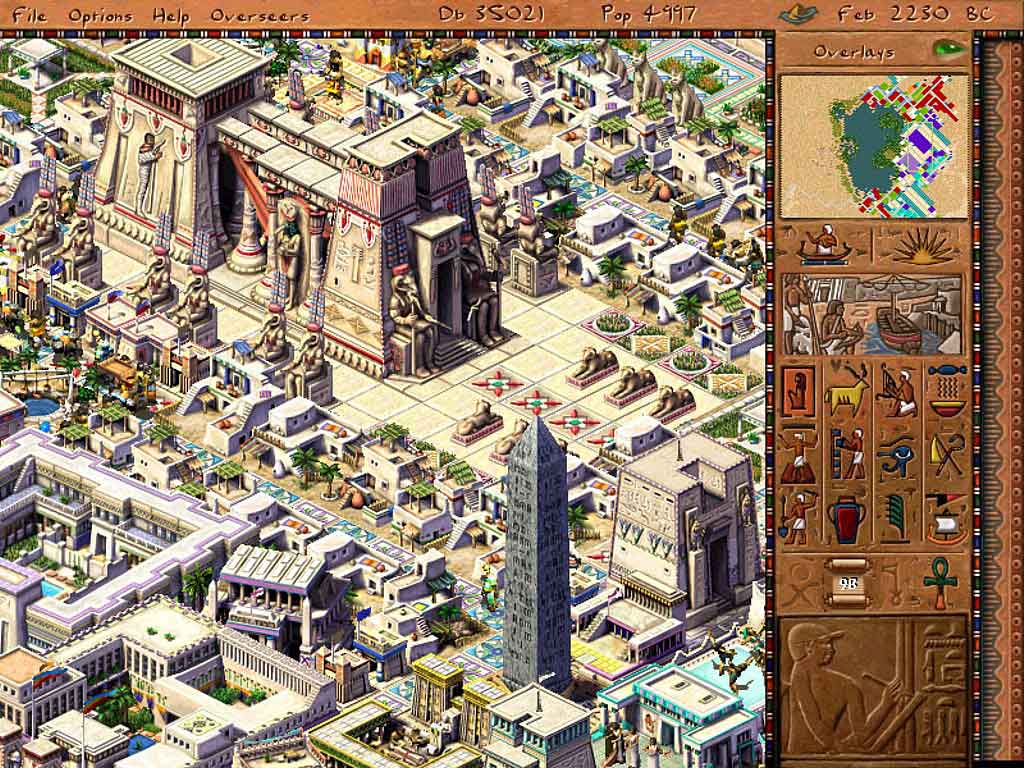
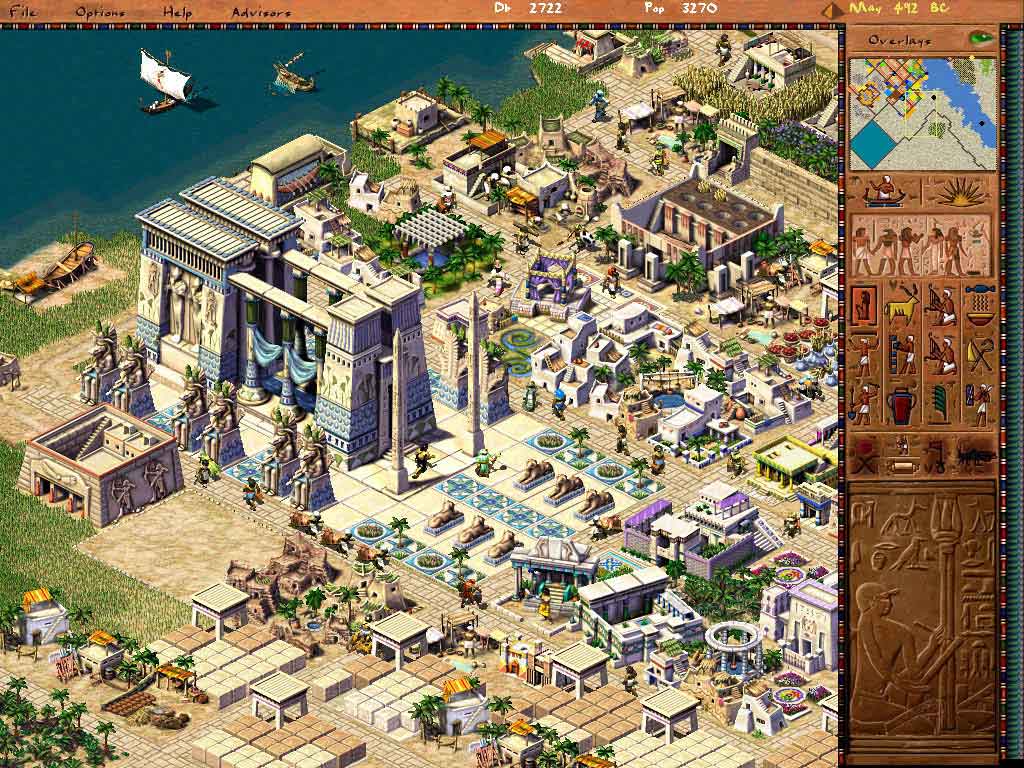
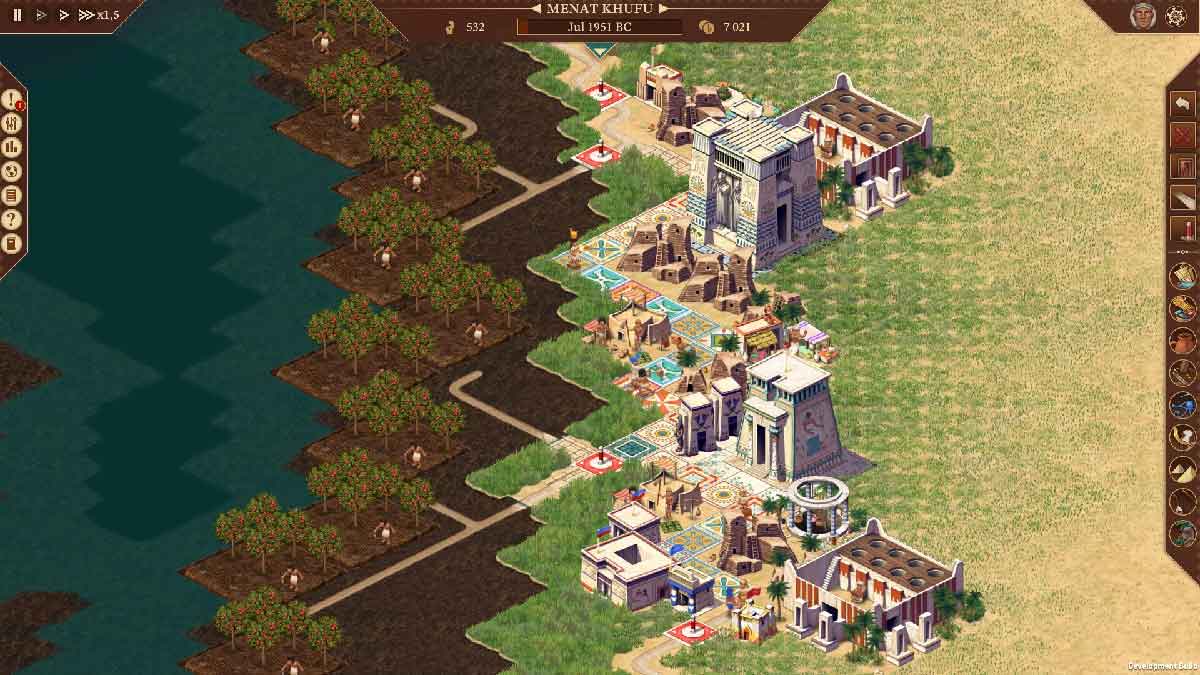
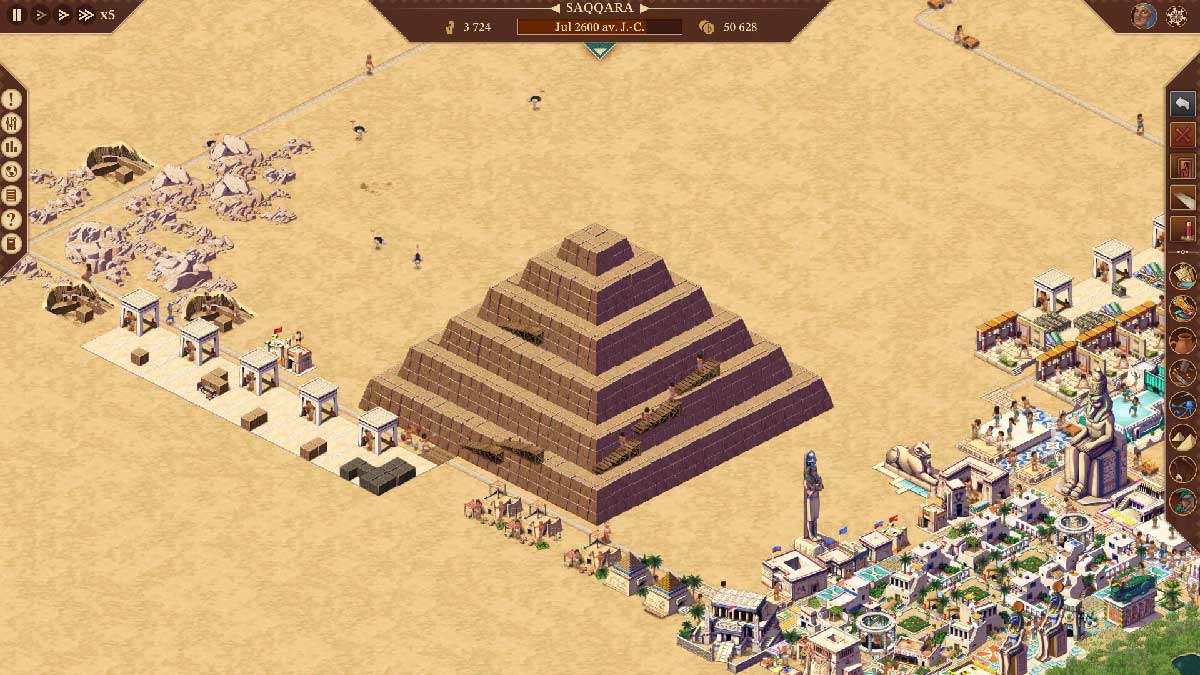
The original ran at 1024x768, locked in 4:3, with sprites that hadn't aged particularly well. Today, Pharaoh : A New Era runs in native widescreen 16:9 at any modern resolution. That's the first thing you feel when you boot it up : you see far more of the map, the interface has room to breathe, and the buildings carry a visual weight the original simply never had.
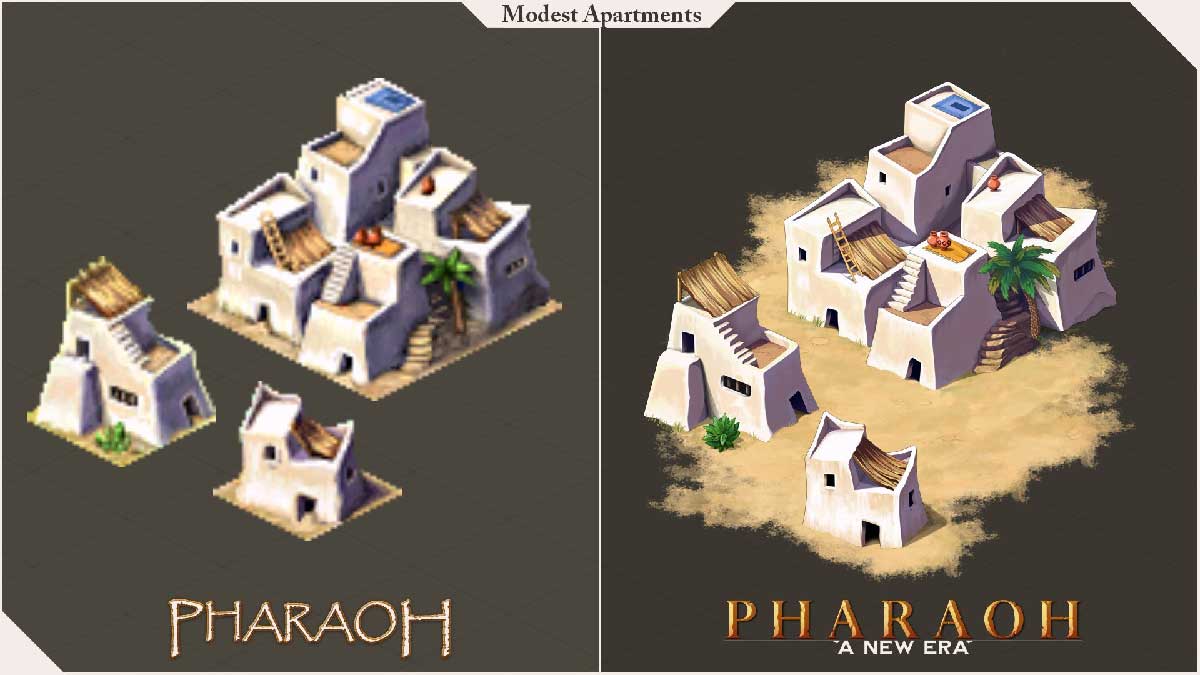
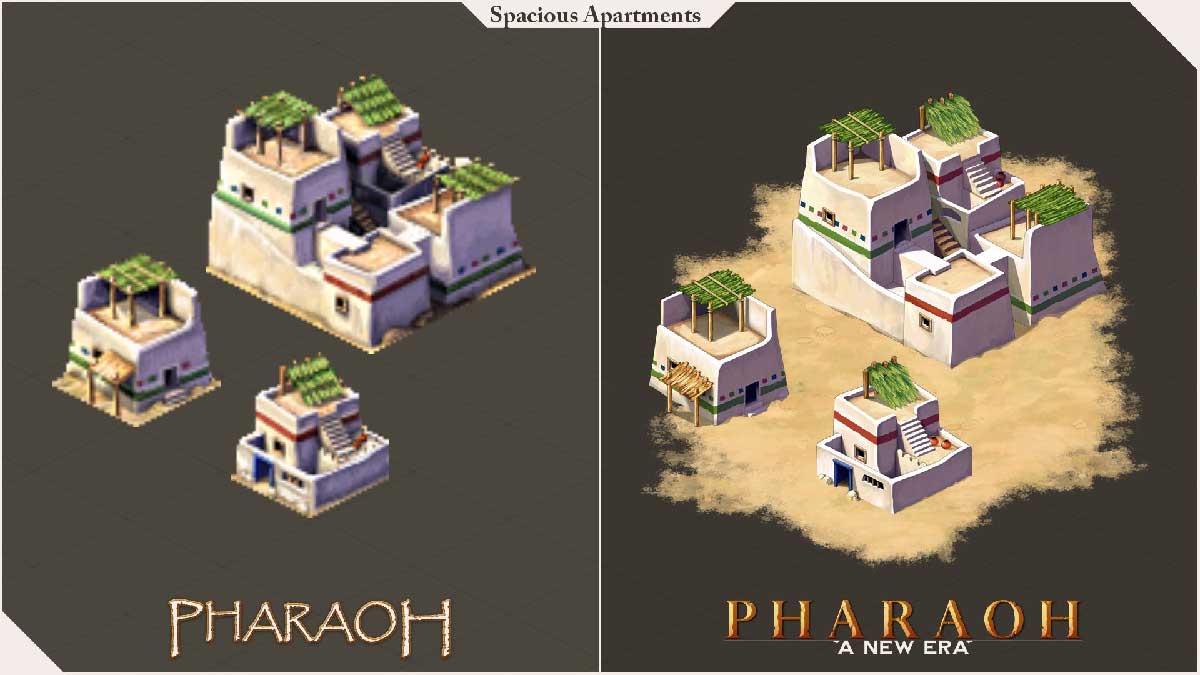
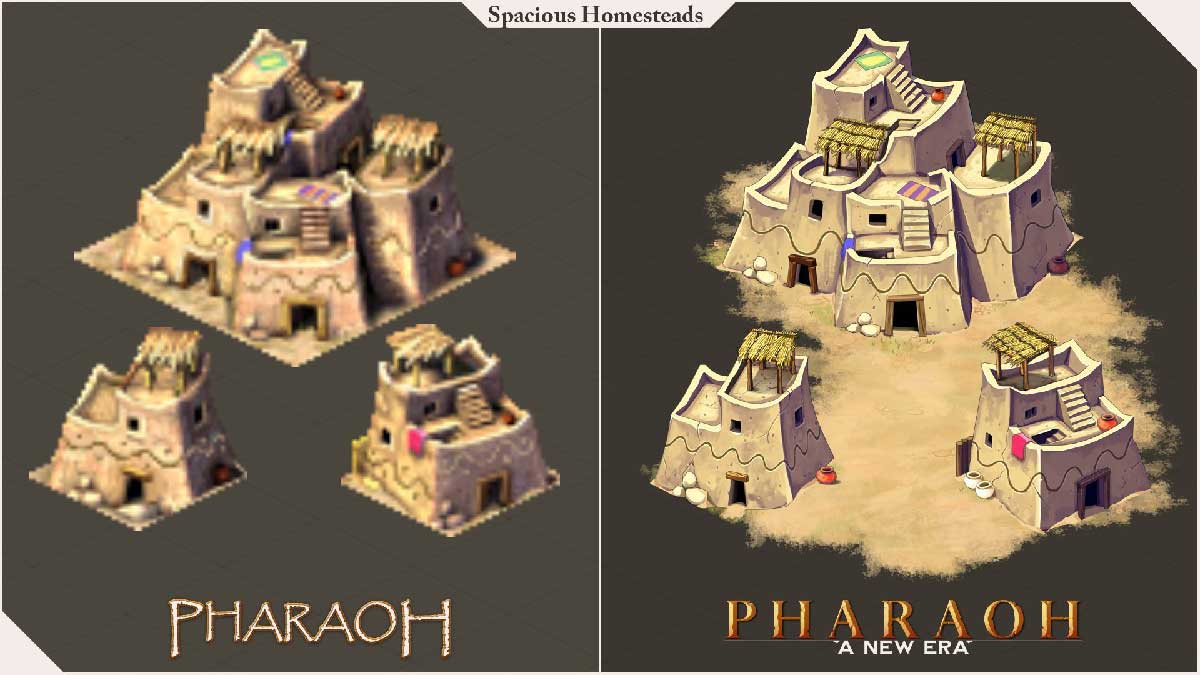
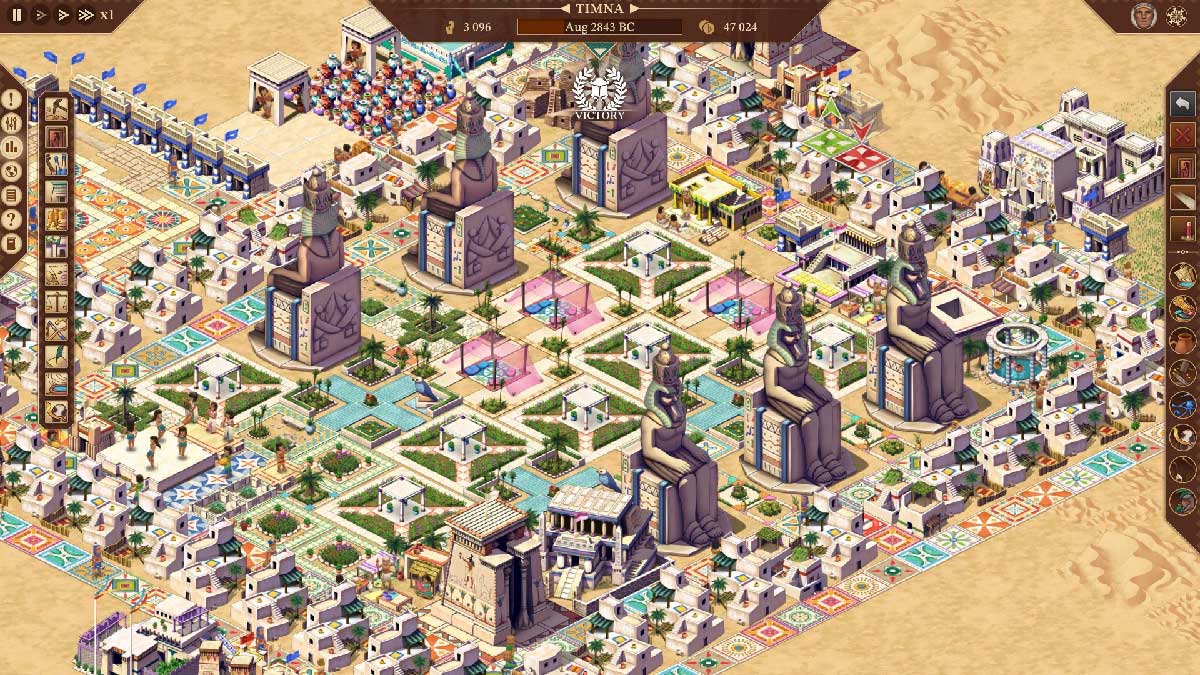
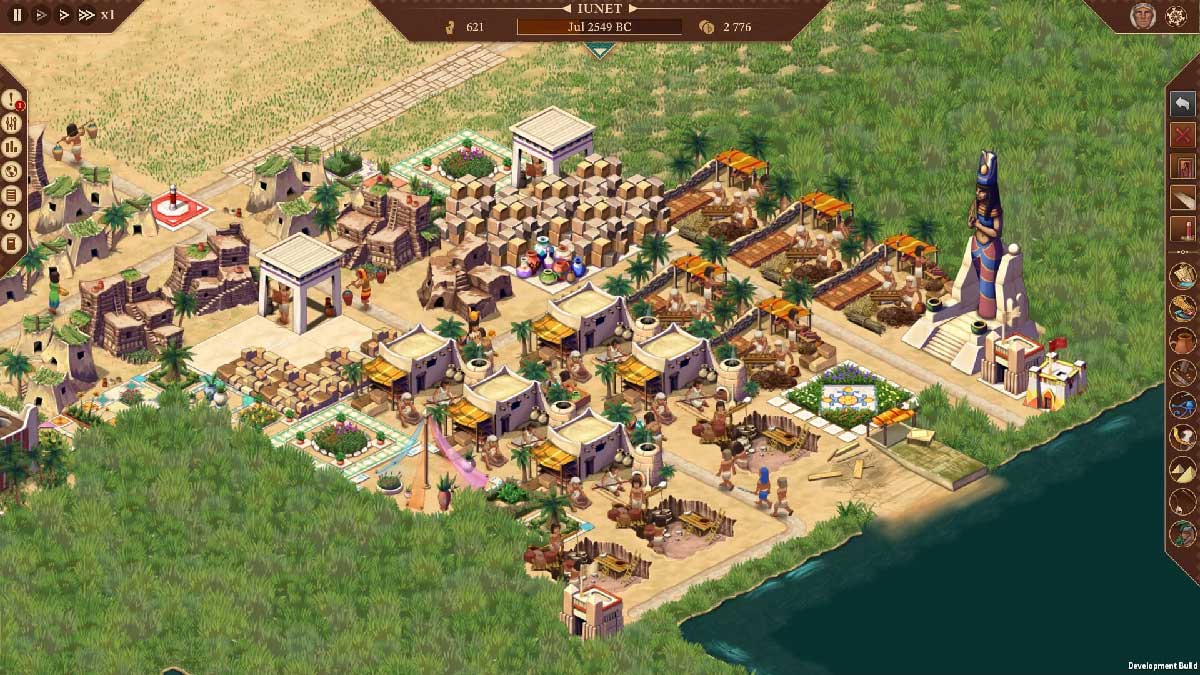
The visuals were rebuilt entirely from scratch. At first glance the smoothing is immediately noticeable : unit animations are fluid, building edges are crisp and clean. Some purists felt it stripped away the grain of the original. Personally, that impression fades very quickly, and you start to appreciate how carefully the work was done. The buildings are genuinely beautiful, with temples, warehouses and residential quarters all reworked with real attention to detail. A few elements changed shape, certain garden tiles for instance no longer look exactly like they did, but these are minor and have no real impact on the experience.
The detail that genuinely surprised me, and that I haven't seen mentioned anywhere else : cloud shadows moving across the map. As you play, districts shift between full sunlight and gentle shade depending on the clouds drifting overhead. It's subtle, but it gives the map a life you didn't expect. You feel time passing. It's a beautifully considered touch.
The management layer : still as deep and absorbing as ever
Resources, trade and gods : the fragile balance of an Egyptian city
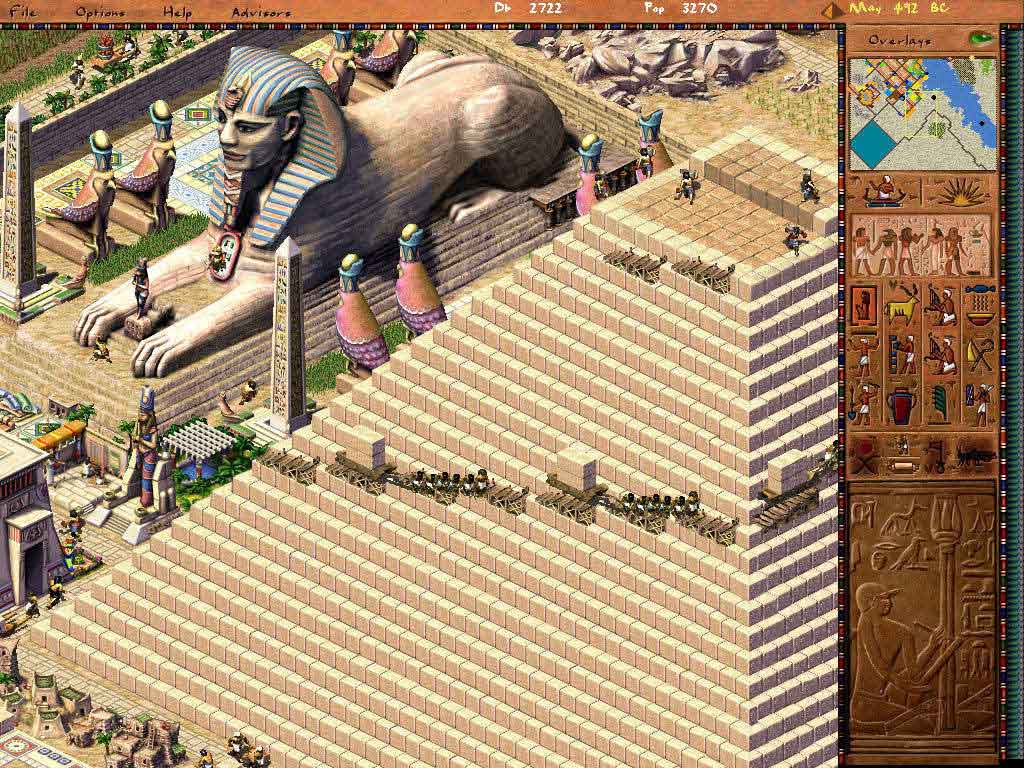
What always made Pharaoh stand out was the depth of its management systems. You can read your warehouse stocks at a glance, watching incoming and outgoing flows adjust in real time. One look tells you whether the city is producing enough, whether supply routes are working, whether traders are making it to the Nile docks. And when you want the full picture, the trade screen lays out every number : what you're buying, what you're selling, at what prices, with which partner cities. It's remarkably readable, and that clarity is a big part of why hours disappear without warning.
Then there are the gods. Keeping Osiris, Bastet, Ptah and Ra on side was never optional in the original, and it still isn't in A New Era. You need their temples, you need to organise festivals on the celebration plaza, and you need to show consistent respect. In return, they can bless you with more fertile floods, combat bonuses, or gifts that appear in your warehouses. Neglect them, and the consequences come fast : drought, buildings catching fire, battles turning against you. This divine tension adds a permanent undercurrent of pressure to the management, and it's been preserved completely intact in the remake.
Diplomatic ties with other Egyptian cities and with the Pharaoh himself matter just as much. Maintaining those relationships through regular trade and the occasional tribute is often what separates a city that holds its ground from one that finds itself fighting alone.
🕹️ Worth knowing : Pharaoh : A New Era offers more than 100 hours of campaign content, covering six distinct periods of ancient Egypt from the Old Kingdom through to the Ptolemaic era. Triskell Interactive rebuilt the game entirely from scratch using new code, rather than porting the original.
The combat system : the remake's most significant change
Before : enemy armies tearing through your city in real time
In the original, when an enemy army attacked, it played out right in front of you. You watched them land directly on the map, march through your streets, cut down civilians as they went, start fires, destroy buildings. It was on you to intercept them with your troops and police, to meet them in the middle of the city if you hadn't prepared, or to hold them at the walls if you had. Archers could fire from the ramparts. And sometimes, through luck, an enemy force would appear on a stretch of the Nile you hadn't settled yet : they couldn't do a thing, and turned around empty-handed. It was alive, unpredictable, and it created moments of real tension.
Now : combat resolved through a pop-up window
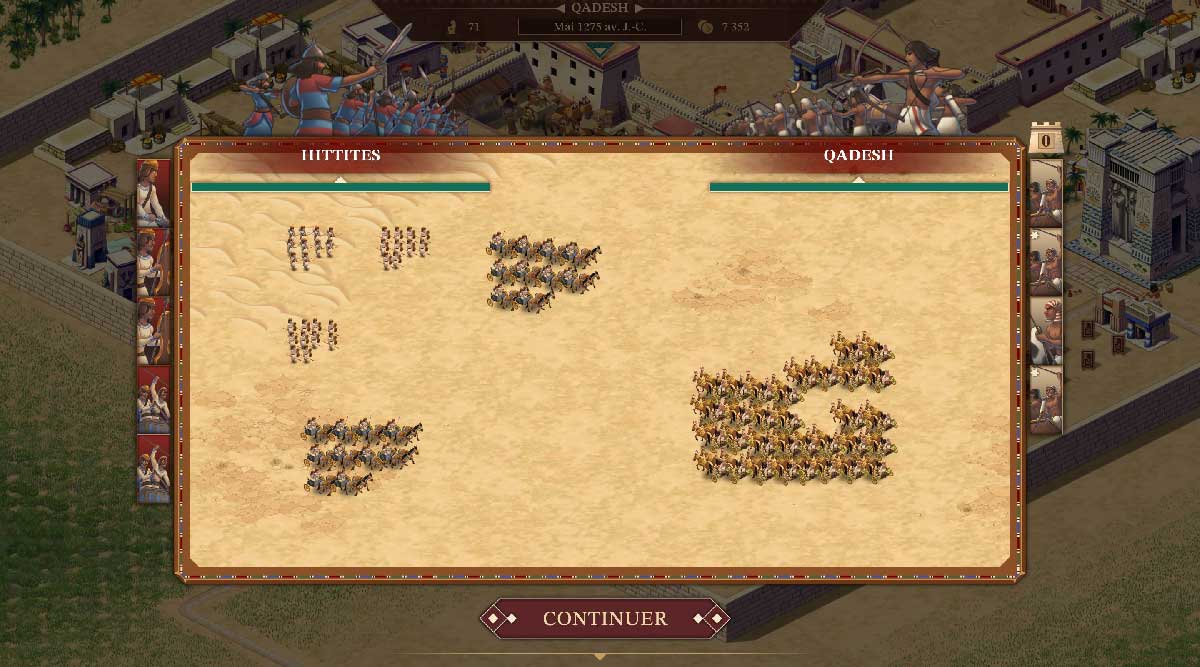
In A New Era, that system is completely gone. When an attack occurs, a pop-up window opens : you see your troops and the enemy's advancing toward each other, and the outcome is resolved immediately. No invaders on the map, no unit micromanagement, none of those moments where you're scrambling to save a burning district.
This is the one genuinely dark spot in the remake for me. That live combat was part of the game's identity. The developers explained on Discord that recreating the system from entirely new code proved too complex technically. It's an honest explanation, and it doesn't make the game bad. To compensate, they added defensive structures you can place throughout the city : buildings that protect specific districts during attacks. If you lose a battle, protected quarters take less damage than unfortified ones, depending on how badly the fight went. It's a different mechanic, less visceral, but one that pushes you to think about urban planning as a form of defence.
⚠️ If you loved the live combat of the original and it was one of your favourite moments, it's worth knowing upfront : that dimension is gone. It's not a dealbreaker, but it's the most significant change in the remake.
What the community won, and what it didn't
Developers who actually listened
I followed the development from the official Discord and watched the debates play out in real time. The issue that drew the loudest pushback at launch was the missing minimap. It's such a fundamental tool in this type of game that its absence made managing large cities genuinely frustrating. Players made the feedback heard clearly, and the developers eventually added it via a patch. That kind of responsive follow-through says a lot about the team's mindset.
Another notable change : you can no longer rotate the camera in 90-degree increments as in the original. Two features were added to compensate. A "flat" button that hides all buildings while keeping their footprint visible on the ground, which helps enormously when planning road layouts or rebuilding a dense district. And the ability to rotate buildings before placing them, which didn't exist in the original. These aren't perfect replacements, but they're practical solutions that end up feeling natural once you've played for a while.
The game launched in February 2023, and a new patch dropped just two weeks ago. Three years on, the team is still refining it. The community has never felt abandoned or ignored. That's genuinely rare, and it deserves to be said out loud.
The music : nostalgia versus modernity
The soundtrack was fully re-recorded. It's well done, it follows the spirit of the originals, with careful orchestral arrangements. But honestly, I've turned it off more than once and pulled up a YouTube playlist of the original tracks to play alongside the game. Those melodies settled into my head in 1999 and never left. I still listen to them sometimes while I work. That's no knock on the new compositions, they're genuinely good. It's just that some sounds are tied to memories specific enough that no remastered version can replace them inside your head. Nostalgia plays by its own rules.
The Pharaoh 1999 soundtrack is one of those you never fully forget. Probably because it soundtracked hundreds of hours of play that are permanently etched into memory.
Official trailer
Verdict and price in 2026 : should you buy it ?
The answer is yes. Pharaoh : A New Era is a full green light. The only real regret is the simulated combat system, but everything else is exactly where it should be : the management depth, the historical richness, the long and progressively demanding campaigns, the unpredictable gods, the river trade, the diplomacy. On top of all that, a modern resolution, clean 16:9 full screen, visuals rebuilt with genuine care, and a development team that kept working on their game three years after launch. In 2026, that's everything you should expect from a remake.
💡 Where to buy :
On Steam : $10.79 instead of $24.99 (sale until May 1st)
On GOG : $10.99 instead of $24.99 (sale until April 30th)
At that price, there's really nothing to think about.
FAQ
Is Pharaoh : A New Era faithful to the 1999 original ?
In most ways, yes. The campaign, resource management, gods, trade and diplomacy are all present and true to the spirit of the original. The most significant change is the combat system, which no longer plays out visibly on the map but is resolved through a pop-up window. The music has also been fully re-recorded, with strong results that still feel different from the original compositions.
Do you need to have played the original to enjoy Pharaoh : A New Era ?
Not at all. The game is just as accessible to first-time players as it is to returning ones. The campaign introduces mechanics gradually and at a comfortable pace. For veterans of the original, the remake delivers the same core pleasure with the visual and technical comfort of 2026.
Is Pharaoh : A New Era still being updated in 2026 ?
Yes. Triskell Interactive has continued shipping patches since the 2023 launch, with a new update released just a couple of weeks ago. The Discord community remains active, and the developers have consistently shown they take player feedback seriously.
Did you play the original back in the day ? What's your strongest memory of the 1999 Pharaoh ? Drop it in the comments below.
Find all our verdicts on PC remakes and remasters in our complete PC remakes guide for 2026.
💡 Join the community!
Want to talk city-builders, remakes, Steam and GOG deals, or everything retro and modern gaming? Come find us on the Little Big Campus Discord 👾