Top 5 PC Management Games (1990-1995) Under $10 - Tycoon Classics in 2026
The years 1990-1995 were a period of extraordinary awakening for video games. In terms of graphical evolution and the birth of entirely new genres, things were exploding in every direction, and for the first time, there were genuinely games "for everyone". FPS, RTS, and management games were all evolving simultaneously. Machines were getting a little more powerful than before, and most titles were affordable, often available today for under $10 on GOG or Steam.
When I say "awakening", it's because 1995-2000 would be the direct continuation of those first five years, a continuation that elevated most of the founding titles to something sublime. But those foundations were already laid : genres were defined, the companies that would shape history were born, major sagas were beginning, and the multiplayer spirit was essentially forged during those years.
The city builder genre owes an enormous debt to this period in particular. SimCity had set the groundwork back in 1989. But between 1990 and 1995, the genre exploded in every direction : ancient Rome with Caesar, the Middle Ages with The Settlers, outer space with Utopia and Outpost, and isometric modernity with SimCity 2000. Five entirely different ways to build something from nothing and watch your creation grow.
Here are the five titles that defined this genre for my generation, all available for under $10, and often much less !
Quick Summary : The Essentials at a Glance
Here are the five best PC city builders from 1990 to 1995 available for under $10, with their current 2026 prices :
| # | Game | Year | Price 2026 | Platform |
|---|---|---|---|---|
| 1 | SimCity 2000 Special Edition | 1993/95 | $5.99 (on sale $2.99) | GOG only |
| 2 | Caesar II | 1995 | $5.99 | GOG only |
| 3 | The Settlers (History Edition) | 1993 | $4.99 | Ubisoft Store only |
| 4 | Outpost | 1994 | Legal Abandonware | My Abandonware |
| 5 | Utopia : The Creation of a Nation | 1991 | Legal Abandonware | My Abandonware |
← Scroll to see the full table on mobile →
The 5 Best PC City Builders (1990–1995)
1. SimCity 2000 (1993) : the cornerstone of urban simulation
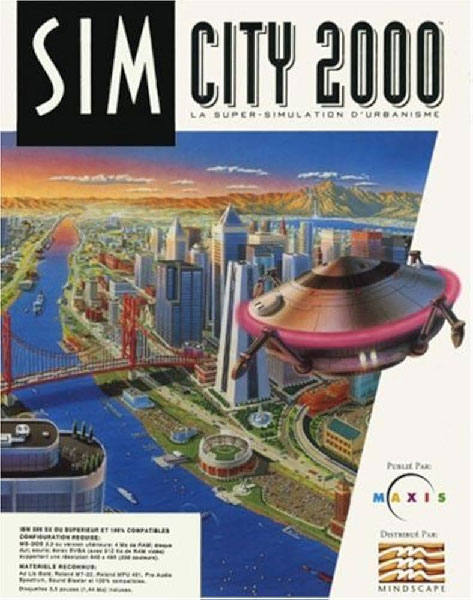
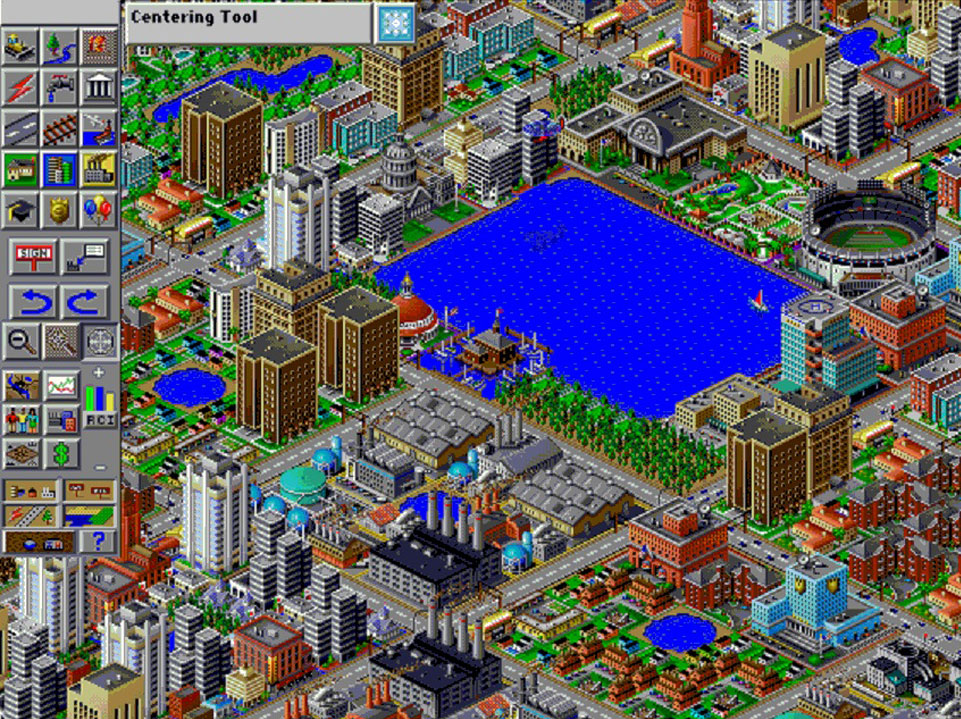
💾 That isometric view let you "tell the whole story" of a city, much like Transport Tycoon Deluxe, except this time, instead of managing transport routes between cities, you could shape an entire city on your own, as a kid. And from there, imagination took over completely. You could craft a charming little village, perfectly arranged with your favourite streets and houses, and right next door, a sprawling Manhattan-style metropolis. Nobody imposed a single rule. It was your world, your pace, your vision.
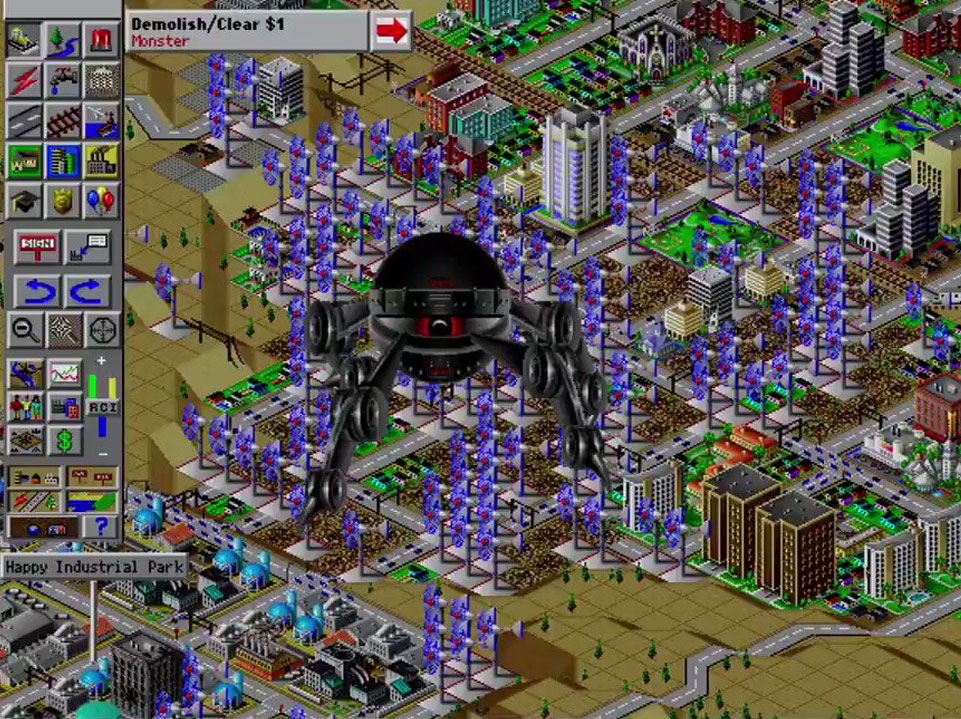
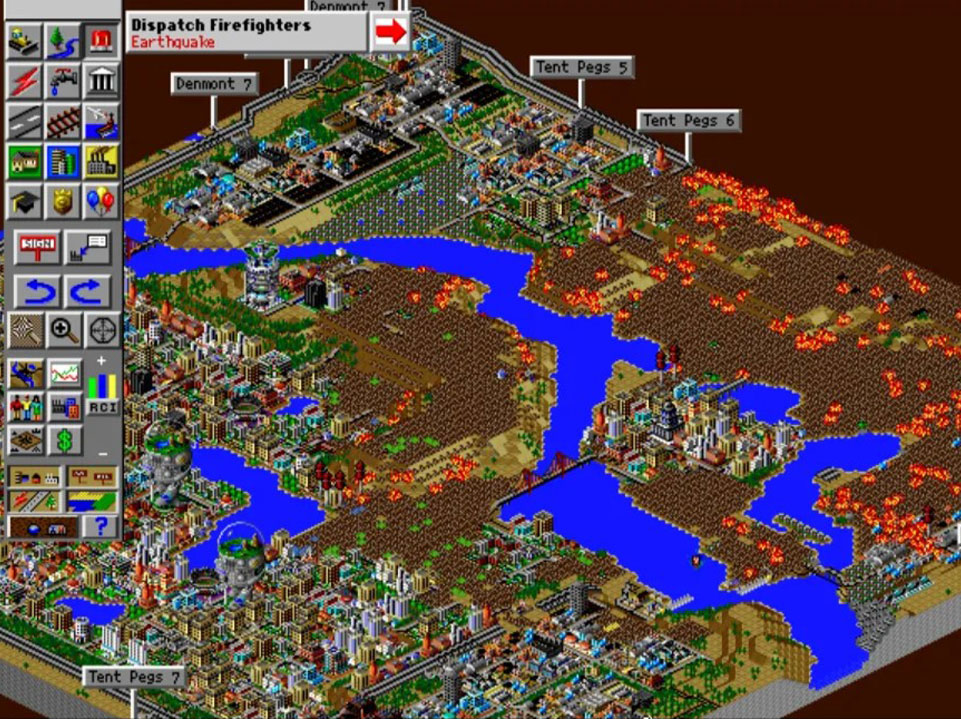
And everything was gloriously alive. Traffic filled every road, newspapers landed on your desk reporting whatever was happening across the city, financial reports rolled in, and you kept improving your urban landscape over time. The game gave me the feeling of being truly endless : you could spend hours and hours just watching your city grow before your eyes. I'd bet it sparked more than a few genuine urban planning vocations.
What makes SimCity 2000 remarkable is the quantum leap it represented over the 1989 original. Will Wright, the father of the genre, co-developed this sequel with Fred Haslam, moving from a flat 2D top-down view to a three-quarter isometric perspective, a visual revolution that finally gave depth, relief, and real life to every construction. Underground layers appeared for the first time, allowing players to lay pipe networks and subway lines. Buildings diversified massively : hospitals, prisons, schools, libraries, museums, stadiums, zoos, and futuristic arcologies. The game's built-in newspaper, which kept you informed of citizen surveys and city problems with a distinctly Maxis brand of humour, was a small masterpiece in its own right.
The success was so sweeping that the game is now part of the permanent collection of the Museum of Modern Art in New York, alongside Pac-Man and Tetris. Will Wright himself described his creations as "digital playgrounds", and SimCity 2000 was exactly that. In 1995, it won the Origins Award for Best Computer Strategy Game.
💡 Why play it in 2026? SimCity 2000 remains the ideal entry point for exploring the history of the city builder. The interface has aged, of course, but the core design logic is as sharp as ever, and the pleasure of watching a city grow tile by tile hasn't faded one bit. The Special Edition (1995) on GOG includes the SimCity Urban Renewal Kit for custom graphics and bonus scenarios. It's also a brilliant alternative to modern city builders that cost ten times as much. Fully compatible with Windows 11 via integrated DOSBox : one double-click and you're in.
🕹️ Price and platform : SimCity 2000 Special Edition is available for $5.99 on GOG (currently on sale at $2.99). Not available on Steam. Buy SimCity 2000 Special Edition on GOG at the best price.

2. Caesar II (1995) : the Roman history school
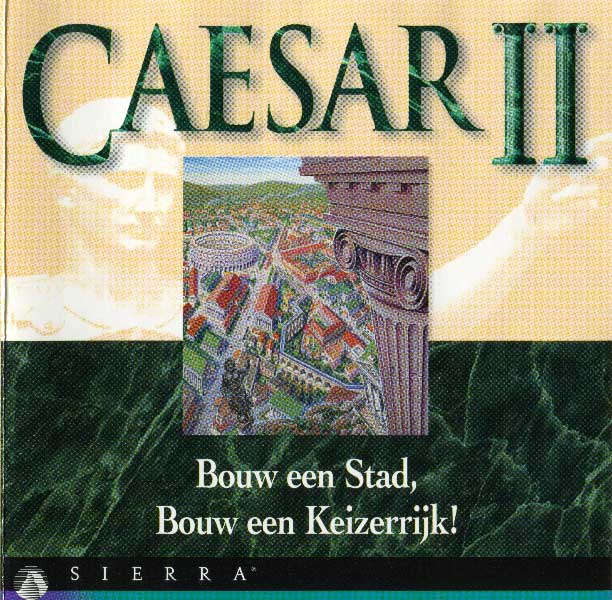
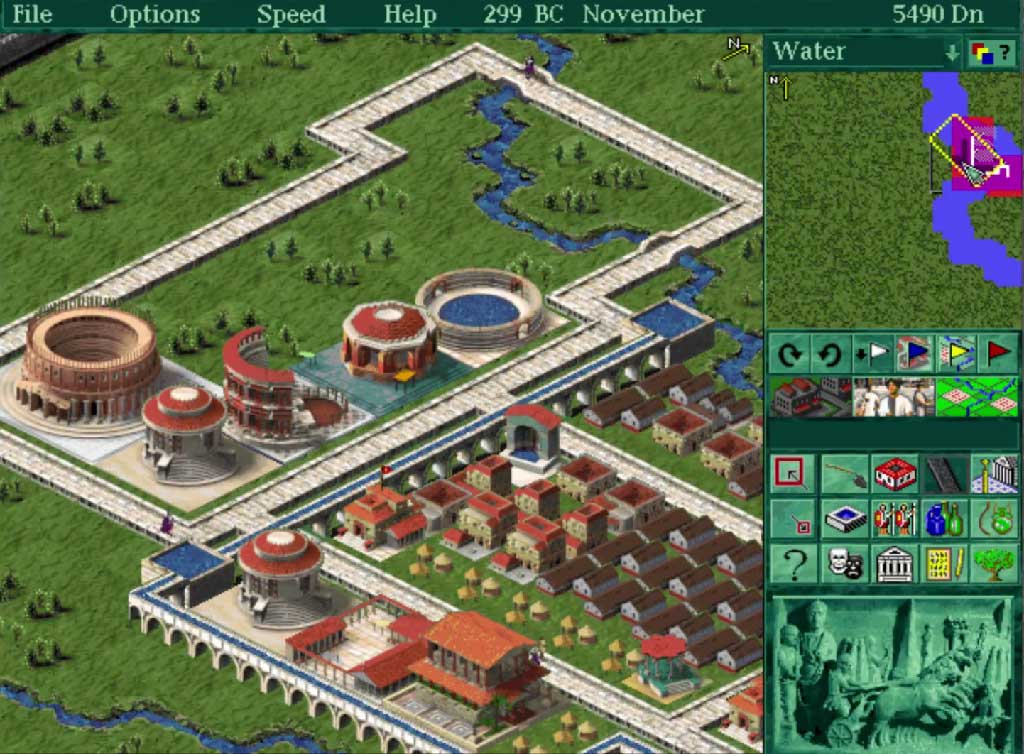
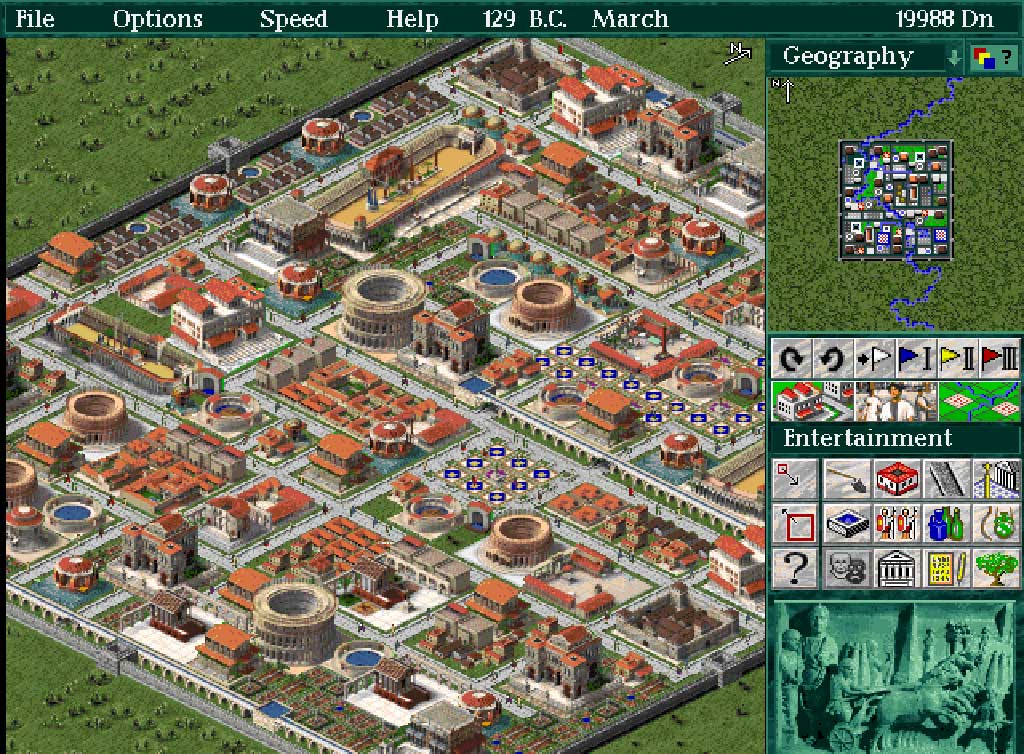
💾 Caesar II was a genuine shock to me. It was the very first historical city builder I ever got my hands on. And back then, I was in middle school, learning everything about the Roman Empire like everyone else : aqueducts, legions, market squares, economics, architecture. Then BAM ! Caesar II arrived. I had something concrete in front of me, something that was actually educational.
Coming from the Amstrad CPC 464 and then the 6128 a few years earlier, pixel-heavy graphics never bothered me in the slightest... quite the opposite. And these games were getting more and more beautiful. Just look at the evolution from Caesar I to Caesar II, which changed everything in a very short span of time. And I'll say it again : you genuinely learned a tremendous amount by playing. It's no coincidence that afterwards I became a massive fan of Pharaoh, then Zeus and Poseidon, and finally Emperor : Rise of the Middle Kingdom. It was a real saga, a genuine leap into the past handed to us, within a child's reach.
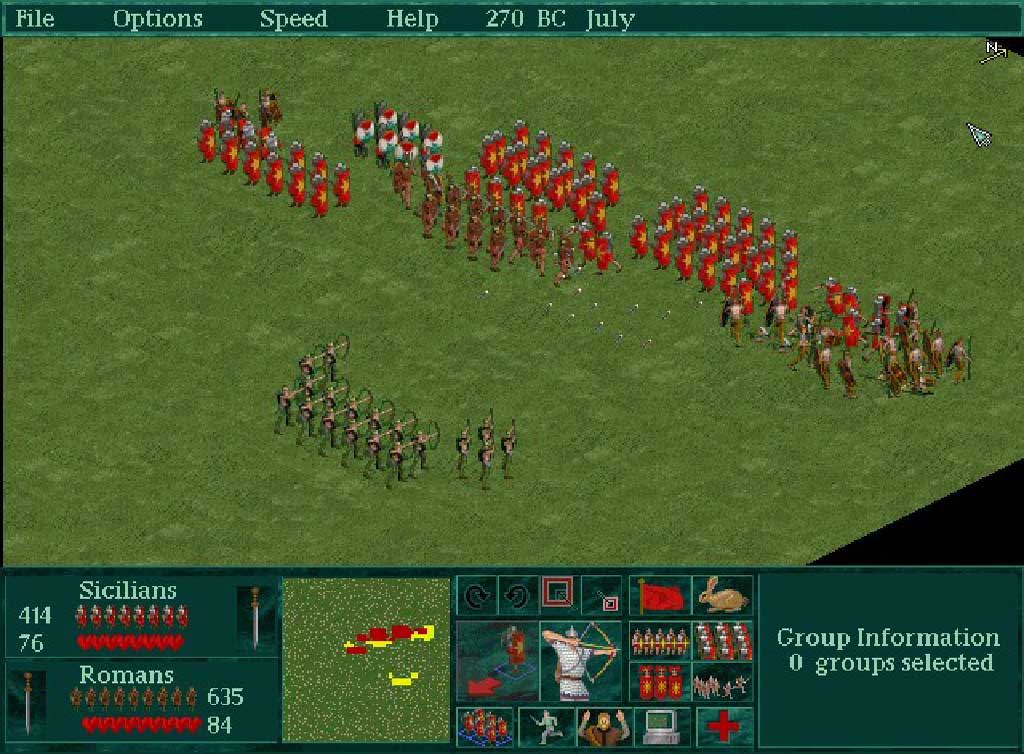
The game puts you in the sandals of a Roman governor tasked with transforming a province into a thriving city. Every citizen has specific needs : water (wells, aqueducts), food (markets, industries), security (garrisons, patrols), education, and entertainment (theatres, circuses, arenas). The bigger your population grows, the more demanding it becomes : wealthy citizens moving in expect luxurious bathhouses and amphitheatres. All the while, you must also manage the military dimension : defending the province against barbarian invasions, raising legions, positioning forts at the right locations.
What made Caesar II unique among city builders of its era was this dual nature : being both the mayor of your city and the general of your army. SimCity 2000 offered total freedom without context. Caesar II imposed a precise historical framework that made every decision feel meaningful. Building an aqueduct wasn't just a happiness bonus : it was a way to understand why the Romans had revolutionised water distribution across the ancient world.
The engine developed by Impressions Games for this series later served as the foundation for Pharaoh (1999) and Zeus (2000), the other masterpieces of the saga you may know better. The lineage is direct and well-documented.
💡 Why play it in 2026? Caesar II runs via DOSBox on GOG : simple installation, fully compatible with Windows 11. It's also an excellent alternative to modern historical strategy games that cost far more. If you want a more accessible entry into this universe, Caesar III (1998, abandonware) or the Augustus Edition on Steam are outstanding alternatives that modernise the experience while staying true to the original spirit.
🕹️ Price and platform : Caesar II is available for $5.99 on GOG. Not available on Steam. Buy Caesar II on GOG at the best price.

3. The Settlers (1993) : the master of logistics
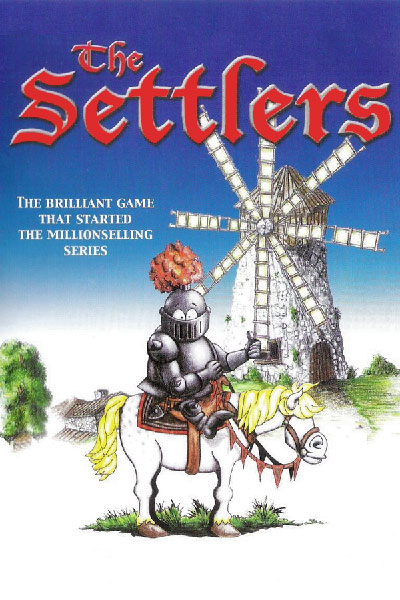
💾 The Settlers, what an incredible saga ! I played every single entry, starting naturally with the first one. Each episode brought real evolution, whether in visuals or gameplay. The mechanics were fresh, and it took genuine learning to conquer new territories : understanding the building placement system, figuring out where to position towers to expand your reach.
Also known as Serf City : Life is Feudal in North America (because American publishers decided "The Settlers" sounded too gentle for their market), this is the game that invented the concept of organic production chains in the city builder. Everything you see in Anno 1602, in Knights and Merchants, in every subsequent Settlers game... it all traces back here.
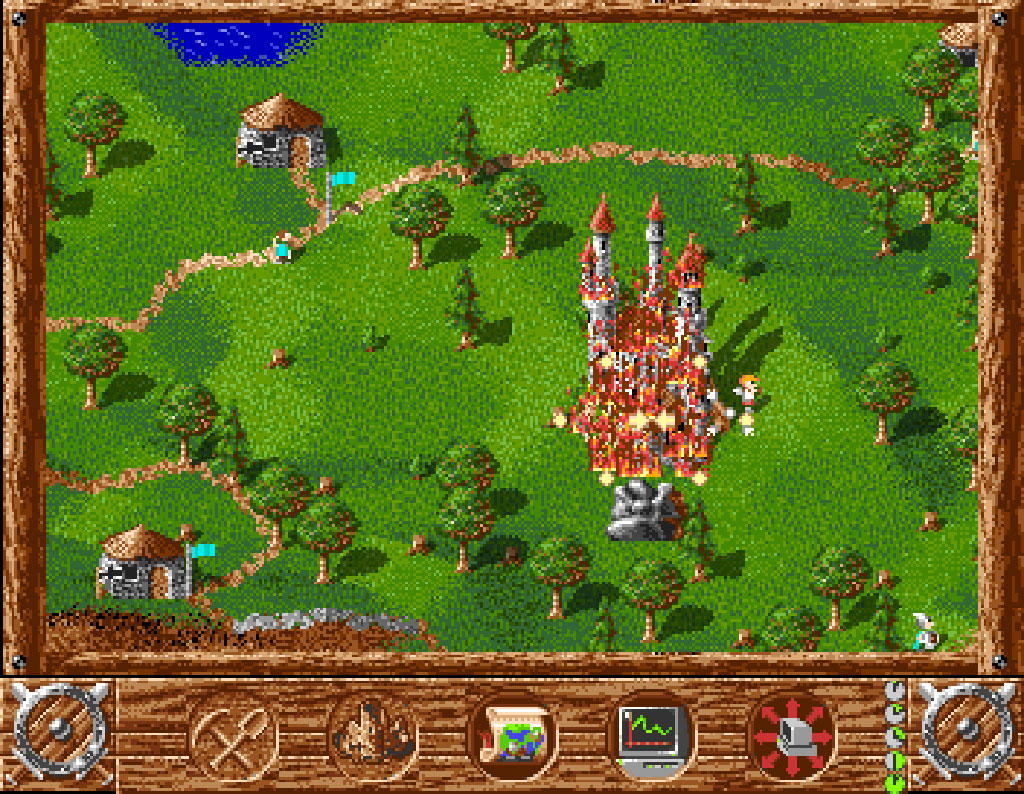
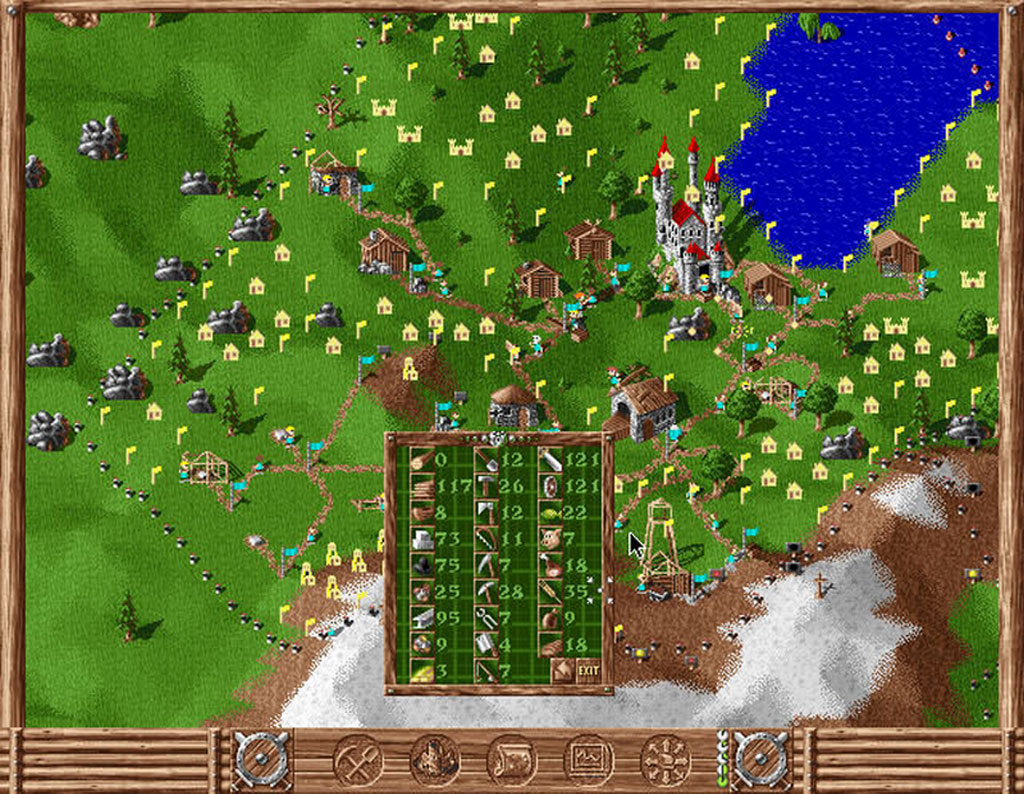
What had truly drawn me to this game was probably the medieval atmosphere and those impossibly charming visuals. You watched your little settlement rise from nothing, every serf carving their own path into the ground through repeated trips, naturally forming roads between buildings. The structures were visually captivating, and the wind rustling through the trees made everything feel genuinely alive, on top of the settlers themselves swarming busily everywhere. The music and sound design were wonderfully pleasant, which mattered enormously given that sessions could last for hours. These are games for patient souls : if you're chasing constant explosions and non-stop action, this isn't your world.
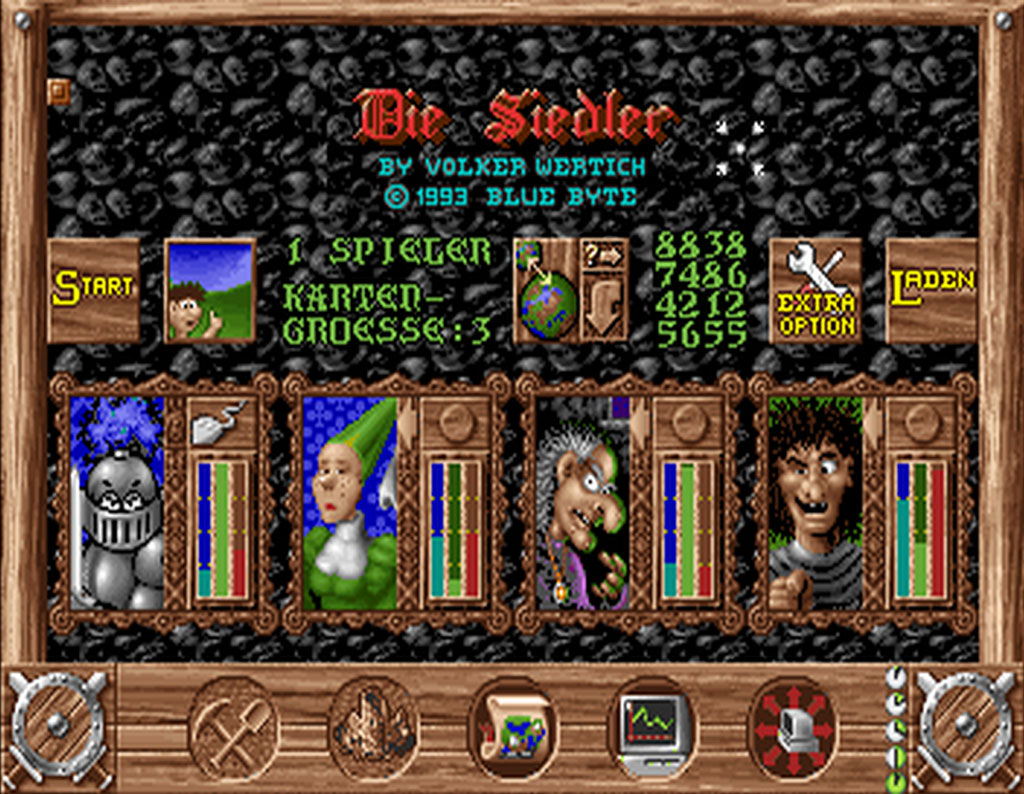
The game's creator, Volker Wertich, was still a student when he submitted his demo to Blue Byte. He had taken a sabbatical year from his studies to focus entirely on the project, and the finished game runs hundreds of simultaneous settlers with remarkable fluidity, the whole thing coded in assembler within a single Amiga executable of more than 70,000 lines. Computer Gaming World awarded it 4.5 out of 5 stars, highlighting "the most realistic medieval economic model ever integrated into a video game." The game sold over 400,000 copies across Amiga and DOS.
The principle has a rare elegance : you never directly control a single settler. You place buildings, trace roads, set priorities... and the settlers organise themselves. The woodcutter supplies the sawmill, the sawmill supplies the carpenter, the carpenter crafts the tools the miner needs, the miner extracts iron, the blacksmith forges swords for the knights who will expand your territory. Break one link and the entire chain collapses!
💡 Why play it in 2026? The History Edition is the definitive way to play in 2026 : remastered visuals, modernised interface, natively compatible with Windows 11, no DOSBox needed. It's the most friction-free experience of the bunch, and a fantastic gateway into cheap PC management games. This game was also part of what later made me fall completely for Knights and Merchants and its expansion The Peasant Rebellion... which we'll cover in depth, that's a promise!
🕹️ Price and platform : The Settlers History Edition is available for $4.99 on the Ubisoft Store only (not on Steam or GOG). Buy The Settlers History Edition on the Ubisoft Store.
4. Outpost (1994) : Sierra's unfinished masterpiece
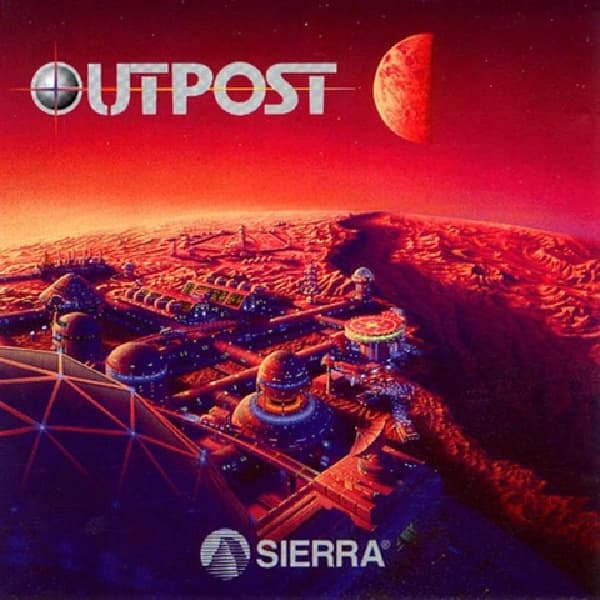
This one slipped past me entirely : I only know it through its reputation and YouTube videos. What I can say is that later on I stumbled onto Space Colony, which I absolutely loved, and which must owe something to Outpost's spirit. But Outpost is a Sierra game, and there was no way I could leave it out. Its spatial atmosphere also set it completely apart from everything else on the list.
The story of Outpost is fascinating... and tragic. Sierra had promised something extraordinary : a "hard science fiction" game, meaning one grounded in real scientific data, co-developed with Bruce Balfour, a former engineer from NASA's space sciences division. Someone who had genuinely worked on galactic probe programmes. The ambition was to create the most realistic planetary colonisation simulation ever conceived. With no internet to verify those promises back then, you bought on faith.
The pitch holds up brilliantly : a massive asteroid nicknamed "The Hammer of Vulcan" is hurtling toward Earth. The last-ditch attempt to deflect it, a massive nuclear strike, splits it into two pieces instead of five. The result : instead of devastating the surface, it annihilates the planet entirely. A corporation decides to launch a vessel carrying the last survivors of humanity to colonise another world in the galaxy. You are the commander of this last outpost of human civilisation. A completely wild premise.
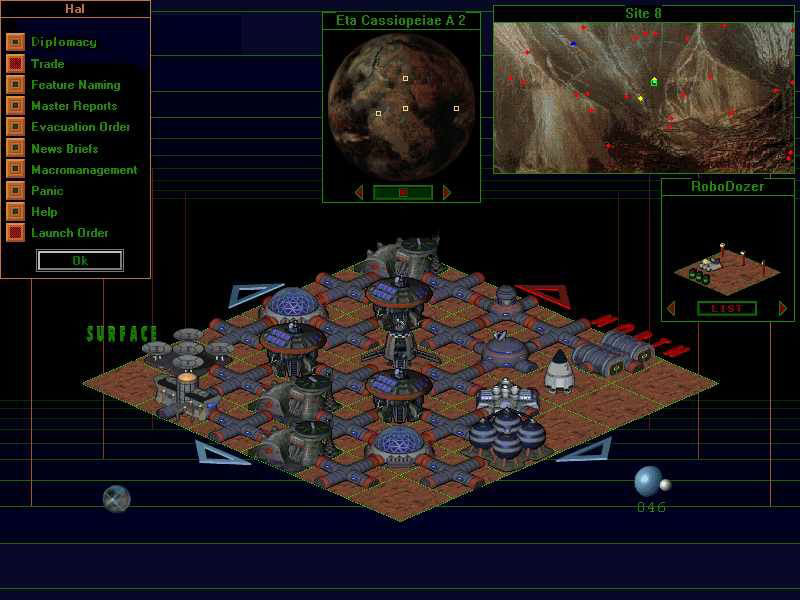
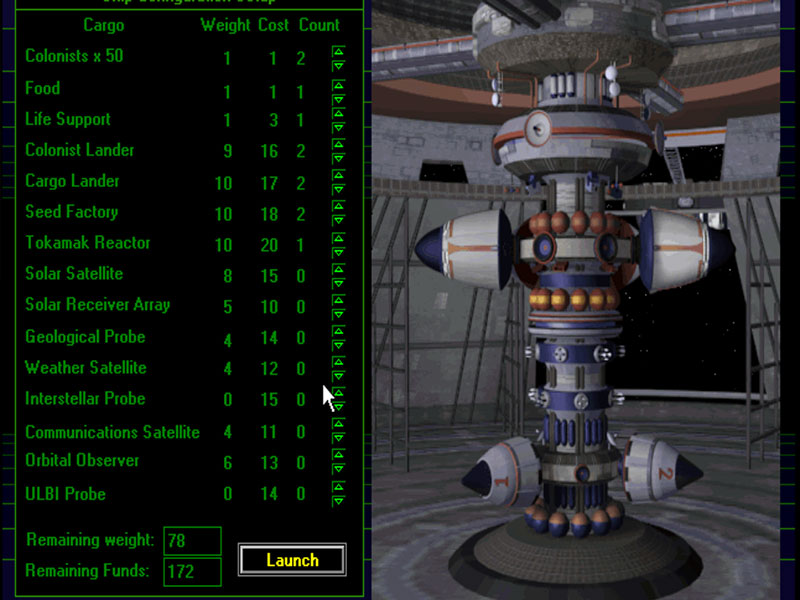
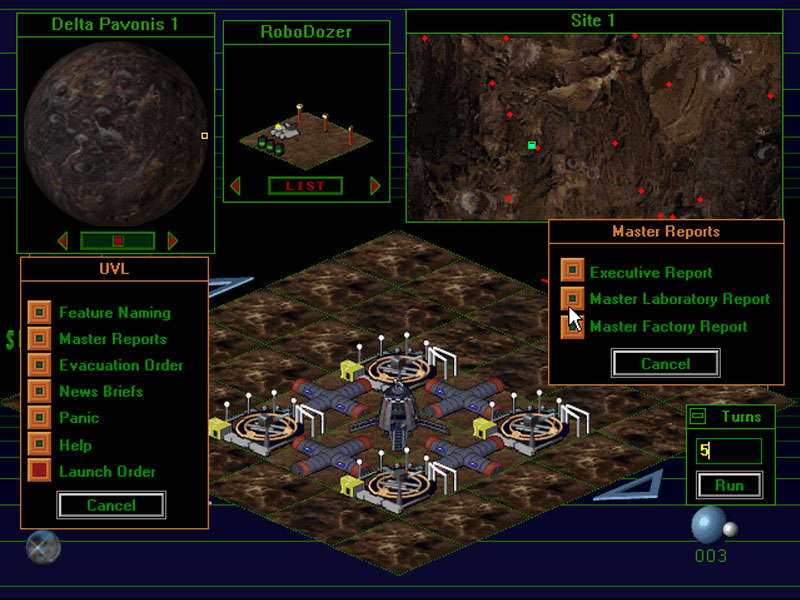
In an isometric view close to SimCity 2000, you had to construct every building of an underground colony (the hostile surface demanded connecting tunnels), manage air, food, energy, colonist morale, and technological research. An exceptionally thorough game manual made dozens of real scientific concepts accessible : planetary atmospheres, terraforming, nanotechnology, space propulsion. The manual alone was worth the price of admission.
⚠️ And then Sierra said "ship it"... before the game was finished. Dozens of features described in the manual and preview reviews simply did not exist in the final release. Diplomacy with the rebel colony? Not available. Buildable roads? Not available. The Mass Driver for launching cargo into orbit? The rail didn't exist. In 1996, Computer Gaming World named Outpost the worst game in industry history, calling it "the greatest screensaver ever made." It stands as one of the most painful lessons in gaming history about the dangers of hype, the rush to market, and broken promises.
And yet... the idea was magnificent. The science underpinning the game was real. Balfour's vision was legitimately ambitious. Outpost 2 : Divided Destiny (1997) corrected many of the original's problems, but never recaptured the momentum that had once seemed so inevitable.
💡 Why play it in 2026? For the history of gaming, and for the manual, a standalone piece of popular science culture. Technically, Outpost remains available as free legal abandonware on My Abandonware. Rights are believed to belong to Microsoft via successive Sierra acquisitions. The Outpost Universe community is still active in 2026, with patches and mods keeping the dream alive.
🕹️ Price and platform : Outpost (1994) is available as free abandonware on My Abandonware. Not available on Steam or GOG.
5. Utopia : The Creation of a Nation (1991) : space colonisation before its time
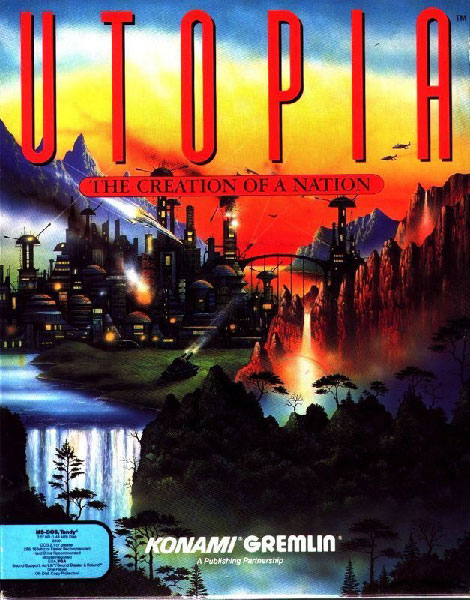
I missed this one entirely, and that's a genuine shame. You can't catch everything. But discovering that Utopia, released in 1991, had achieved something truly unique that even Outpost failed to replicate three years later : that was a revelation.
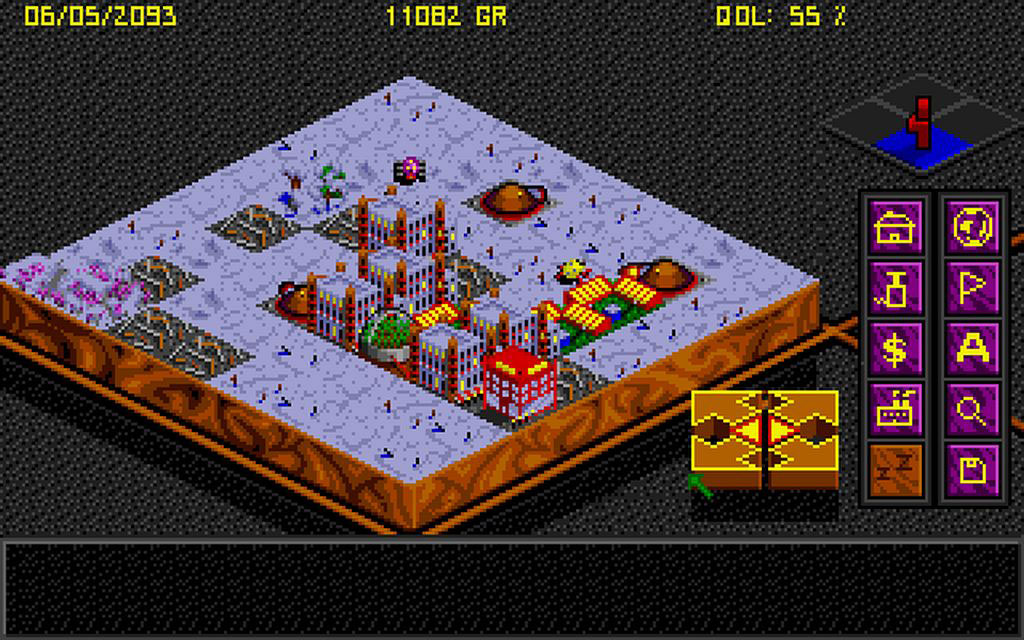
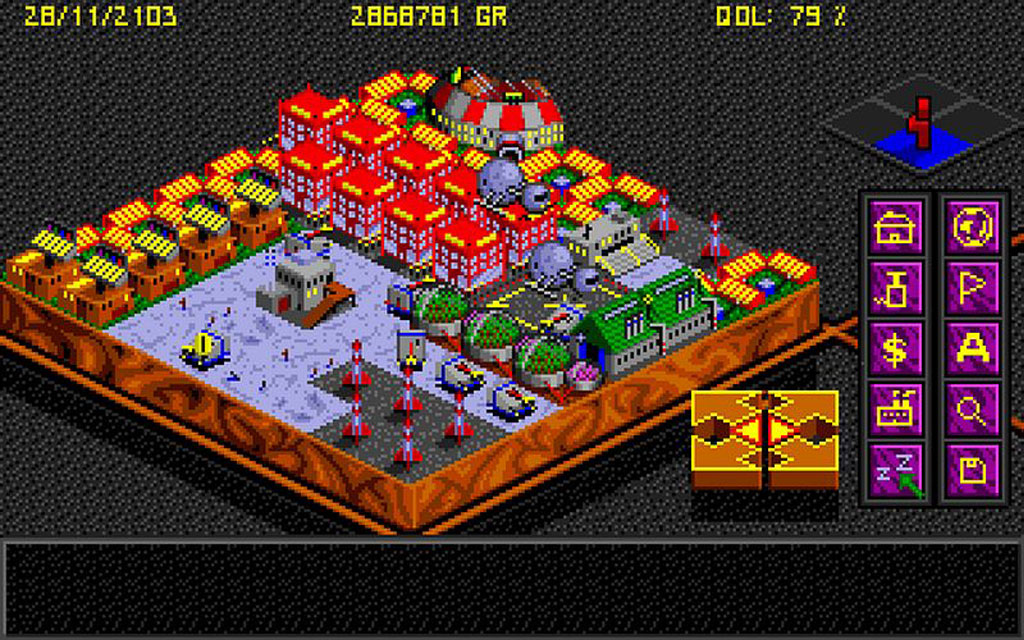
Celestial Software, a small British studio that barely anyone still talks about, delivered something in 1991 that SimCity didn't have : a city builder with a fully fleshed-out military dimension, set in a planetary science-fiction universe. You were a Colony Administrator on a distant planet. The objective was to raise your colonists' Quality of Life score to 100%. To get there, you had to build energy sources, housing, factories, hospitals, entertainment venues, and maintain security.
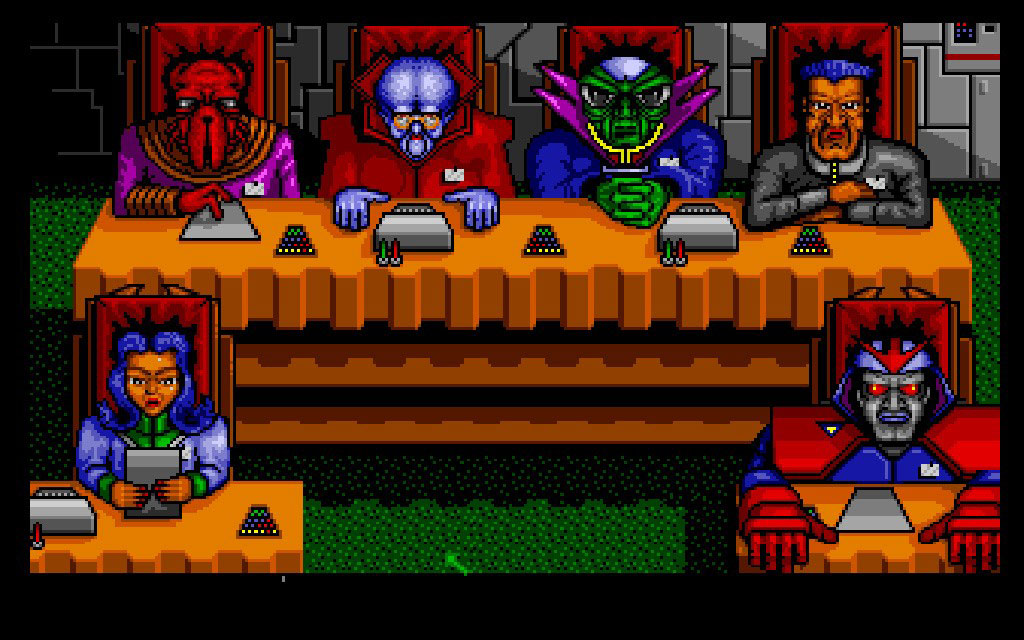
But Utopia pushed further. On each planet, a hostile alien race was also attempting to colonise the territory, different races with different expansion strategies depending on the scenario. You had to be a general as well : building tanks and combat ships, recruiting spies to infiltrate the enemy colony and extract intelligence on its weaknesses. Resource management was inseparable from military management : spend on hospitals or on tanks? Invest in civilian research or in weaponry? Every decision carried an opportunity cost.
The game's presentation used square "cards" that you navigated between, with a light isometric top-down view and colourful, charming sprites for the era, something in the spirit of Populous. It launched first on Amiga (where it was considered one of the platform's finest titles), then ported to Atari ST, DOS, and even Super Nintendo in 1993.
What makes Utopia historically significant is that it preceded Outpost by three years while delivering a far more functional result, and it influenced a whole generation of SF colonisation games. It even received an expansion : Utopia : The New Worlds, with ten additional missions. The community of players who discovered it back then still speaks of it with real affection.
💡 Why play it in 2026? Utopia is available as free legal abandonware on My Abandonware. Rights are believed to belong to Atari SA via the successive acquisitions of Gremlin Interactive. The DOS version runs under DOSBox without any difficulty. For a smoother experience, the Amiga version (via emulator) is considered by purists to be the definitive one.
🕹️ Price and platform : Utopia : The Creation of a Nation is available as free legal abandonware on My Abandonware. Not available on Steam or GOG.
Full Comparison Table
Here are the five best PC city builders between 1990 and 1995, all under $10, ready to play on a modern PC today :
| Game | Year | Price 2026 | Platform |
|---|---|---|---|
| SimCity 2000 Special Ed. | 1993/95 | $5.99 (on sale $2.99) | GOG only |
| Caesar II | 1995 | $5.99 | GOG only |
| The Settlers History Edition | 1993/2018 | $4.99 | Ubisoft Store |
| Outpost | 1994 | Free (abandonware) | My Abandonware |
| Utopia : The Creation of a Nation | 1991 | Free (abandonware) | My Abandonware |
← Scroll to see the full table on mobile →
How to Play These City Builders on PC in 2026?
DOSBox, GOG, and Modern Solutions
The vast majority of these games were designed for MS-DOS or Windows 3.1, but getting them running in 2026 is far easier than you might think.
SimCity 2000 on GOG ships with a pre-configured DOSBox : double-click, and the game launches. Map zoom and rotation work perfectly. Caesar II on GOG works the same way, with integrated DOSBox. The interface is in English, but the game is intuitive enough to get your bearings quickly.
The Settlers History Edition on the Ubisoft Store installs like any modern game, natively compatible with Windows 11, no DOSBox required, with remastered visuals. It's the most friction-free option of the bunch.
For Outpost and Utopia (abandonware versions), download DOSBox from dosbox.com, or DOSBox-X for better Windows 11 compatibility. Install the game in a folder, configure the mount settings in DOSBox, and launch the executable. Game-specific YouTube tutorials exist for both titles to walk you through it step by step.
💡 General tip : GOG remains the gold standard for cheap retro PC games available commercially : they pre-configure DOSBox and guarantee compatibility with Windows 11. For abandonware, My Abandonware is the reference site in terms of both legality and archive quality.
Where to Buy These City Builders at the Best Price in 2026?
For SimCity 2000 and Caesar II, GOG is the only commercial option. Steam doesn't carry them. Prices are already very low (around $5-6), and GOG sales regularly push these titles down to $2-3. To track price drops, IsThereAnyDeal.com is your best ally : it aggregates prices across stores and alerts you during Steam Sales and GOG promotions.
The Settlers History Edition is exclusive to the Ubisoft Store, no Steam, no GOG. At $4.99, it's an outstanding value for the full remastered first game with all patches included.
For Outpost and Utopia, there's no question : they're free legal abandonware, available on My Abandonware and other preservation sites. The original publishers never renewed their commercial rights.
🕹️ Deal alerts : also keep an eye on retro PC-themed Humble Bundles, which regularly feature packs of classic management games for just a few dollars. These bundles are often the most economical way to pick up multiple GOG or Steam keys in a single purchase.
FAQ : The Most Common Questions
Is SimCity 2000 better than the original SimCity?
Different, rather than better. The 1989 original has a purity and accessibility that some players still prefer. SimCity 2000 adds the isometric view, underground depth, and a much wider variety of buildings, but also more complexity. For discovering the genre in 2026, start with SimCity 2000.
Caesar II or Caesar III to start the saga?
Caesar III (1998) is generally recommended as the entry point : more modern interface, more refined mechanics, even greater historical fidelity. But Caesar II has a charm and a military dimension that the third entry somewhat softened. If you're curious about the roots, start with II. If you want the most polished gameplay experience, Caesar III is outstanding.
Is Outpost really the worst game ever released?
No, that reputation is overblown. The game has real flaws (missing features, bugs, sluggish pacing), but the underlying concept remains brilliant and the scientific manual is genuinely fascinating reading. It's a game that deserves to be known for its history as much as its gameplay.
Is The Settlers actually playable in 2026 for someone who's never tried it?
Yes, through the History Edition. The original's lack of a tutorial remains an obstacle, but guides are widely available online. If you want a more accessible starting point for the series, The Settlers II (also in the History Edition) is the one the community most often recommends as the ideal entry point.
Foundations That Built Everything
Between 1990 and 1995, these five games defined the rules of the city builder genre, each in its own way. SimCity 2000 proved that a city could be a world unto itself. Caesar II demonstrated that history could be an extraordinary playground. The Settlers invented the autonomous production chain. Outpost dreamed too large and paid the price. And Utopia had understood everything four years before anyone else, without many people remembering it.
The legacy of these games runs through everything we still play today. Cities : Skylines descends directly from SimCity. The historical Total War series inherited Caesar's atmosphere. Anno descends from The Settlers. The lineage is direct, well-documented, and endlessly fascinating to trace.
What's remarkable is that these titles remain excellent alternatives to modern city builders that cost ten times as much. For a handful of dollars, you get dozens of hours of play, from an era when core mechanics were designed to last.
Next week : the city builders of the 1995–2000 period - Anno 1602, Pharaoh, Caesar III, Zeus, Theme Hospital... the generation that elevated every single one of these foundations.
💡 If you love this kind of game, our Top 5 PC Management Games (1990-1995) covers the Tycoon titles from the same era : Transport Tycoon, Capitalism, Railroad Tycoon. A perfect companion read to this one.
So, what was your first city builder? Were you building Rome with Caesar, or carving out a medieval kingdom with The Settlers? Drop it in the comments - I'd love to read your memories!
Related Articles on LittleBigCampus
- Top 5 PC Management Games (1990-1995) : Transport Tycoon, Capitalism, Railroad Tycoon
- Top 5 PC Strategy Games (1991-1995) : Dune, Warcraft, C&C, Civilization
- Top 5 PC FPS Games (1992-1996) : Wolfenstein, Doom, Dark Forces, Duke Nukem, System Shock
- Top 12 Best Budget PC Games to Play with Friends (€5-€20 max)
💡 Join the community!
Want to talk games, find people to play with, or share your pop culture discoveries? Come join us on the Little Big Campus Discord 👾