The Great Shift : CD-ROM and Windows
King's Quest, Space Quest, Leisure Suit Larry, Police Quest, Quest for Glory… the licenses followed one after another, the sequels sold out, and the studio became a global benchmark for PC adventure gaming.
Time passed, and we were already in the early 1990s. The PC world was shifting. CD-ROM technology hit the consumer market, exponentially increasing storage space. Windows 3.1, and then 95, replaced DOS as the primary interface. Machines evolved, and naturally, player expectations did too. They wanted more sound, more animation, more action, less typing, and above all, less slowness. Beside the keyboard, a trackball mouse slowly made its appearance.
For Sierra, one question became central :
How do you remain an adventure studio when adventure alone is no longer enough ?


SCI, CD-ROM, and the Temptation of Interactive Cinema
A Technical Revolution
With the SCI (Sierra Creative Interpreter), Sierra gained a technical lead. Mouse support was integrated, interfaces became more intuitive, graphics grew more refined, and above all : sound reached a new scale.
Indeed, the CD-ROM era allowed for elements that were previously impossible :
- Digital voices (no more reading text !), making games much more immersive.
- Cinematic sequences (Full Motion Video, or FMV), even if their graphical quality was often debatable.
- Richer soundtracks and orchestral scores.
But… this obviously came with trade-offs, as producing a CD-ROM game now meant :
- Larger development teams
- Significantly higher production costs
- Increased pressure on deadlines
- A need for massive sales to break even
⚠️ Sierra adapted by renewing its flagship franchises (like King's Quest) with these new capabilities, but the technological evolution changed the game : the company could no longer rely solely on what defined its identity : classic graphic adventures.
Diversification : A Necessity
Not Putting All Your Eggs in One Basket
Ken Williams understood this early on : as the video game market exploded, Sierra’s journey couldn't rely solely on graphic adventures. Publishers like Blizzard (Warcraft), id Software (Doom), and Maxis (SimCity) were redefining strategy, FPS, and simulation genres. Not to mention LucasArts, which was striking hard with games like Indiana Jones and Monkey Island.
But that wasn't all ; for several years, Sierra had also been experimenting with software. They worked on a Lisa assembler for Apple II, developed the Home Word processor, several Encyclopedias, and gardening or 3D modeling software.
💾 At that time, Ken Williams’ vision was clear : do not put all your eggs in one basket. His strategic goal was to balance Sierra's revenue into three equal pillars : one-third for productivity, one-third for education, and one-third for video games. This bet on diversification paid off, especially in the Old Continent : Sierra became number 1 in Europe in the educational software segment. Despite this generalist ambition, the core business remained powerful, with video games still representing 40 to 50 % of their overall revenue.
It was a fascinating but unstable period. Sierra became a sprawling publisher, at times visionary, at times scattered. The studio was no longer just creating : it was absorbing, publishing, and financing. Creativity was still there, but it was now framed by much heavier industrial realities.
Early Tensions and the Challenge of Competition
When the Market Tilts
The multiplication of studios and genres put pressure on Sierra's original model. Ken and Roberta Williams had to manage a much larger structure, far from the family atmosphere of Oakhurst.
The golden age of graphic adventure (the famous 1986 – 1993 period) gave way to a market dominated by action and real-time gameplay. Sales of classic adventure games (even well-made ones) began to stagnate, while real-time strategy (RTS) and management games generated massive revenue. Fortunately for the couple, the studio had never been more visible, allowing them to make several acquisitions.
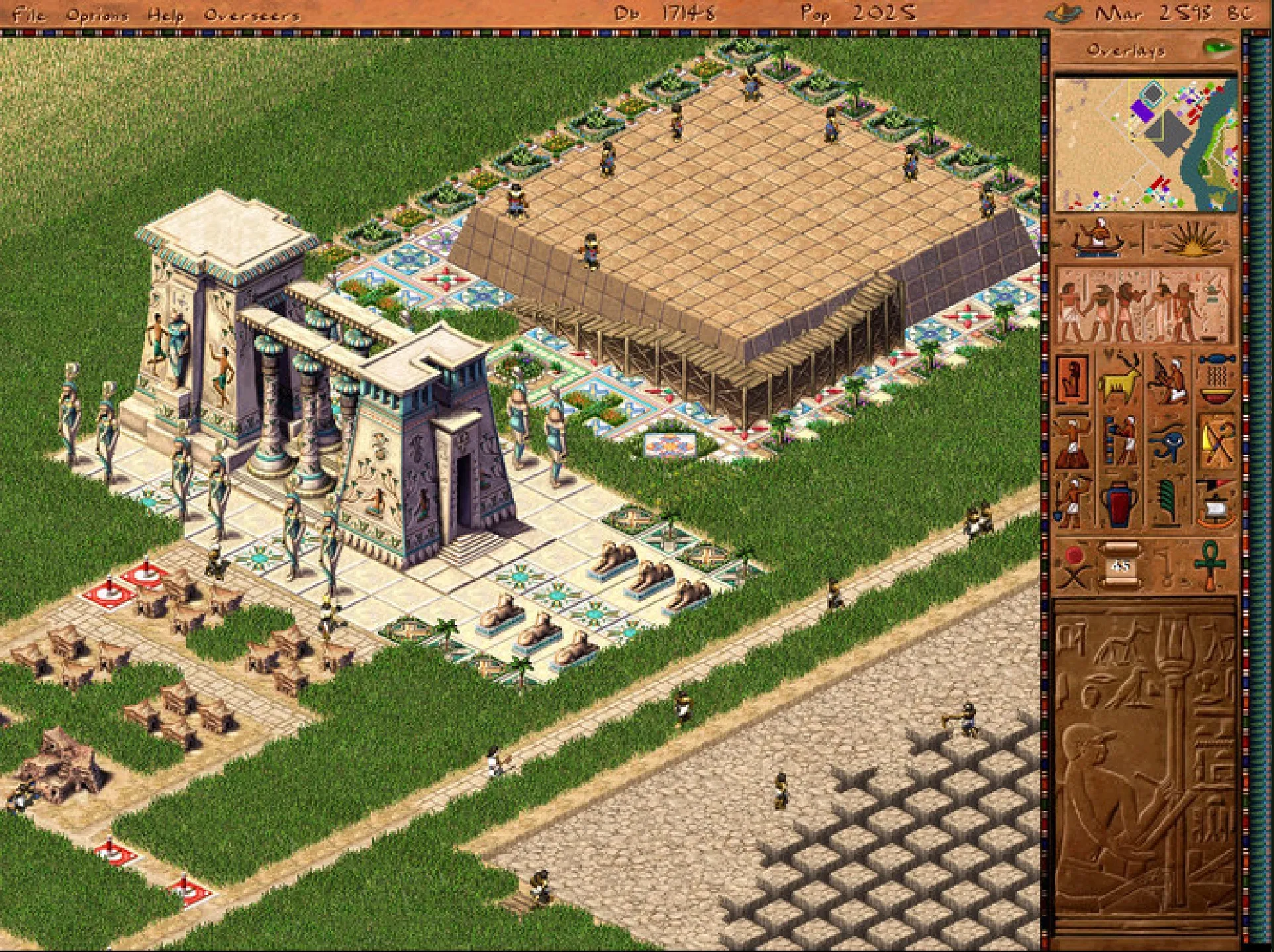
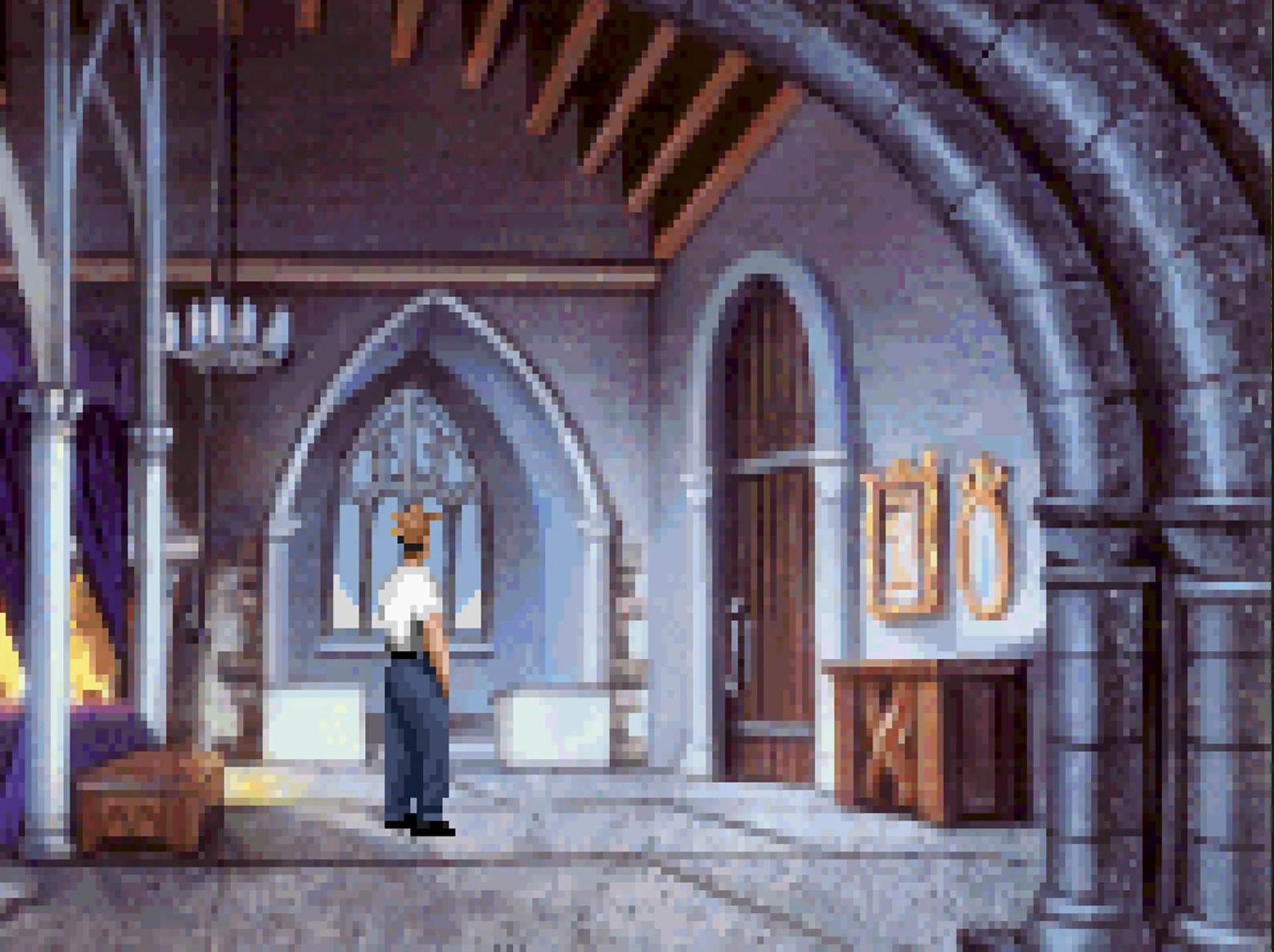
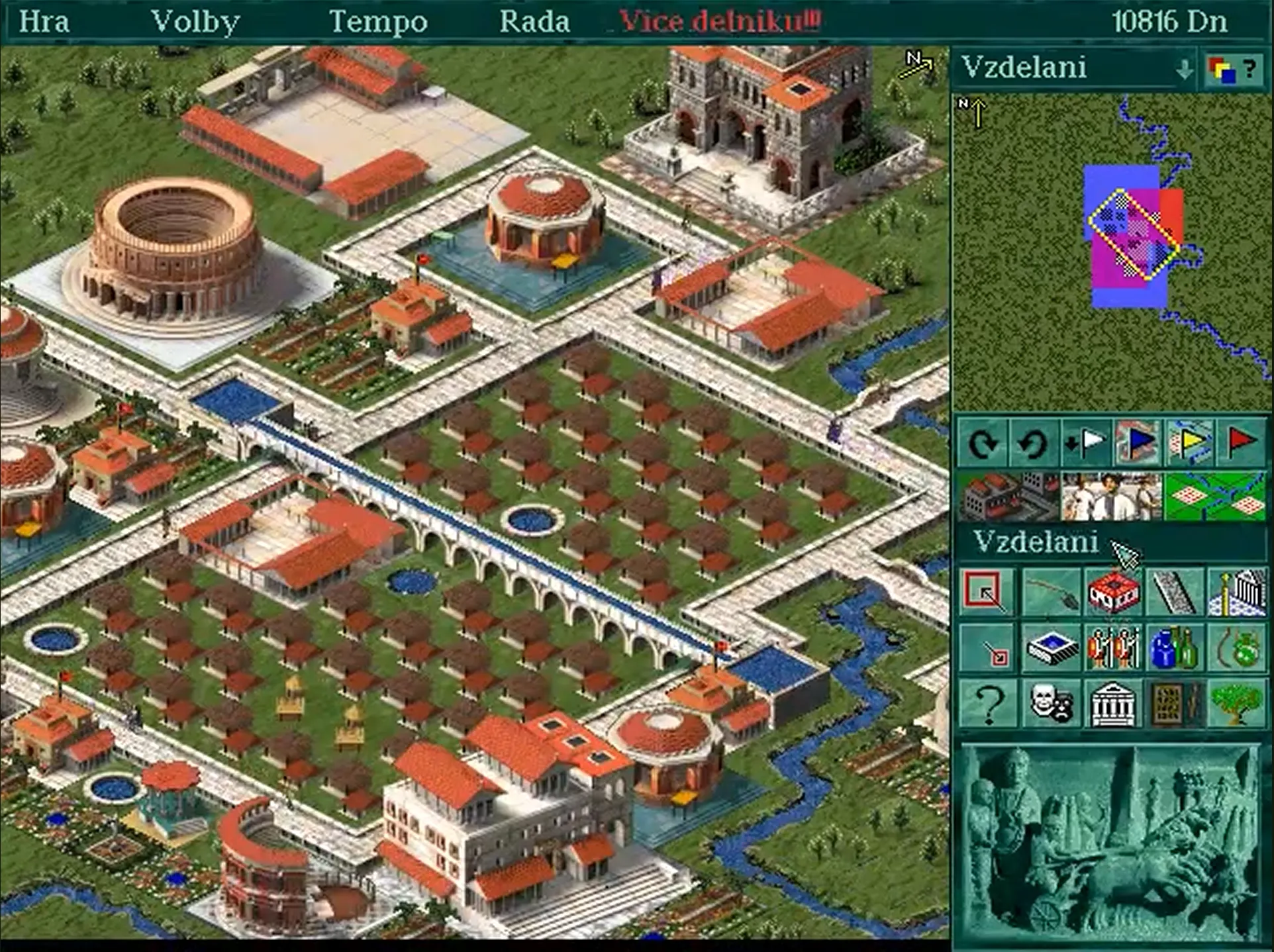
During this period, Sierra reached a new dimension as a truly multi-genre publisher. By acquiring key market players, they opened new horizons : action and flight simulation with Red Baron (1990), logic puzzles with The Incredible Machine (1992), and historical strategy thanks to Impressions Games (Caesar II, Pharaoh, Lords of the Realm). Simultaneously, they continued to excel in their favorite field, adventure, with the unforgettable Gabriel Knight (1993).
💡 Yet, something was cracking. Graphic adventure, its historical pillar, slowly began to decline in public interest. Costs exploded. Successes became rarer and more unpredictable. Every project could be a triumph… or a financial abyss.
Sierra wasn't in freefall. Not yet... but the balance had become precarious.
The Acquisition by CUC International (1996)
The End of Independence
The climax of this diversification phase and the need for capital was the acquisition of Sierra On-Line in 1996 by the conglomerate CUC International (Comp-U-Card International). This buyout, valued at approximately $1.5 billion (via a stock swap), marked the end of the company’s independence. For Ken and Roberta Williams, it represented a colossal financial validation, but it was also the beginning of a gradual loss of creative and strategic control.
While CUC International initially saw this acquisition as a way to consolidate its consumer software portfolio by leveraging Sierra’s prestige, the reality was more brutal : the imposition of restructuring and aggressive profitability targets quickly caused the artisanal and creative atmosphere of the early days to fade in favor of a purely financial logic.
⚠️ At this stage of the story, Sierra is still standing, still ambitious, and still creative. But it is no longer untouchable. The choices made in this decade will determine its future… and unknowingly prepare for the most painful period of its existence…
Did you live through this era and these games ? If so, feel free to talk about it in the comments below ! Personally, I farmed Pharaoh and the Queen of the Nile endlessly... and I still love that game !
The final chapter : Sierra On-Line : The Shattered Dream and the Wall Street Betrayal (Part 4)