The Very Beginning
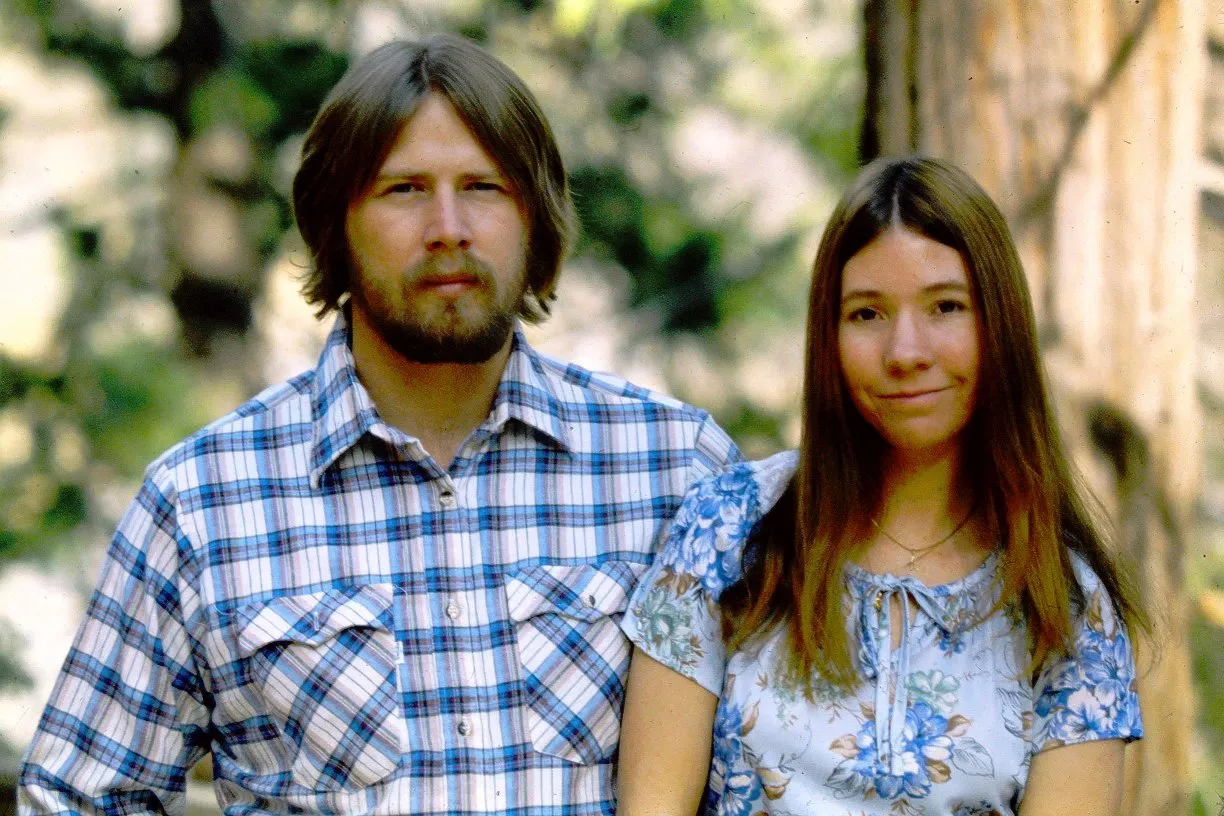
On the Campus, some stories touch us more deeply than others. The story of Ken and Roberta Williams is one of them. Today, this couple is enjoying a well-earned retirement, but back in the late 70s, they were just two dreamers in California with an Apple II, a stack of scribbled notes, and a groundbreaking idea : to create an adventure game unlike anything that had ever existed.
What they started in Oakhurst, nestled in the small Californian woods, was about to transform our childhoods. Mystery House, King's Quest, Leisure Suit Larry, Space Quest… so many worlds that made us run, think, and learn a great deal in front of our screens.
Today, at Little Big Campus, we are thrilled to tell you this story from its very roots. How Ken and Roberta dared to defy conventions, creating games that were impossible to ignore, signing improbable deals, and fighting to preserve their vision despite crises and risks. It is the story of a couple who put dreams in our hands and changed gaming forever. And this is exactly where it all begins…
From Mystery House to King's Quest
Where Did This Come From ?
Let’s look back at Sierra On-Line, one of the legendary companies of the 80s and 90s, which propelled countless games onto the stage starting from nothing… or almost nothing. The birth of Sierra On-Line was the perfect alignment of two paths : a passion for technology and an obsession for storytelling, meeting at the right place at the right time.
Ken Williams and Roberta Williams founded "On-Line Systems" in 1979. Their intention was to explore what a microcomputer could do for a narrative : giving it choices, presence, and interactive life. Their first steps would redesign the way we interact with video games on the Apple II.
A Couple and a Conviction
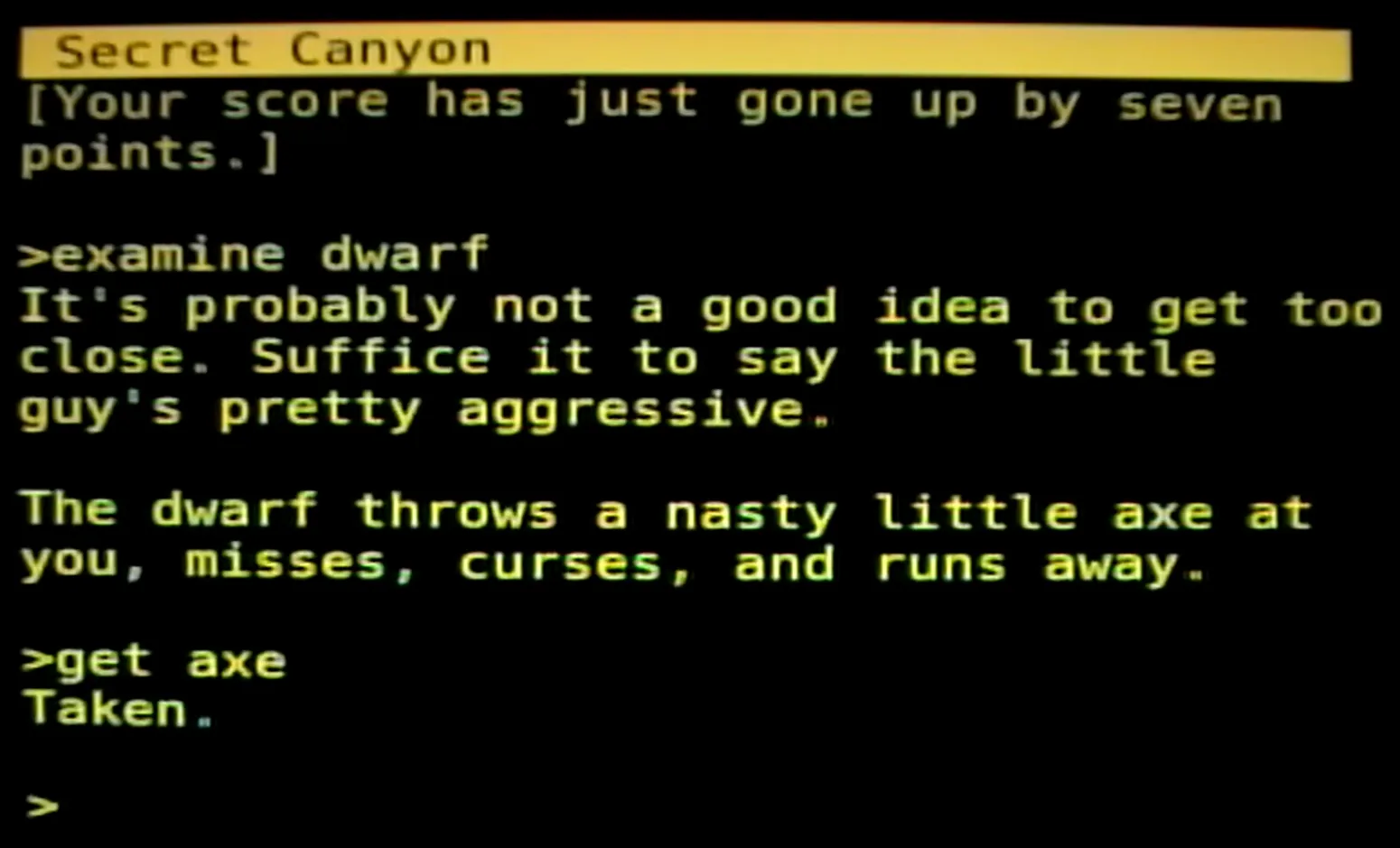
Ken and Roberta were a perfect match : while one was a programmer, the other was a storyteller. After discovering the game "Colossal Cave Adventure" (a text-based adventure), Roberta saw an obvious possibility : what circulated as lines of text could become more than just a limited command system. She wanted images, atmosphere, and immersion that relied on curiosity, not just reflexes. Ken provided the tool, Roberta provided the story. Together, the adventure began.
The first commercial games still felt like professional DIY : you coded at home, bought an Apple II, wrote in BASIC or Assembly, and tested with friends. Yet, Roberta's approach was a radical shift : writing an interactive adventure, enriched with illustrations, and selling it to the world.
It was a bold move because the consumer machines of the time had very little memory (the Apple II had 4KB… ALTHOUGH, it was expandable to 48KB… "The future is now, old man"), lacked sophisticated graphics, and had rudimentary interfaces. The idea of marrying text and image was risky… but it would be handsomely rewarded.
Mystery House : The First Visible Step
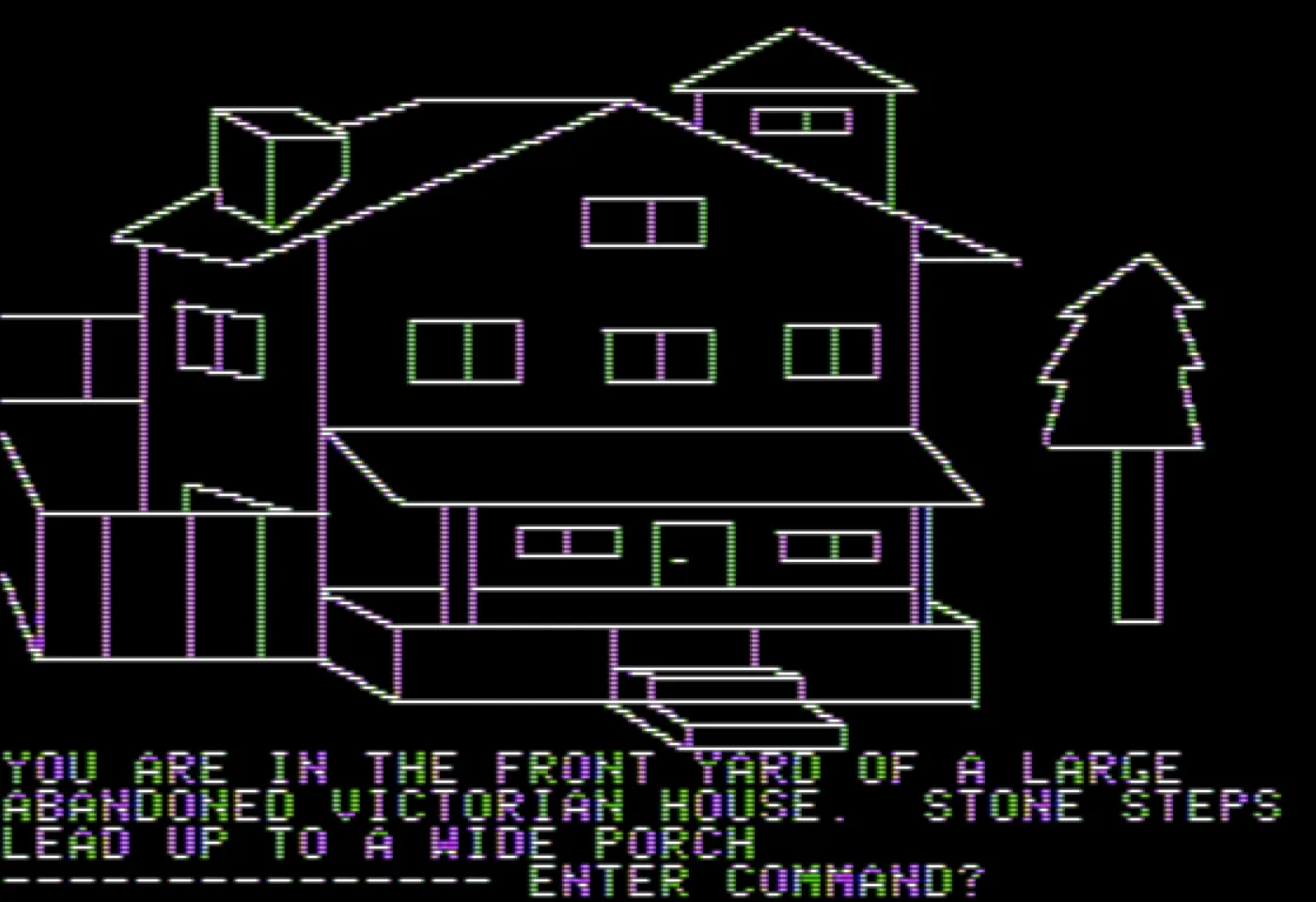
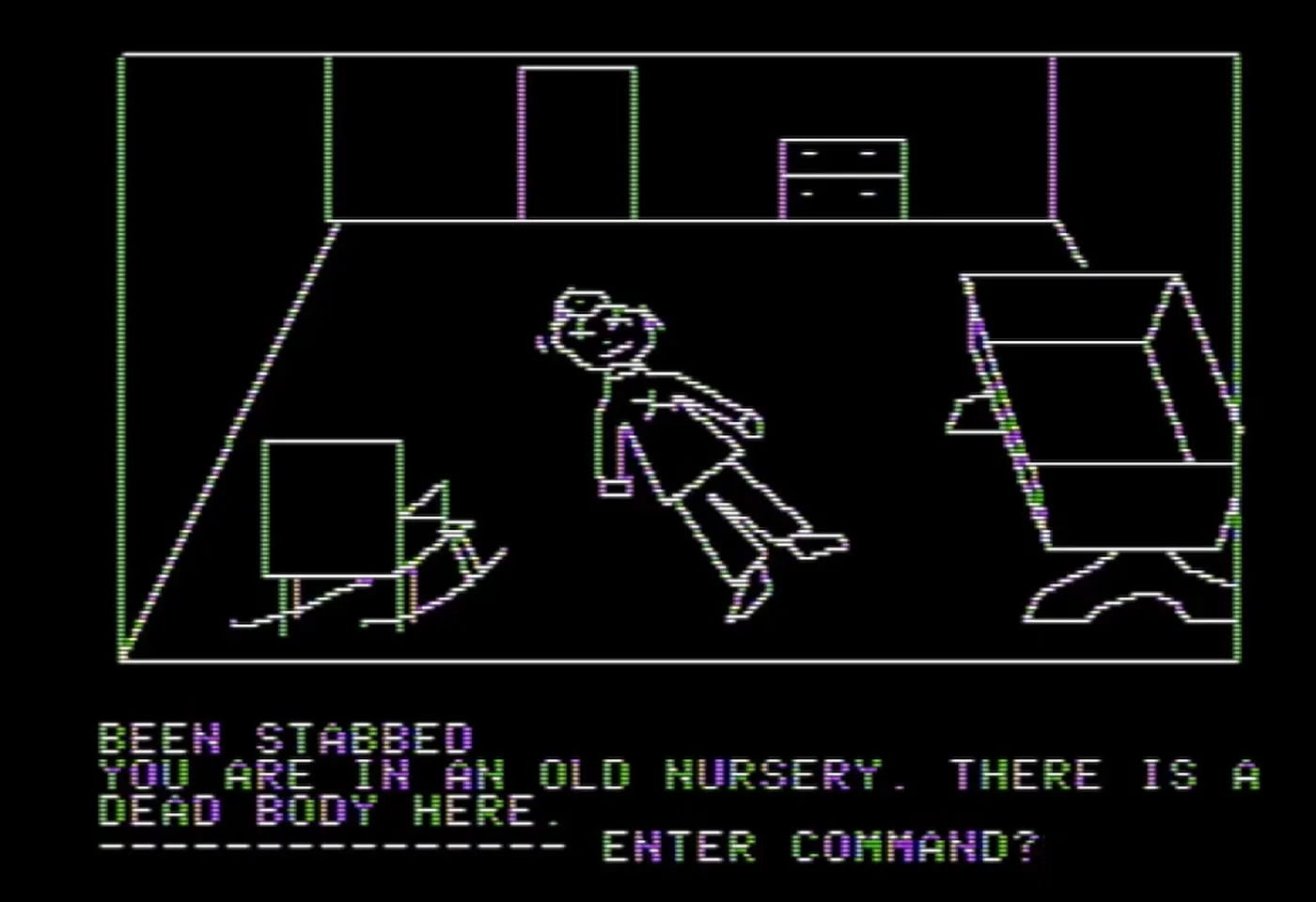
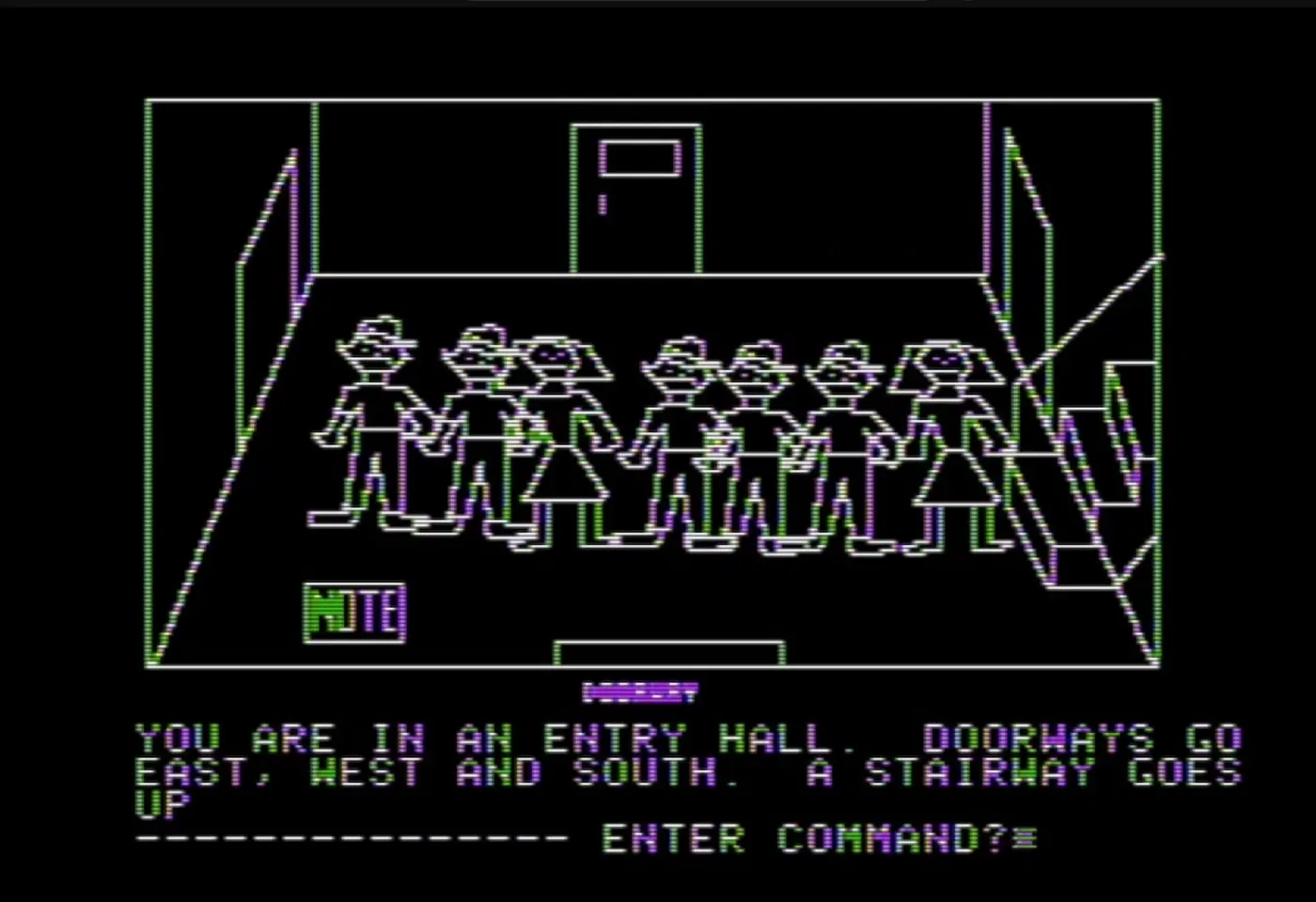
In 1980, Mystery House was released under the "On-Line Systems" label. The game combined text and monochrome "graphics" (lines… dots…) on the Apple II : 70 crude images, traced using a primitive scanning device. Roberta drew her ideas by hand, and Ken would place the paper drawing on a tablet. By tracing the contours with a stylus, the movements were translated by sensors into digital coordinates (X and Y). These coordinates were then sent to the computer.
💡 As a result, the computer didn’t store the drawing as a full image, but as a series of plotting instructions (a set of "go to X, Y" and "draw line" commands). This avoided heavy bitmap storage and even allowed for simple animation : when a player opened a door, the image was redrawn to show the modified scene.
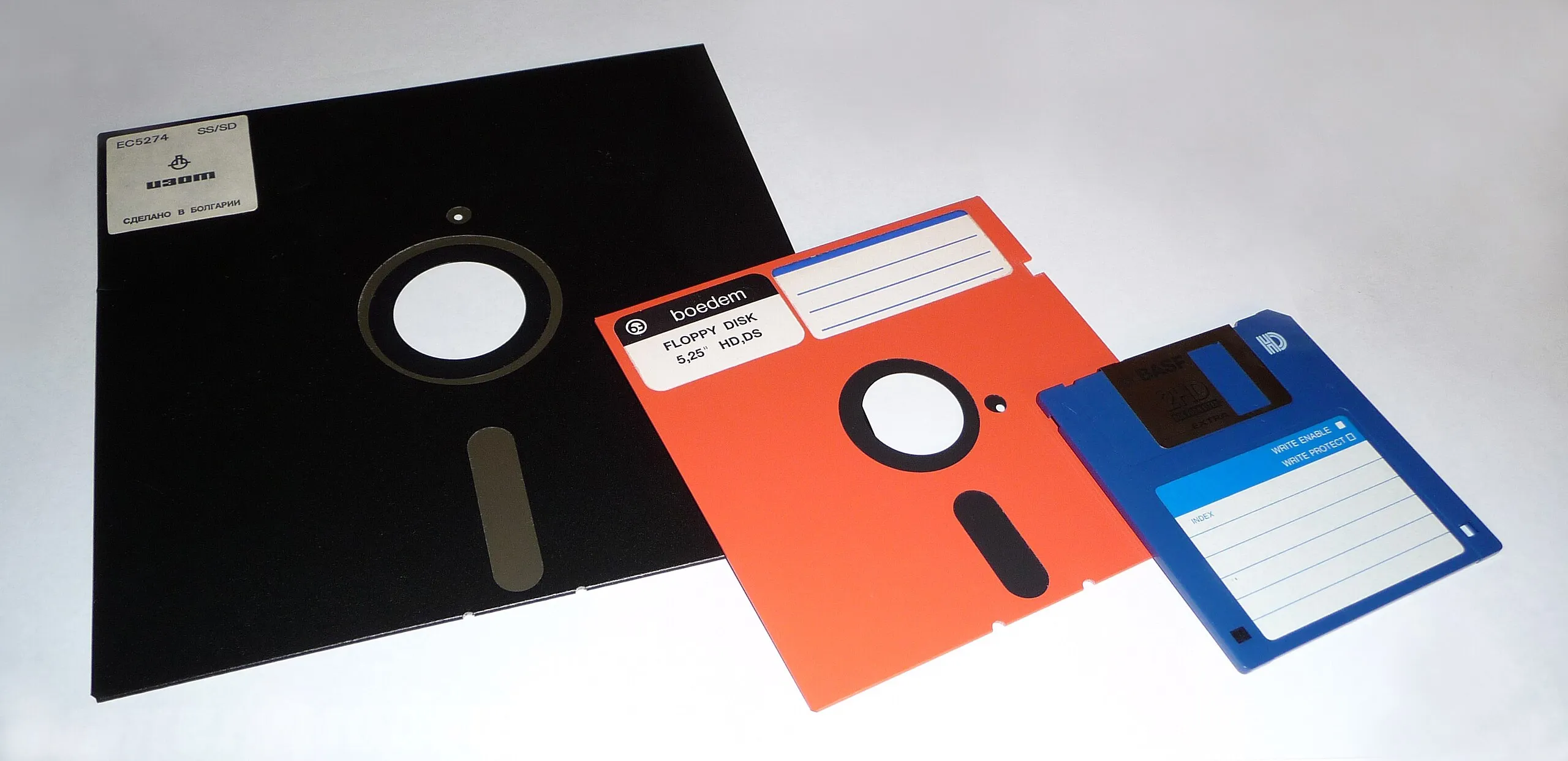
Mystery House was sold for $24.95 ; its concept surprised and captivated the audience : over 10,000 copies were sold in the first year. A remarkable figure for the nascent microcomputer market. And guess what ? The game was often sold via mail-order, with the flat floppy disks of the era fitting perfectly into envelopes. This early success funded what came next : a small independent publisher became a viable project.
Mail-order, Retailers, and Independence
For their growing company, Ken and Roberta’s initial business model was simple and intentionally artisanal. Mail-order, local computer retailers, and word-of-mouth in clubs and microcomputer fairs made up the distribution network. This choice maintained creative freedom : no heavy editorial pressure and a greater capacity for risk-taking than a traditional publisher. This would be a principle the couple tried to uphold as long as possible.
The Unexpected Validation from Steve Wozniak
Ken Williams, a programmer at heart, always had doubts about the legitimacy of making "games" instead of "serious applications." This internal debate was about to be settled, not by an accountant, but by an absolute industry legend. Recognition came from where it was least expected, and it validated everything.
Steve Wozniak, co-founder of Apple, was involved in a plane crash in February 1981 (he was piloting the aircraft himself). He suffered from temporary amnesia and spent several weeks recovering in the hospital. During his recovery, he played Mystery House (and likely other Sierra games), finding it brought him great comfort and much-needed stimulation.
Ken Williams has often told this story in interviews and detailed it in his book, "Not All Fairy Tales Have Happy Endings." Parts of the letter even appeared in old Sierra catalogs.
I had a widely publicized plane crash in February. Fortunately, everyone is fine and I still love flying. I have no memory of the crash or the five weeks following it (total amnesia), but I’ve been told about the accident and the hospital stay. Photos show me in the hospital playing on an Apple with your new game, which I was totally unable to put down. Thank you so much for the happiness you brought into my life. I hope you find no limits to your creativity. — Steve Wozniak
For Ken Williams, this letter was crucial. He had doubted his company’s direction, initially wanting to focus on "serious applications" (business software). Wozniak, his personal hero, gave him the ultimate approval for games : Wozniak said that Sierra's game was "the closest application to what I really designed the computer for." This gave Ken the confidence to dive headfirst into the world of video games.
Mystery House has just opened the door. Sierra is still just a name written on a floppy disk sent by mail, but the momentum is there : proof that a couple isolated in the California woods can shake up the video game industry. If an Apple co-founder says their games are worth it, then nothing is forbidden. To be continued in the next article : Sierra On-Line : From Expansion to the Triumph of King's Quest (Part 2)...
Continue reading : Sierra On-Line : From Expansion to the Triumph of King's Quest (Part 2) →