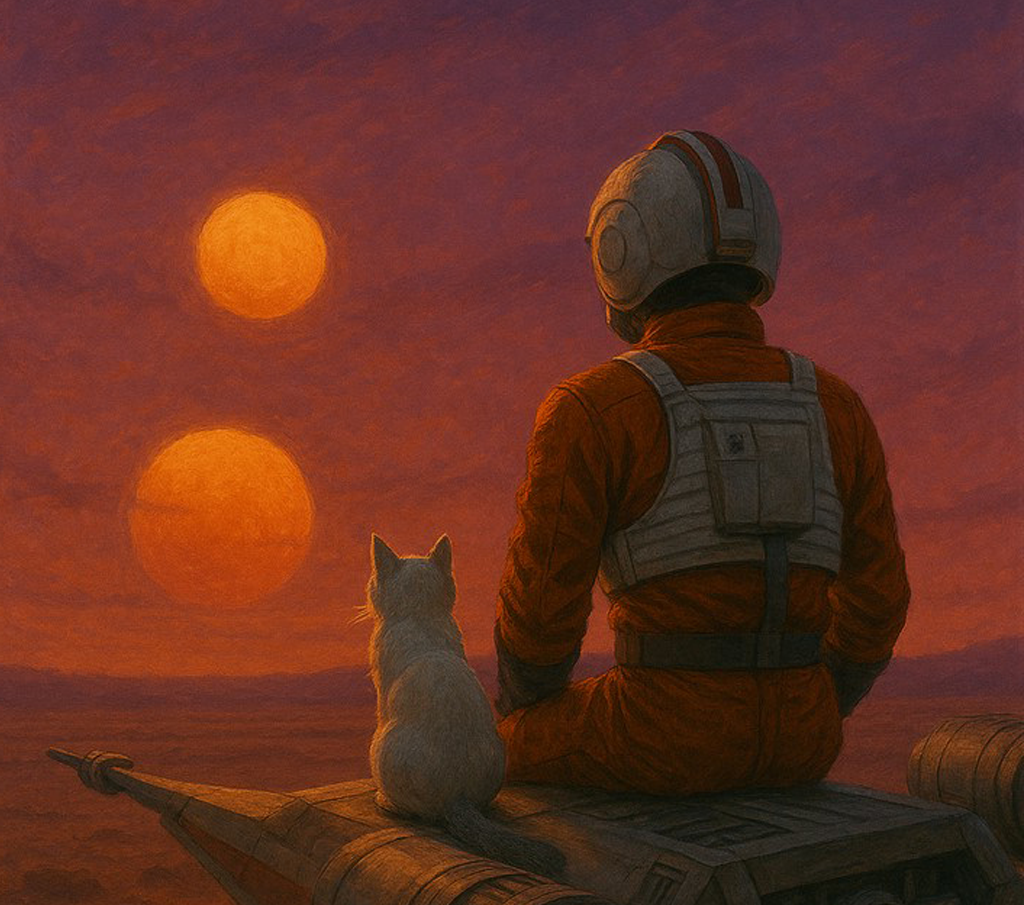
The Golden Age Before the Storm
By the mid-90s, Sierra On-Line no longer resembled the small artisanal studio born in an Oakhurst kitchen. It was a global powerhouse. Driven by Ken Williams, the company had only one obsession : the horizon. Ken didn't see himself as a mere pixel merchant, but as a visionary. In his mind, Sierra wasn't competing with LucasArts or Broderbund. His real rivals were Microsoft and Disney.
Sierra's future was radiant. The company had already laid the groundwork for what would become the daily lives of gamers thirty years later : online gaming, social networks, and cinematic storytelling. By acquiring talented studios and publishing titles like Homeworld or Ground Control, Sierra was poised to become the industry's center of gravity. But behind this irresistible ascent, a trap was being set.

The Assassination of Sierra : Ken Williams' Thesis
Walter Forbes' Approach : The Wolf in the Fold
For Ken Williams, Sierra did not die of natural causes. It was "assassinated". He carries this conviction with bitterness in his autobiography. He regrets that history only remembers Sierra for its 80s 2D adventure games. For him, those games were merely the first step of a technological metamorphosis that should have placed Sierra at the pinnacle of the Internet era.
Everything shifted in the early 90s. Walter Forbes, CEO of CUC International, sat on Sierra’s board of directors. Forbes was the embodiment of Wall Street success : Harvard graduate, charismatic, flying in private jets, and rubbing shoulders with Bill Gates. Ken, fascinated by financial success, saw him as a model of a "great businessman."
However, Roberta Williams, more instinctive, sensed danger. She remembers a scene in the lobby of the Hotel Le Bristol in Paris. Forbes, in jogging gear, approached her alone. He was looking for the "weak link." He asked her point-blank : "Have you ever thought about selling Sierra ?". Roberta, far from the shy young woman some described, replied firmly : "No." When he insisted on knowing the price, she cut him off : "It's expensive."
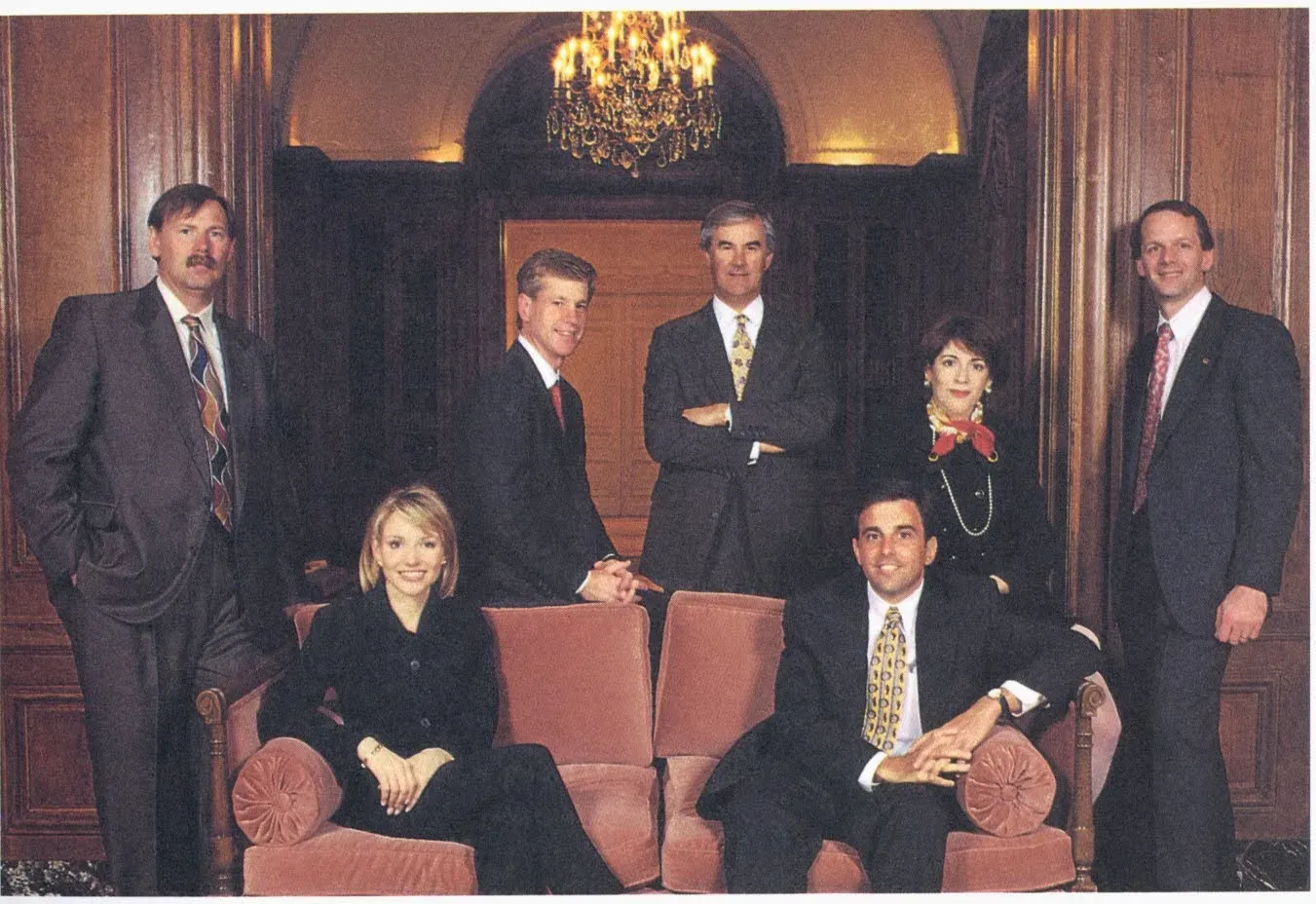
The 1996 Dilemma : A Billion Dollars of Lies
Despite the warnings, Ken Williams gave in to temptation in February 1996. Forbes proposed a massive buyout for $1 billion. For Ken, it was the opportunity to shield Sierra and provide it with the resources to crush the competition. His lieutenants, Mike Brochu and Jerry Bowerman, pleaded with him not to do it. Bowerman warned Ken : "No one beats Wall Street estimates by a penny for 24 consecutive quarters. It's impossible."
But Ken wanted to believe. He felt a fiduciary responsibility to his shareholders. The buyout was finalized in July 1996. What Ken didn't know was that CUC, a discount coupon company, was not generating real profits. It was inventing its numbers.
Culture Clash and the Founders' Exile
The Betrayed "Pact"
As soon as the contract's ink dried, Walter Forbes’ promises evaporated. He had guaranteed Ken that Sierra would remain autonomous. It was a lie. Control of the software division was handed over to Bob Davidson (of Davidson & Associates).
Ken Williams quickly found himself sidelined. Davidson, a cold and rigid numbers man, imposed a bureaucratic culture completely at odds with the Oakhurst spirit. "There was no room for improvisation with Davidson," an ancient producer recalls. Ken, who always wanted to be "the nice boss," found himself exiled to an online shopping subsidiary, NetMarket, far from his development teams.
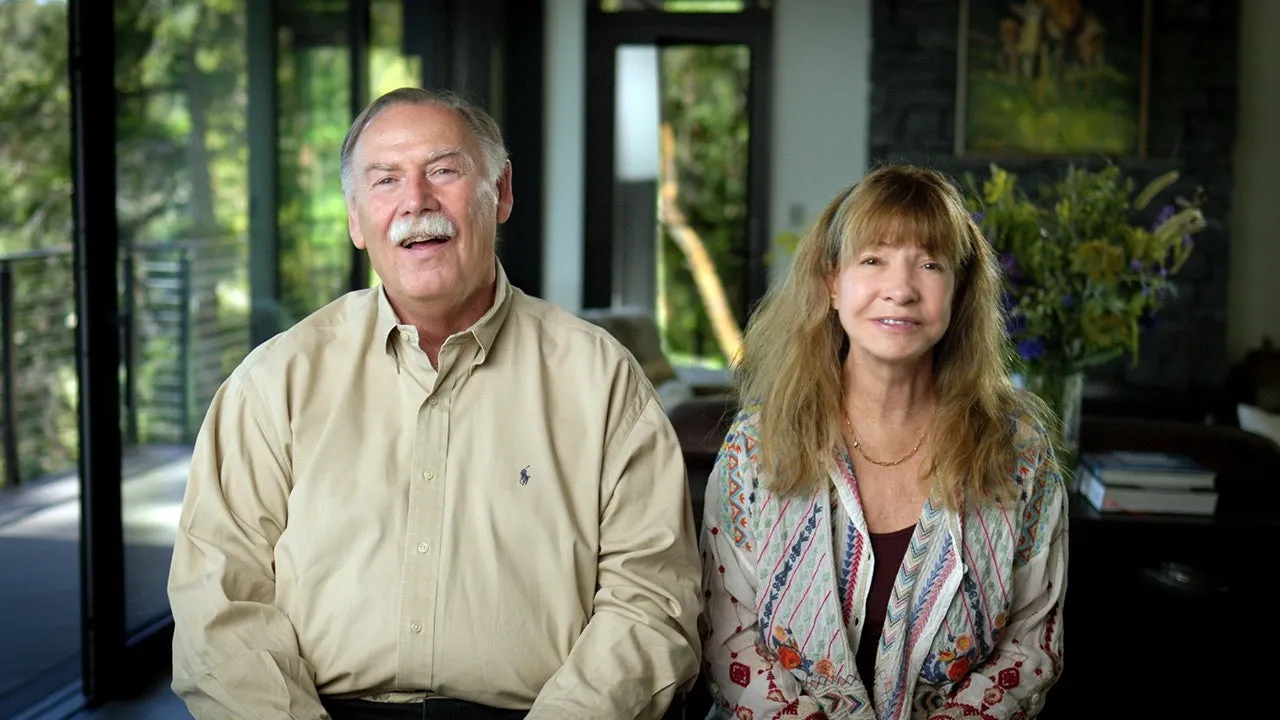
Roberta's Sixth Sense : Instinct vs. Finance
In 1997, while Ken Williams tried his best to focus on the NetMarket project, Walter Forbes invited him to a leadership seminar in Vail, Colorado. Ken arrived with the enthusiasm of a pioneer, ready to pitch his vision of a future where everything would be bought online, supported by ultra-high-performance servers.
But in the hushed atmosphere of Forbes’ golf club, the reception was freezing. CUC executives, more concerned with their financial engineering than technological innovation, treated Ken like a "little boy" with his toys. "They tore everything down," Jerry Bowerman recalls. Ken left the meeting humiliated and ignored, calling Roberta to vent his frustration.
Roberta says : "A feeling of dread washed over me. I woke up the next morning and told Ken : we have to sell our stock. Right now."
Survival instinct vs. market "logic" : Roberta didn't base her decision on any financial statements — which they didn't even have access to — but on a visceral intuition : these people were not who they claimed to be. Ken, though reluctant, eventually listened. They sold everything they could while the stock was still at its peak, around $40. A few months later, the fraud exploded and the stock plummeted to $10. This "Queen of Adventure" instinct just saved the couple’s personal fortune.
A social tragedy behind the scenes : Roberta tried to warn her friends and colleagues at Sierra : "Sell, something is wrong." But many didn't listen. For employees remaining in Oakhurst or Bellevue, stock options were the bulk of their compensation and future retirement. Some had even taken out bank loans using their shares as collateral. When the stock evaporated, dozens of coworkers went, overnight, from "paper millionaires" to total bankruptcy.
In 1997, Ken Williams permanently left the company he founded. Roberta stayed to finish what would be her last great project, but her heart was no longer in it.
The Agony of King's Quest VIII
The development of King's Quest : Mask of Eternity symbolized the end of the creative era. Roberta worked from home, but when she returned to the studio, she no longer recognized her team. New managers, driven by marketing fervor, wanted to turn the saga into a Diablo clone.
"My team wouldn't listen to me. They told me I could just go home." — Roberta Williams
She fought to save her vision, refusing to sign her contract until the game’s release to force management to respect her authority. It was a period of profound sadness for the woman who invented the graphic adventure.

1998 : The Cendant Scandal and the Descent into Hell
The Fraud in Numbers
While Sierra tried to keep its head above water, the scandal broke. In April 1998, two CUC executives revealed the deception : revenues had been artificially inflated for years to satisfy Wall Street.
Cendant (born from the CUC/HFS merger) was accused of reporting a $55 million profit in 1997, when in reality, it was $217 million in losses. In a single day, the stock collapsed from $36 to $19, erasing $14 billion in market capitalization.
The Spark Before the Shadow : The Half-Life Miracle
Ironically, it was in the midst of this financial chaos that Sierra published its greatest masterpiece. In 1998, the studio agreed to publish Valve's first game : Half-Life.
The success was planetary — a cultural and technical shock. The FPS was reimagined, storytelling became environmental, and immersion took precedence over spectacle. Sierra didn't know it yet, but by propelling Gordon Freeman, it helped redefine modern gaming for the next twenty years. Sierra proved its genius for finding legends one last time, but the studio was already a "hollow shell." Half-Life's profits were only used to absorb the debts of a parent company in flames.

The Fracture : "Chainsaw Monday" and the Death of the Mountain
Chainsaw Monday
In August 1998, Cendant declared that software was no longer part of its "core business." Sierra was sold to Havas Interactive (a Vivendi subsidiary). February 22, 1999, remains etched as the darkest day in the studio's history : "Chainsaw Monday."
Without warning, management closed the historic Oakhurst studio. Hundreds of employees were laid off. Sierra's beating heart stopped. Sierra On-Line changed its name to Sierra Entertainment, a mere publishing label. Ken Williams would later summarize this period with a chilling image : watching your own child being tortured to death, unable to intervene.
Ken Williams, devastated by the fate of his former colleagues, wrote them a poignant farewell letter on February 23, 1999. In this heartbreaking message, he looked back on 20 years of history, explained the decisions that led to this catastrophe, and tried to find comfort in the extraordinary adventure lived together :
Dear former Sierra employees,
Roberta and I would like to express our deepest condolences for the recent loss of your jobs. I hope it won't be too long before you return to work at Sierra in Seattle, or another company... in Oakhurst, or elsewhere.
According to tradition, I'm supposed to say something comforting and motivational to help everyone feel better. Unfortunately, I have failed in this task. There really is nothing good to say. This is a very sad ending to Sierra's twenty years of operation in Oakhurst, which at one time had over 550 employees based locally. This story should have had a happy ending, but instead, it saw a long series of bad news that ended yesterday with the closure of all Sierra product development activities in Oakhurst.
The problems started with the move of the headquarters to Seattle. This move was imperative for several reasons, mainly due to the difficulty we had recruiting senior executives and software engineers. This transfer, while painful for Oakhurst, was the instrument of our phenomenal growth between 1993 and 1996. I remain convinced that this relocation was the right decision for Sierra, and that we would not have prospered without it.
I cannot say the same about the sale of The ImagiNation Network (INN) in 1993, or the sale of Sierra itself in 1996. When Sierra launched INN in 1991, the network was a decade ahead of its time. After investing millions into it, Sierra found it didn't have the financial resources necessary to support ongoing operations. In 1993, AT&T aggressively sought to acquire INN, promising to market the service and grow the business. Unfortunately, AT&T lost interest in INN and sold it back to AOL, which, to my disappointment, closed the service.
Sierra, as you know, was acquired by CUC International in 1996. Since CUC offered to buy the company at a price roughly 90 % above its market value, the decision was taken out of management's hands. At the time of purchase, we were convinced that through the merger with several Sierra competitors (Blizzard, Knowledge Adventure, Davidson, and others), Sierra would become a much stronger company.
We had good reason to believe that this acquisition would allow us to grow faster, not shrink. Unfortunately, CUC chose to transfer control of the company to Davidson and closed several groups within Sierra.
Later, as we all know, CUC merged with another company, HFS, to form the Cendant corporation, with around 12,000 employees. A few months after this merger, it was discovered that someone, or perhaps a group of people within the former CUC organization, had fraudulently falsified financial statements.
The actions of this handful of people — who I hope get what they deserve — caused the collapse of Cendant's stock price and wiped out the net worth of many employees of HFS and CUC, including many of you, as well as a large part of mine. Cendant was sued by its shareholders, CUC's former management team was fired, and the decision was made to sell the software business.
It is no wonder that morale suffered through all this anarchy ; and although I haven't seen Sierra's accounts for several years, I assume the recent consolidation of operations is driven by a quest for rediscovered profitability and stability. If this story were written as a book, the publisher might seek to classify it under "Fantasy," "Science-Fiction," or even "Horror." It is far too scandalous to be true. But the bad news is that these events actually took place.
I comfort myself in the following way, and perhaps it will help you cope with what happened. Imagine a stranger had approached one of us, on the street, in 1979, and said :
"Would you like to move to one of the largest cities in the world ? While you're there, you can play a key role in creating a company that almost everyone will know and respect. Your grandchildren will be amazed when they learn you once worked there. You'll be the envy of your peers because they'll know your team created the greatest collection of hits ever made by a single company. There will even be years when you played a role in more than half of the products on the industry's top ten best-selling lists ! You'll be surrounded by incredibly smart and hard-working people, who will work more than 20 hours a day when necessary to get the job done. And you'll have more fun than you ever thought possible. There's just one small catch : it will only last twenty years."
Even knowing it wouldn't last forever, I would have followed that stranger anywhere. I'm disappointed that it's not forever, but a 20-year ride on the world's greatest roller coaster beats life in the slow lane any day.
Life may never be the same again, but it's not over, and we all have wonderful memories that we'll never forget. Good luck, and I miss you all.
— Ken Williams, February 23, 1999
The Buyout Waltz (2000 - 2008)
The 2000s were a slow agony of identity. Sierra passed from hand to hand. The Oakhurst premises were briefly taken over by Codemasters under the name Yosemite Entertainment, before closing for good.
In 2004, massive new restructurings took place. Mythic licenses like Leisure Suit Larry or Caesar were handed over to external studios for 3D sequels that struggled to convince. The magic of Mount Half Dome slowly faded from screens.
2008 : The Final Point
The official death occurred in July 2008. During the merger between Vivendi Games (owner of Sierra and Blizzard) and Activision, the Activision-Blizzard group was formed. The Sierra brand was shelved.
- Studios like Massive Entertainment (World in Conflict) were sold to Ubisoft.
- Swordfish Studios was ceded to Codemasters.
- Forums closed, and the official website disappeared.
Sierra no longer existed as an entity. It was nothing more than a folder in Activision’s archives.

The Legacy : Sierra Never Truly Dies
Crowdfunding : The Fans' Revenge
Though the structure is dead, Sierra's DNA is everywhere. The modern adventure game, from Telltale's The Walking Dead to the works of Quantic Dream, owes everything to Roberta Williams' mechanics.
It is thanks to nostalgia and the generosity of fans that Sierra’s legends were able to be reborn. Kickstarter projects from Jane Jensen (Gabriel Knight), Al Lowe (Leisure Suit Larry), and Tim Schafer’s Double Fine studio proved that the public had never forgotten.
In 2014, Activision attempted a brief resurrection of the label to publish The Odd Gentlemen’s new King's Quest, a vibrant tribute that allowed a new generation to discover the humor and poetry of Daventry.
The Unexpected Return (2022)
To everyone's surprise, after more than twenty years of silence, Ken and Roberta Williams emerged from retirement in 2022. They founded Cygnus Entertainment to release Colossal Cave, a 3D adaptation of the text-based game that started it all for them in 1979. The circle is complete : the pioneers have returned to the source.
Epilogue : "Stay Tuned — We're Just Getting Started"
If Sierra On-Line eventually faded from Wall Street's accounting ledgers, it remains eternal in a much more precious place : our gamer memories. Whether the company developed, published, or simply distributed these titles, its name is inseparable from a list of masterpieces that is staggering.
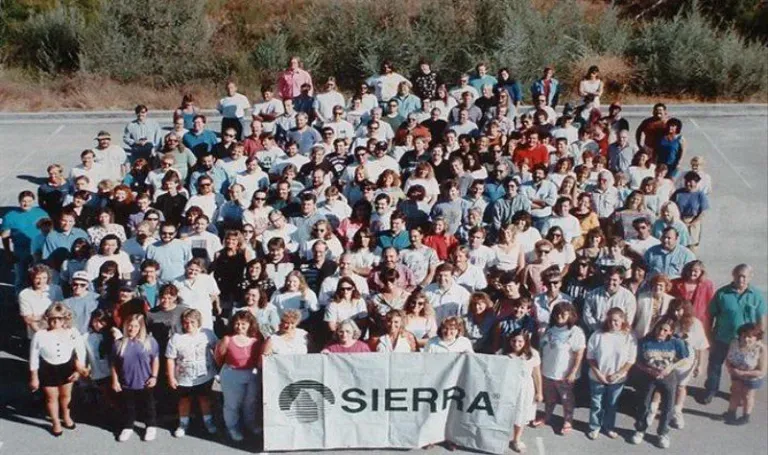
Look at this list. It is almost impossible that you won't find a piece of your childhood or adolescence there :
- The Adventure Pioneers : Mystery House (the first !), the King's Quest epic, the space humor of Space Quest, the escapades of Leisure Suit Larry, or the realism of Police Quest.
- Horror and Experimentation : The traumatizing Phantasmagoria and the ambitious Outpost.
- Strategy and City-Builders : The Caesar saga, the sands of Egypt in Pharaoh / Cleopatra, the skies of Master of Olympus : Zeus, not to mention Lords of the Realm, Homeworld, and Empire Earth.
- Action and Simulation : Red Baron, the strangeness of Gobliiins, the tactical intensity of SWAT, the dread of Alien versus Predator, the Diablo : Hellfire expansion, and even the early days of Football Manager.
- The Valve Revolution : Half-Life and its cult expansions (Opposing Force, Blue Shift, Decay), the chaos of Team Fortress Classic, and, of course, the global phenomenon Counter-Strike.
Reading these names, you probably see yourself 20, 30, or 40 years ago ; you hear Larry's chuckle or you still feel that tension in the corridors of Black Mesa. Sierra wasn't just a company ; it was a label of quality, a companion that taught us every game was worth experiencing for the power of its story and the heart put into every adventure.
Today, Ken and Roberta Williams no longer live in the stress of quarterly reports or stock market scandals. For over 20 years, the couple has lived on a boat, sailing together across the world. They traded the Sierra Nevada mountains for marine horizons.
As for Sierra's "murderer," Walter Forbes, justice finally caught up with him. In 2007, he was sentenced to over 12 years in prison and ordered to pay $3.28 billion in restitution for securities fraud.
But the story doesn't end there. Ken and Roberta are currently preparing a major documentary on their entire career. Thanks to a successful Kickstarter, this film will be released next year and will feature legendary figures like Steve Wozniak (Apple co-founder).
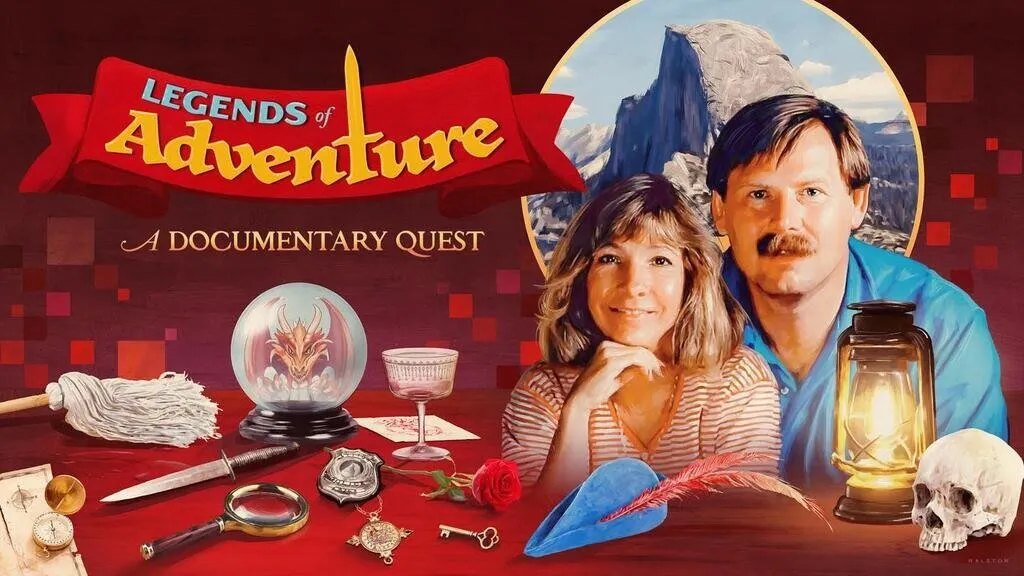
Stay tuned — We're just getting started. — Ken and Roberta Williams
Sierra was that rare ability to make us feel like explorers, whether we were a knight in Daventry, a cop in Los Angeles, or a space janitor. They taught us that we could die in a thousand stupid ways (and we loved it !), but above all, that behind every screen of pixels lay a story worth living.
Thanks for the journey, Sierra.
And you, what is your last memory of Mount Half Dome ? Pharaoh coming and destroying your city ? The first time you finished Half-Life ? Share your memories in the comments !
Rediscover the saga : Sierra On-Line : From Mystery House to Wozniak's Ultimate Nod (Part 1)