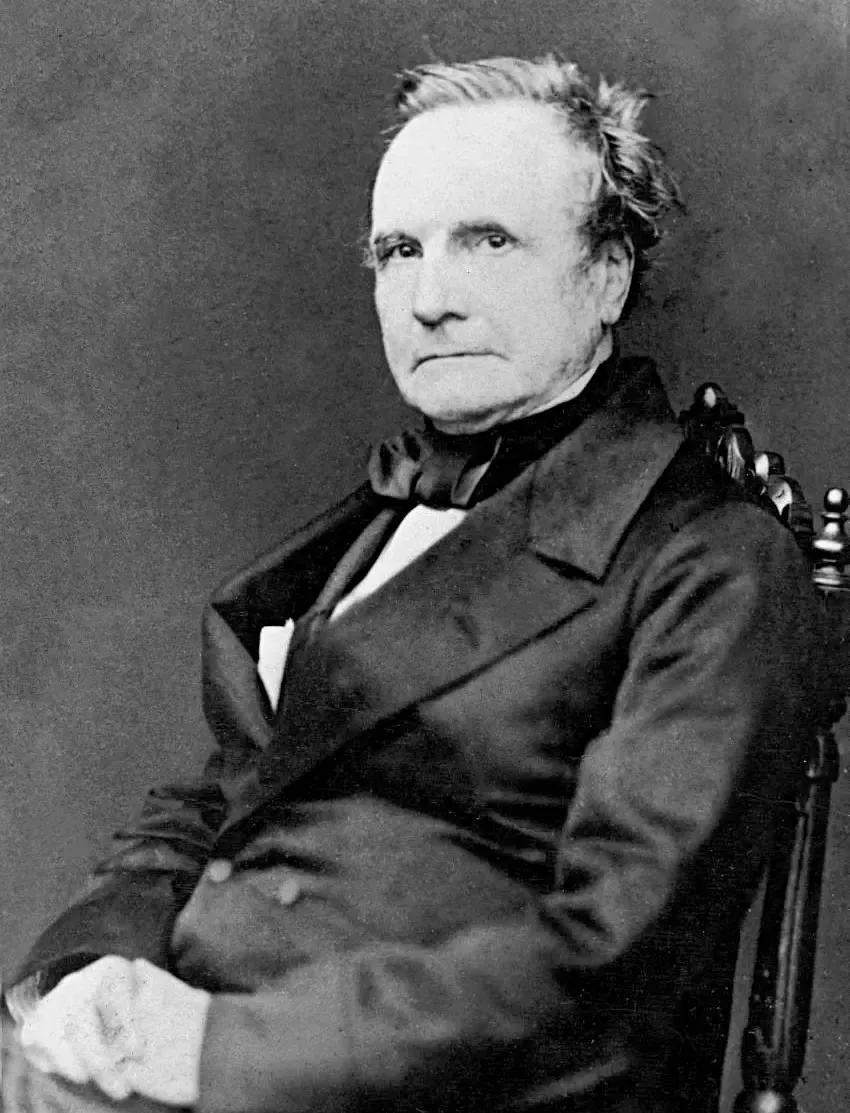
Charles Babbage : The guy who was sick of calculating by hand
Imagine yourself in 1830, in the heart of a Victorian England proud of its moustaches, its chimneys, and its differential equations. You are about to publish a mathematical table filled out by hand by someone who hasn’t slept for three days, probably miscopied his numbers, and just confused a 7 with a 1. Result : your shiny new ship starts sinking, your shell misses its target, and you’ve officially killed more sailors than dysentery has in 50 years.
Fortunately, one man exists. His name is Charles Babbage, he is a mathematician, an engineer, a bit of a misanthrope, but very attached to one simple idea : humans are just too bad at precise calculation. They must be replaced… by machines.
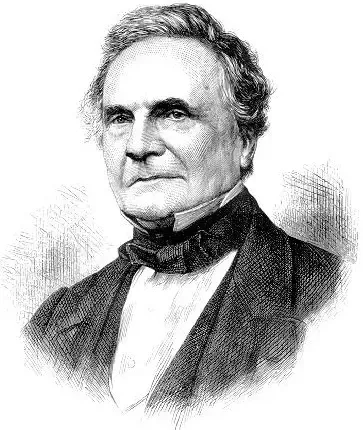
He just wanted the right numbers
Babbage, horrified by the errors in the logarithmic tables printed at the time, proposed creating a machine capable of doing the job without failing. The idea? A mechanical automaton, powered by a hand crank, which calculates using the method of finite differences.
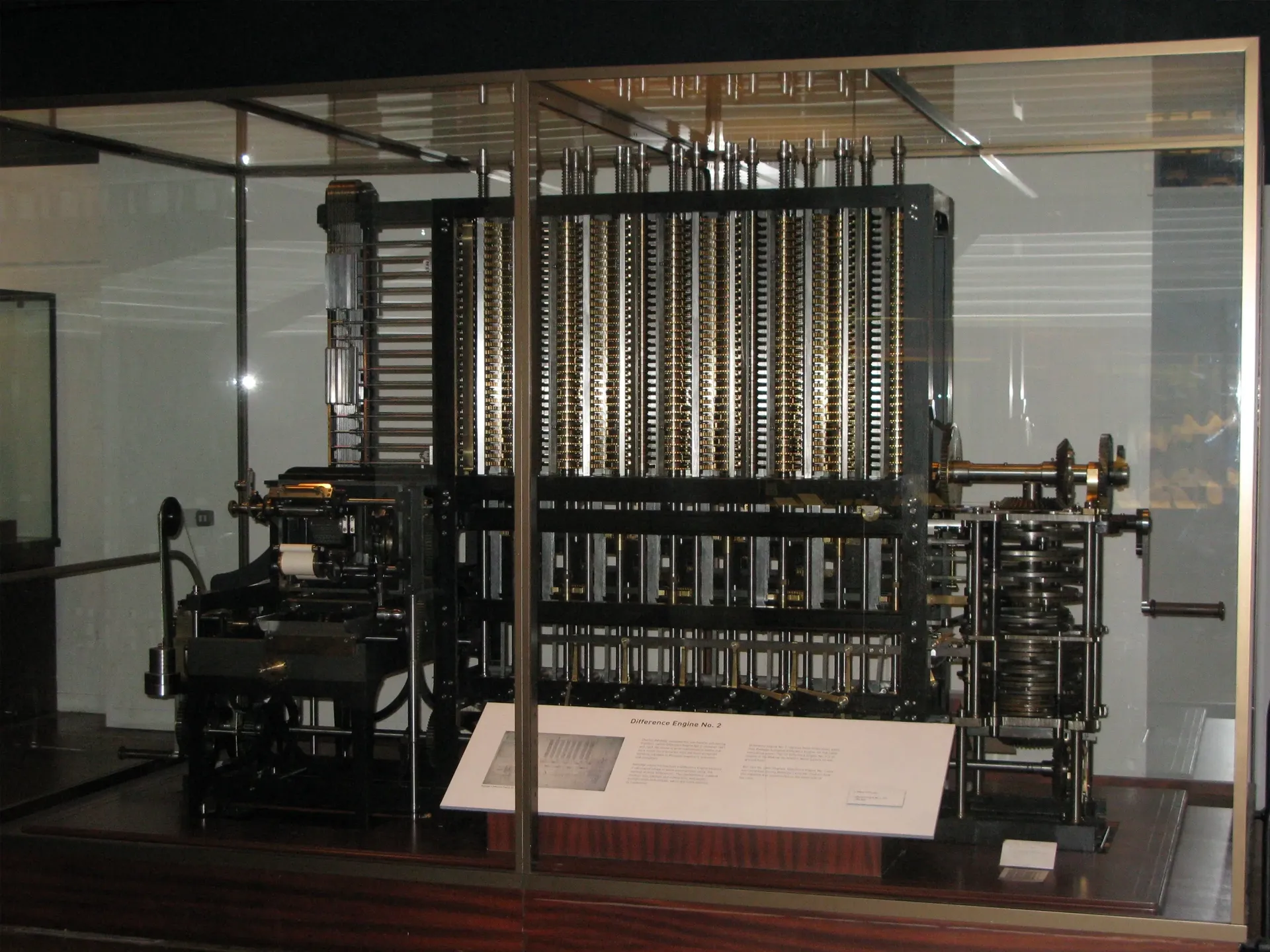
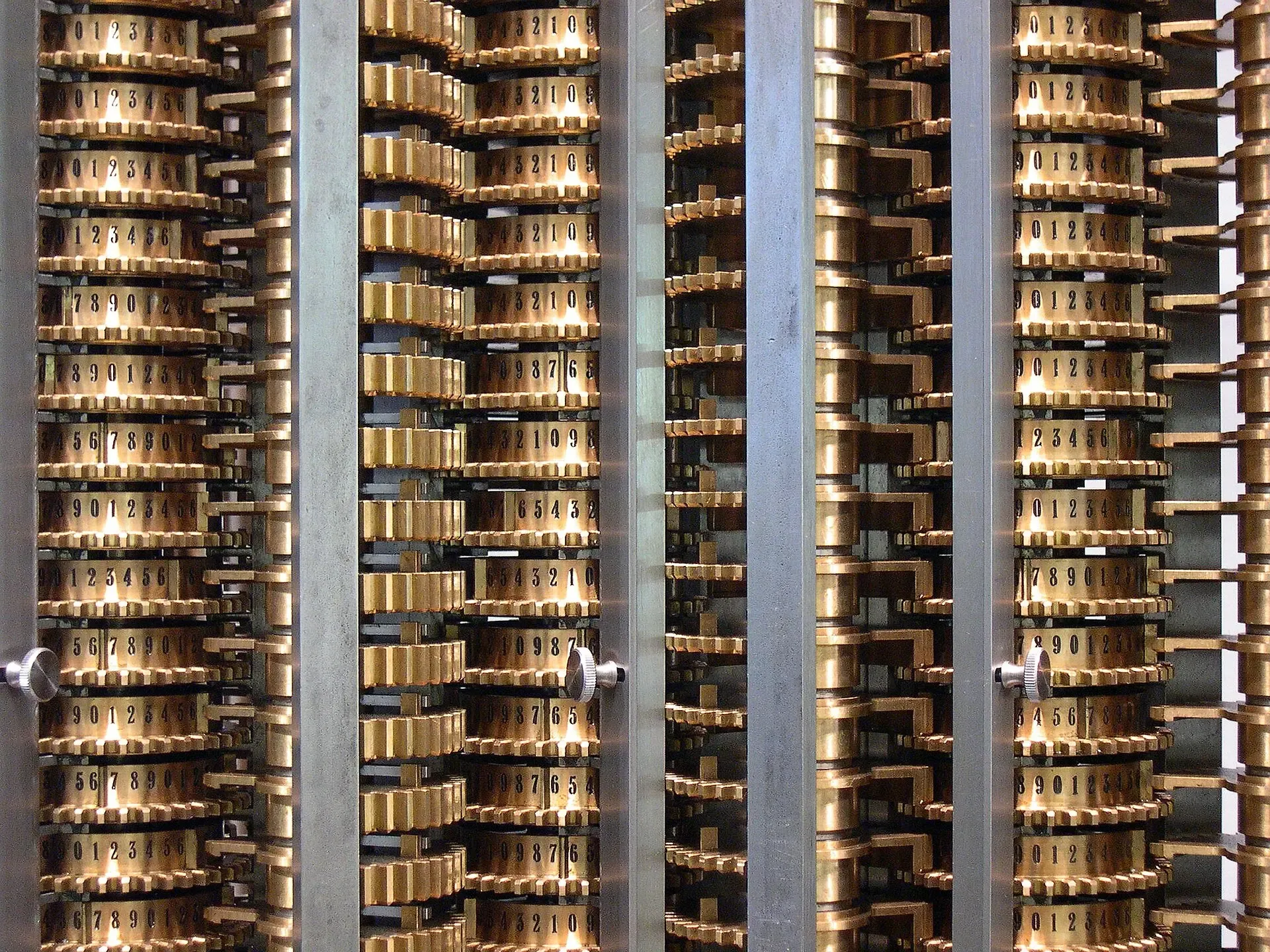
He called it the Difference Engine. Yes, it sounds a bit strange, but it was a true breakthrough. It was supposed to look like a giant block of metal with gears, rods, levers, and toothed cylinders… basically, a mix between a Swiss watch and a giant robot. It was designed to print its results itself, to avoid human error at the end of the chain.
Spoiler : it would never be finished. Lack of funds, technology, financing, and patience. It’s the classic story of any ambitious project that is far ahead of its time.
Then he literally invented the computer. But… in wood.
Around 1837, Babbage took things to the next level : he designed the Analytical Engine, a programmable device with memory, a calculating unit, punched cards as source code, and even a printer. On top of that, it could repeat instructions : loops. It’s the skeleton of modern computing. A hundred years before Turing. A hundred and fifty years before Intel processors. Except it would have required thousands of hand-machined metal parts to build it. And even in Factorio, no one has that kind of patience.
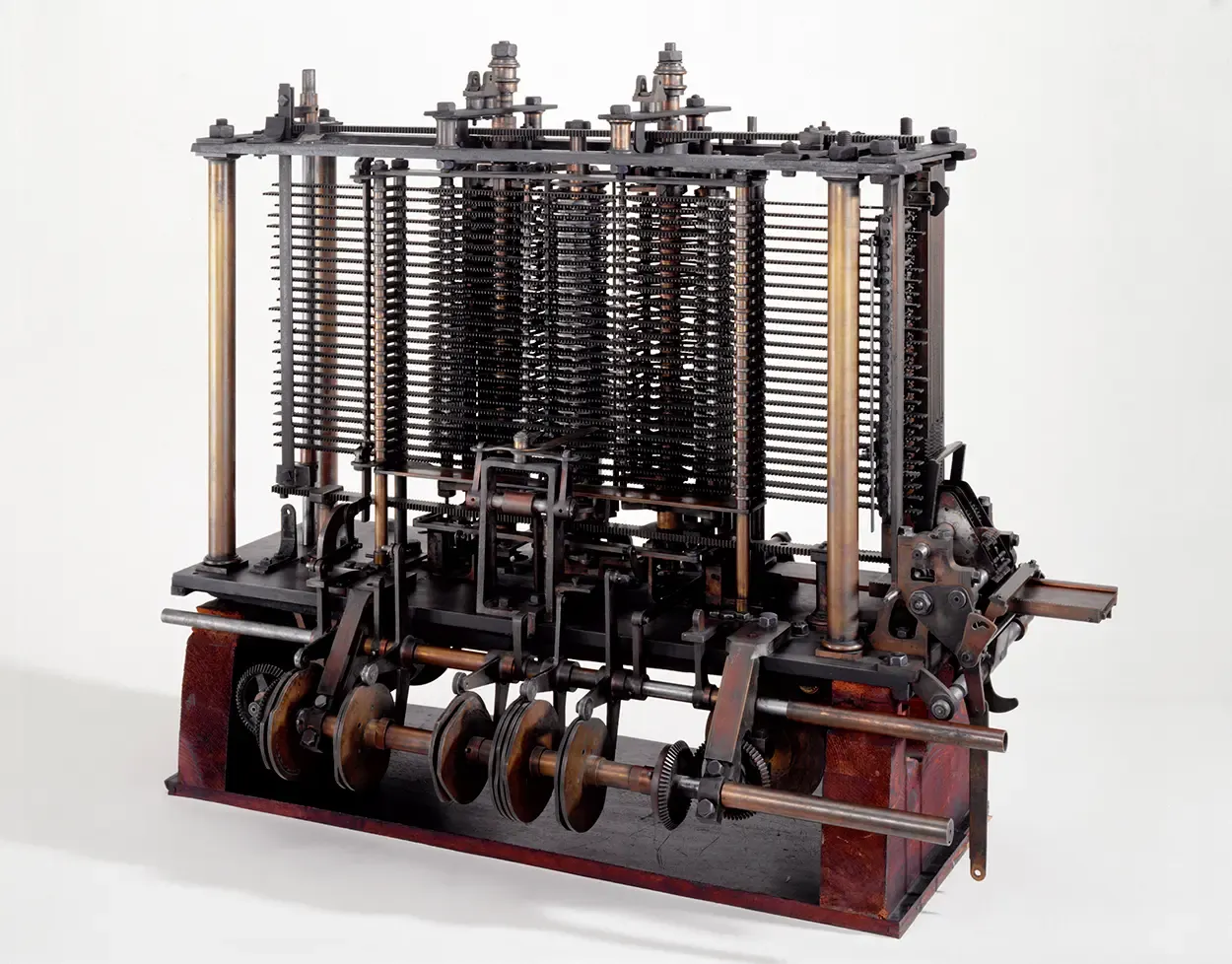
And like any good English story, there's also a brilliant woman forgotten along the way
Ada Lovelace, the only one to understand the sheer scale of the Analytical Engine, wrote in 1843 what is considered the first computer program in history, while half of Europe still thought electricity was a sin. Chilling.
She saw what no one else could : a machine that wasn't limited to numbers, but could manipulate symbols, sounds, or images. She literally predicted the multimedia computer.
Charles Babbage died frustrated. No wonder.
Old man Babbage spent 40 years drawing plans, asking for funding, grumbling at printers, and being snubbed by bureaucrats. What did he leave behind? Plans, sketches, partial prototypes, and an idea : machines can think. Or at least, execute logical instructions better than we can. And that is perhaps the most powerful legacy of Babbage: having understood, before everyone else, that we were all going to end up as slaves to machines. Except he, at least, had provided a crank to turn them off. His work remained unfinished, misunderstood, almost forgotten... until engineers at the Science Museum in London built his machine according to his plans in 1991. And guess what? It works.
"He was taken for a madman. He was just 150 years ahead of his time."
Finally, and just for the history books, Old man Babbage was also one of the pioneers whose work helped invent the speedometer and the cowcatcher for trains. He also began to understand that a tree's age could be counted by the rings at its heart, campaigned for a uniform postal rate regardless of distance, and many other things… in short, Old man Babbage might not have had fiber, but his brain was hardwired for the future.
Babbage in pop culture?
He appears in Assassin's Creed Syndicate and in plenty of steampunk fiction. Today, he is considered one of, if not the very first father of modern computing. A face, a brain, ideas too big for his time. And a dream : that machines calculate better than us. A dream we are not far from realizing.