Dune 2000 in 1998 : Inheriting the Founding Myth of the RTS Genre Was No Easy Task
Some games carry the crushing weight of a legendary title on their shoulders. Dune 2000 is undeniably one of them. Released in September 1998 under the joint stewardship of Westwood Studios and Intelligent Games, this remake possessed every single ingredient to thrill die-hard fans : the desert planet Arrakis, monstrous sandworms, the spice, and above all, the direct legacy of Dune II, the game that laid the foundations of all modern real-time strategy. Yet, between the myth and the harsh reality of the final product, there was an entire desert to cross. Our deep dive into PC strategy games continues here on Little Big Campus. You can explore all our retrospectives and deep dives in our cult feature on the golden age of RTS and LAN Parties.
Dune II : The Birth of the RTS Genre and an Unreachable High-Water Mark
Two Masterpieces in 1992, One Timeless Legacy
To grasp the massive impact of Dune 2000 in the late 90s, one must first look back at the seismic shift caused by its predecessors. In 1992, the literary masterpiece by Frank Herbert inspired two incredible gaming releases within months of each other. French developer Cryo Interactive opened the doors with a unique hybrid of adventure and strategy, boasting a hypnotic atmosphere and artistic direction that captivated gamers worldwide. A few months later, Westwood Studios launched Dune II : The Building of a Dynasty, forever remembered as the founding father of modern RTS.
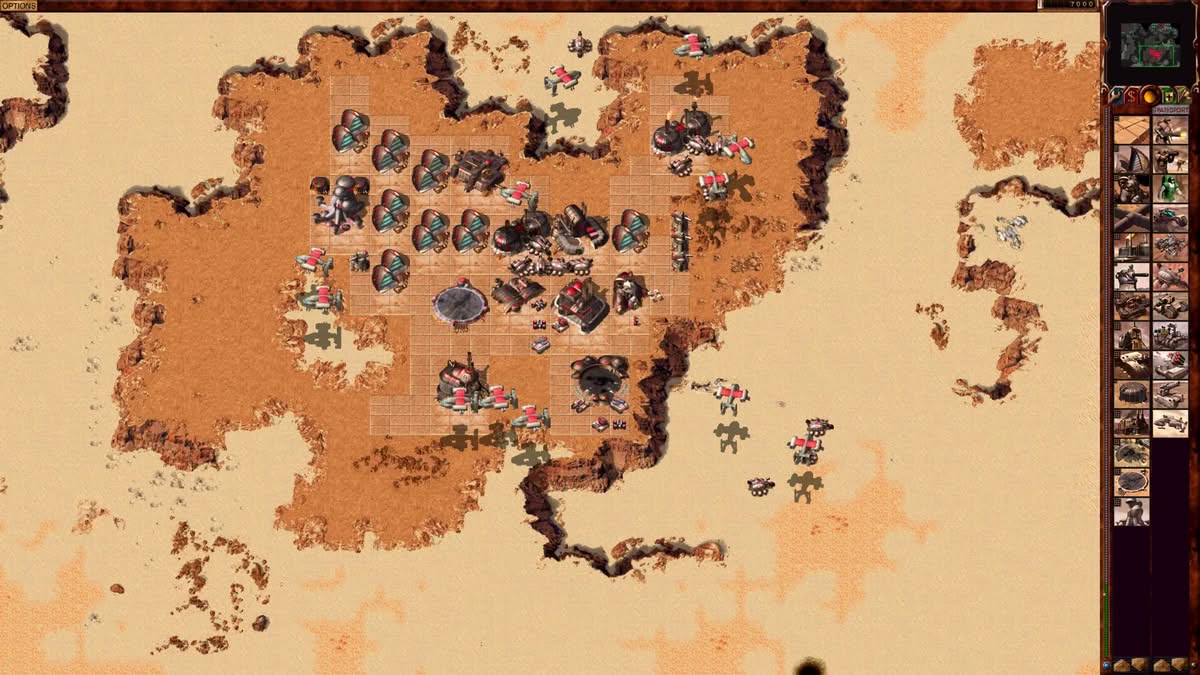
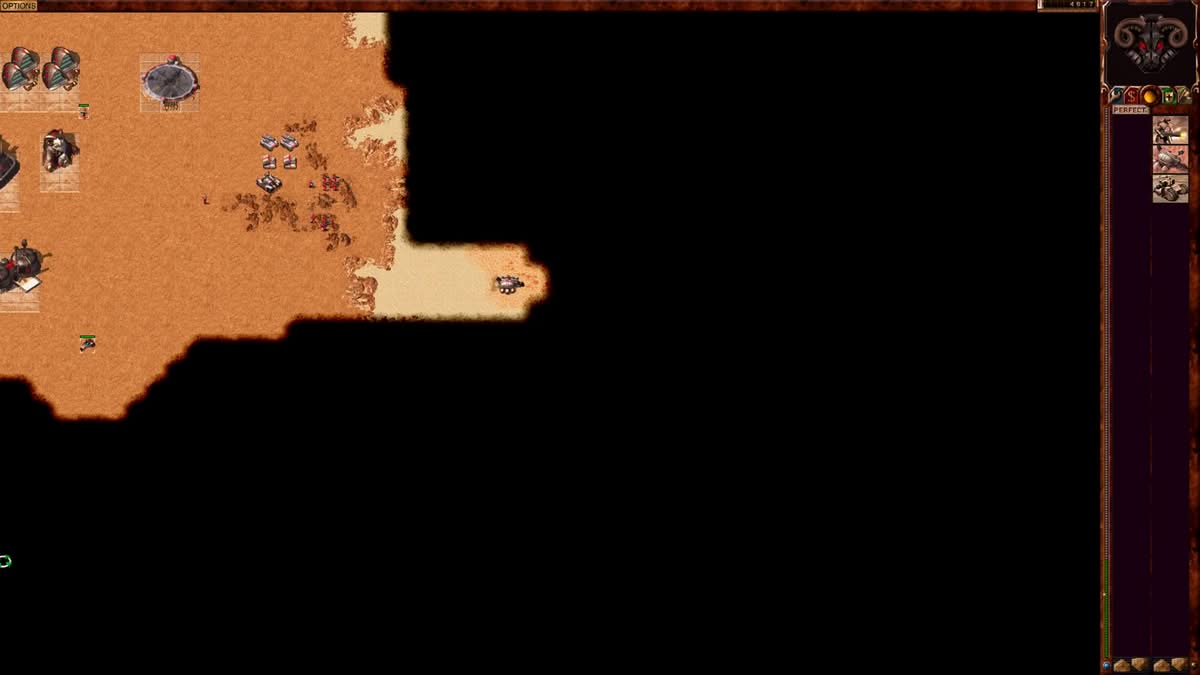
Dune II established the core mechanics that defined real-time strategy for decades : resource harvesting, base building tied to a tech tree, fog of war, and direct mouse unit selection. It sat comfortably at the peak of every PC gamer's personal pantheon. Returning to Arrakis six years later with a title as bold as "Dune 2000" set an extraordinarily high bar to clear.
💾 I originally discovered Dune II on a secondhand floppy disk found at the bottom of a cardboard box, with no box and no manual. It did not matter : the first twenty seconds of the cinematic intro glued me to my seat. That low rumbling bass synth, that endless expanse of sand... Something in this game swallowed you whole. Returning to Arrakis six years later with "Dune 2000" felt like staring down an overwhelming wave of nostalgia.
Facing Trial by Fire Against the Titans of 1997-1998
A Real-Time Strategy Market That Had Evolved Beyond Recognition
When Dune 2000 hit store shelves in September 1998, the PC gaming landscape had made giant leaps forward. Cavedog had shaken up the scene with the true 3D engine and real physics of Total Annihilation. Blizzard had just redefined competitive gaming forever with StarCraft. Meanwhile, Age of Empires dominated LAN parties across the globe. The competition was fierce, technically advanced, and fiercely ambitious.
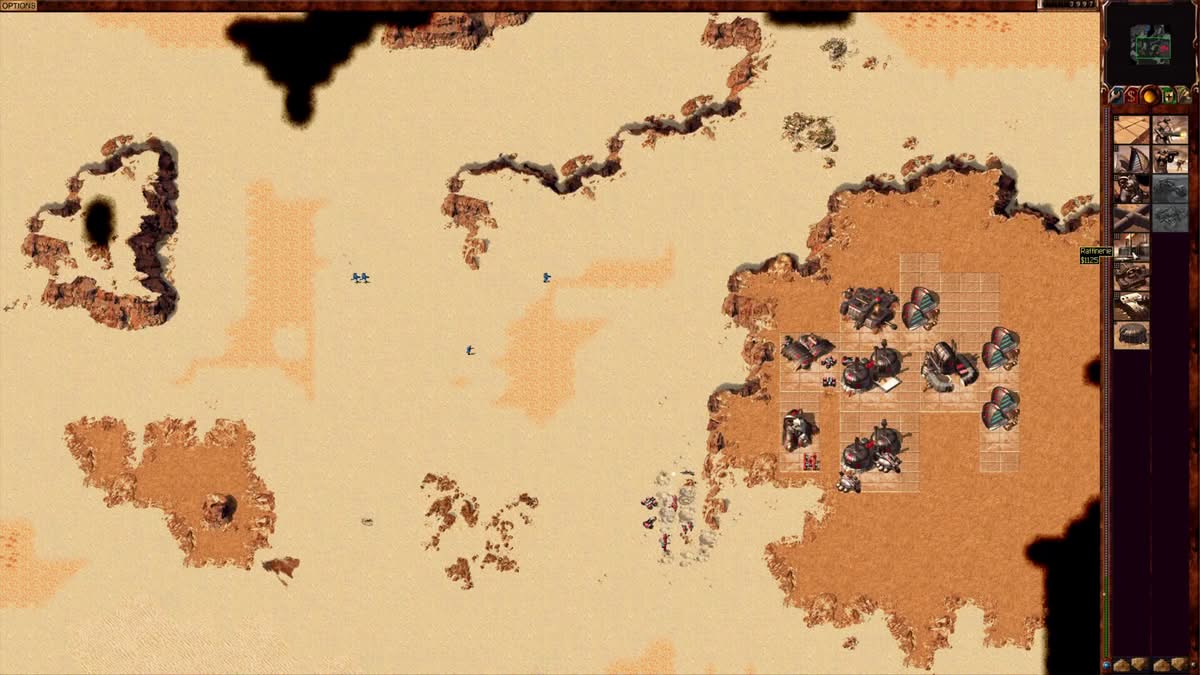
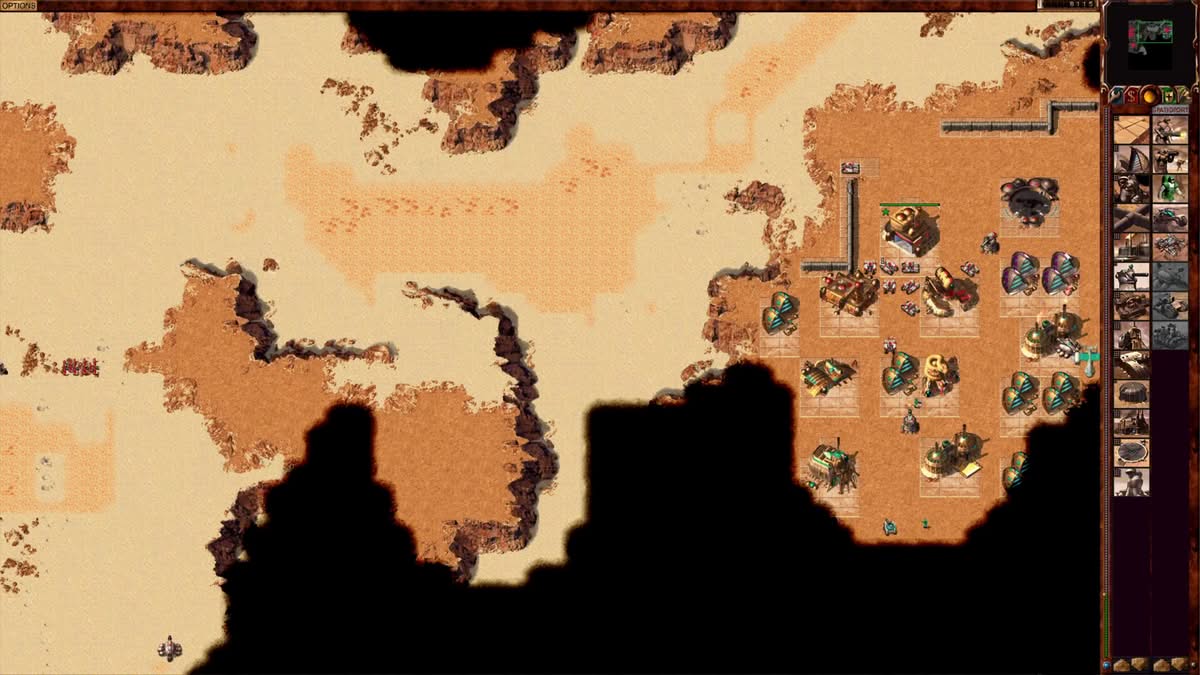
By contrast, Westwood Studios chose to rely on an updated version of their 16-bit 2D engine, previously utilized for Command & Conquer and Red Alert. The generational gap was immediate. While rivals introduced smooth production queues, true 3D perspectives, or overhauled unit AI, Dune 2000 felt more like a polished coat of paint rather than a true next-gen evolution.
Mirrored Factions and Desert Monotony : The Core Design Flaws
Three Houses, One Shared Blueprint
Beyond the engine limitations, Dune 2000 suffered from structural design flaws that critics and players highlighted immediately. The primary complaint : a total lack of meaningful asymmetry between the three Great Houses of Arrakis. The Atreides, the Harkonnens, and the Ordos shared almost their entire basic roster. Trikes, Quads, Combat Tanks, and Siege Tanks were practically identical across all factions.
Only a handful of specialized units offered late-game tactical variance : the Atreides Sonic Tank, the massive Harkonnen Devastator, or the treacherous Ordos Deviator. Strategic differentiation existed, but it arrived far too late in campaign progression to overcome the repetitive feeling established in early missions.
⚠️ The visual monotony amplified this feeling : Arrakis forced a landscape comprised almost entirely of jagged rocks, beige sand, and spice fields. While StarCraft swept players from lush jungle planets to metallic orbital platforms, Dune 2000 served desert map after desert map. It was the price of honoring Herbert's lore : Arrakis is a desert world, and the game fully embraced those stark visual limits.
Lynchian Atmosphere and Frank Klepacki’s Master Touch : The Saving Grace
Live-Action FMVs, Iconic Actors, and an Unforgettable Soundtrack
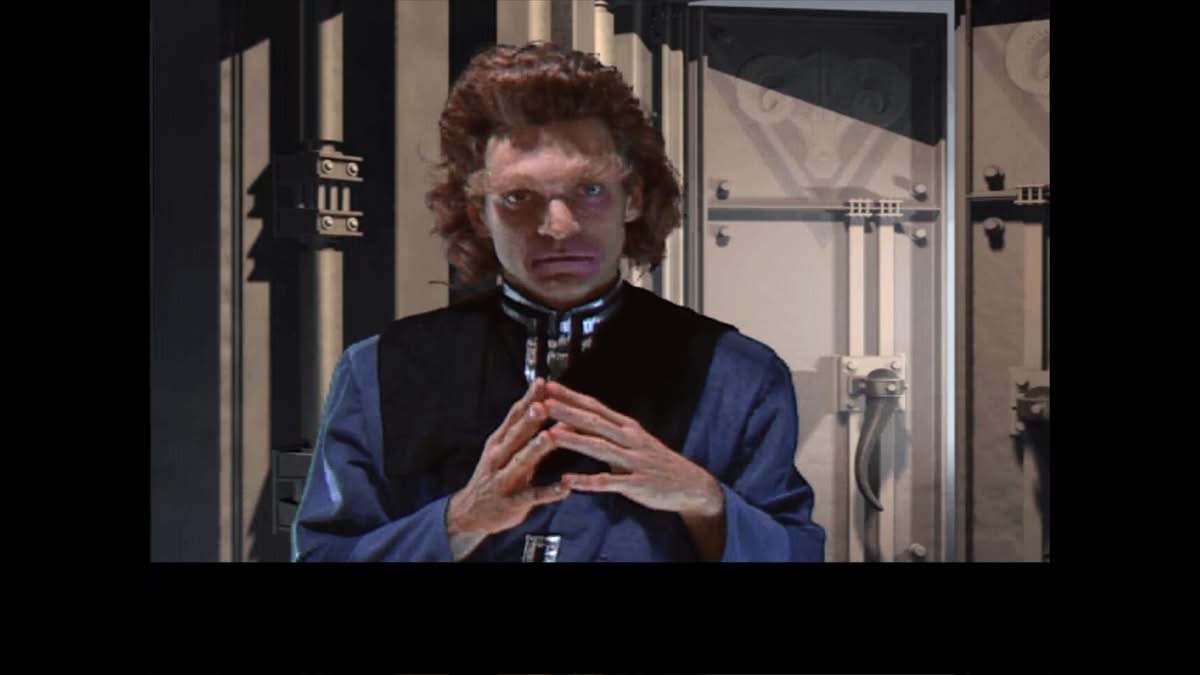
Despite structural flaws, Dune 2000 maintained a captivating identity thanks to its cinematic presentation. In classic Westwood fashion, the game featured full-motion video (FMV) sequences with real actors to drive the narrative forward between missions. Veteran actors like John Rhys-Davies performing as Mentat Nori brought dramatic weight and narrative polish to every campaign.
The artistic direction drew heavy inspiration from the baroque, dark, and industrial aesthetic of David Lynch’s 1984 film adaptation. It was a bold choice that gave the game undeniable visual cohesion. This atmosphere was elevated by the iconic score from Frank Klepacki, Westwood’s legendary composer. His tracks blended Middle Eastern motifs, heavy industrial percussion, and eerie electronic synths, capturing the constant peril of Arrakis and the subterranean rumble of approaching sandworms.
When the ground starts trembling underneath your harvester and Klepacki's score swells with dread, you know the sandworm is coming. And you know you are not ready. In 1998, that level of atmosphere was unmatched.
Arrakis in 2026 : How to Play Dune 2000 Today
GOG Preservation, Abandonware, and High-Resolution Mods
While Dune 2000 is not available on Steam, it stands proudly in GOG’s Preservation Program with over 44,142 community votes, showcasing how deeply players still cherish this classic. Outside of GOG, the game has long circulated via abandonware sites, allowing retro fans to keep its memory alive.
For gamers seeking a modern presentation, a high-resolution community patch enables the title to run smoothly at modern widescreen resolutions, delivering crisp visuals on contemporary displays. The community hub D2K+ remains the definitive resource for Dune 2000 modding. The modding scene is still active, making it the best route for an optimal playthrough today.
💡 The D2K+ high-resolution patch is the ultimate gold standard for running Dune 2000 in 2026. It provides full widescreen compatibility and resolves modern OS display bugs. Quick installation, immediate results : this is the premier way to revisit Arrakis today.
Dune Beyond 2000 : What Arrakis Became in Gaming History
Spice Wars, Awakening, and the Enduring Legacy
The story of Arrakis in interactive media did not end with the 1998 remake. More recently, developer Shiro Games tackled the lore with Dune : Spice Wars, blending real-time strategy with 4X grand strategy mechanics—an ambitious design that carved out a loyal niche without quite establishing a long-term competitive scene.
Meanwhile, Funcom is taking the franchise into new territory with Dune : Awakening, a massive open-world survival MMO focused on the brutal realities of the desert planet. If it fulfills its promises, Arrakis will claim a prominent place in modern gaming once again.
🕹️ Dune : Spice Wars (Shiro Games, 2023) and Dune : Awakening (Funcom) represent the two most recent attempts to bring Herbert's universe to life. The latter is eagerly anticipated for its survival MMO approach to Arrakis, a scale never attempted before for the franchise.
Frequently Asked Questions About Dune 2000
Is Dune 2000 playable on Windows 10 and Windows 11 ?
Yes, using the D2K+ high-resolution patch. The original 1998 executable is not natively compatible with modern 64-bit operating systems, but community-made fixes solve most stability issues. Setup takes just a few minutes and is straightforward for all users.
Where can you legally buy or download Dune 2000 in 2026 ?
The game is part of GOG’s Preservation Program wishlist with over 44,000 community votes. In the meantime, it circulates via abandonware archives. It is not currently available on Steam.
Is Dune 2000 still worth playing in 2026 ?
For fans of retro RTS titles and Frank Herbert’s lore, absolutely. The single-player campaigns offer around ten hours of strategic gameplay, the live-action FMVs remain delightfully nostalgic, and Klepacki’s soundtrack is timeless. However, modern players without retro ties may find the identical faction rosters tough to look past.
What is the difference between Dune II and Dune 2000 ?
Dune II (1992) is the original masterpiece that defined the RTS genre. Dune 2000 is its 1998 remake, featuring upgraded graphics, refined mouse controls, and live-action FMV cutscenes while preserving the original core gameplay. Because it did not add 3D graphics or deeper mechanics, it faced criticism upon release.
Did Frank Klepacki compose the soundtrack for Dune 2000 ?
Yes. Frank Klepacki, Westwood Studios’ iconic composer (famed for Command & Conquer and Red Alert), composed the entire Dune 2000 soundtrack. It remains one of the most atmospheric works of his career, blending Middle Eastern instruments, industrial beats, and ambient electronic textures.
The Verdict : Flawed Design, Unforgettable Atmosphere
Dune 2000 remains a nostalgic treasure for fans of Westwood Studios. Though technically outdated even at launch, it retains the magic of an era when feeling the ground shake beneath a harvester's treads was pure gaming magic. Its Lynchian art style, dramatic FMVs, and evocative Klepacki soundtrack ensure its lasting place in RTS history.
Which House did you pledge allegiance to ? Atreides, Harkonnen, or Ordos ? Share your memories in the comments below !
💡 Join the community !
Want to discuss retro games, PC strategy, or share LAN party memories ? Connect with us on the Little Big Campus Discord 👾