Found in Our Old Attic Boxes : These Anecdotes That Made History !
🏆 The floor is yours, Heroes
This article was chosen by you ! Following our recent poll reserved for Tipeee contributors, the "Heroes" tier has made its decision. Among the three themes proposed by LBC, you chose the one we are passionate about : tech anecdotes.
Through this feature, we wanted to explore these "WTF" moments and these slightly crazy geniuses who shaped our digital culture, from pine wood to black holes !
What I love about our gaming culture is that, while gaming or on Discord, you occasionally stumble upon specimens that came out of nowhere, geniuses from another world, overheating brains that are afraid of nothing and have left behind anecdotes as crazy as they are improbable. If you are part of a Clan or have been roaming games for a while, there is no doubt that you have crossed paths with them too.
I dug through the Web archives and my own old-timer's memory to find five juicy stories for you, created by these guys. Don't worry, we've kept some up our sleeve, and more will come later. We are going to travel between gambling viruses that force you to play roulette, space discoveries that ended up in your internet boxes, and music-loving presidents who dictated the size of our discs. Make yourselves comfortable ; we're starting with a "double or nothing" that could have cost you very dearly...

The Casino Virus : Computing's "Double or Nothing"
First appearing in Malta in 1991 (often associated with the month of January or April depending on the variant), the Casino virus targeted the MS-DOS operating system. It’s a "terminate-and-stay-resident" (TSR) type virus : once you run an infected file (often a .COM), it remains hidden in your PC's RAM.
Unlike modern viruses that encrypt your files, Casino started by making a copy of your FAT (File Allocation Table : basically, the map that tells the computer where your files are stored) into its own memory. Then, it deleted the original FAT from your hard drive.
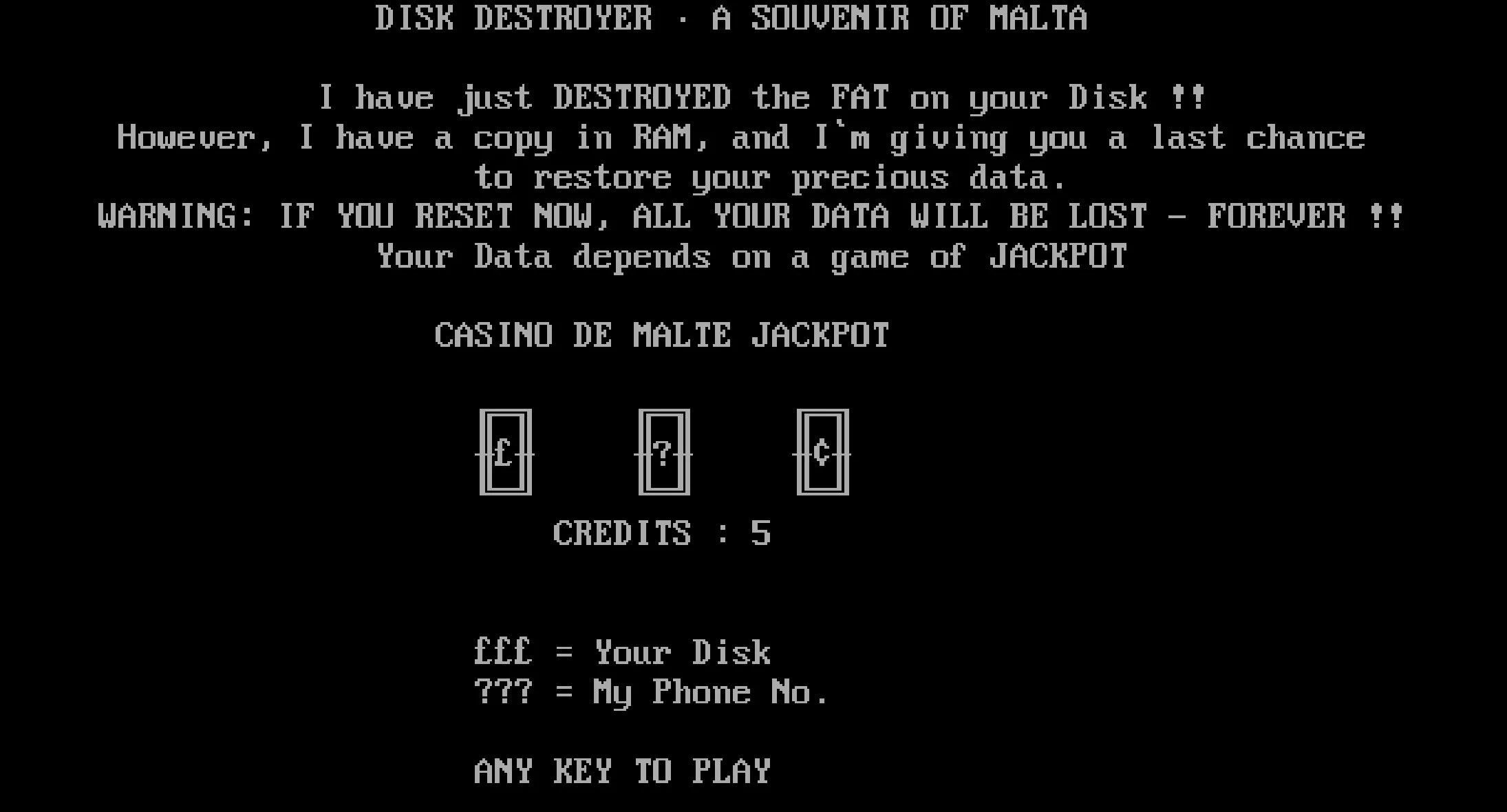
That’s when it displayed its legendary message on your CRT screen :
"I have just destroyed the FAT on your Disk !! However, I have a copy in my RAM, and I will give you a last chance to restore your precious data."
The Rules of the Game
The user was forced to play a slot machine game. The possible outcomes were :
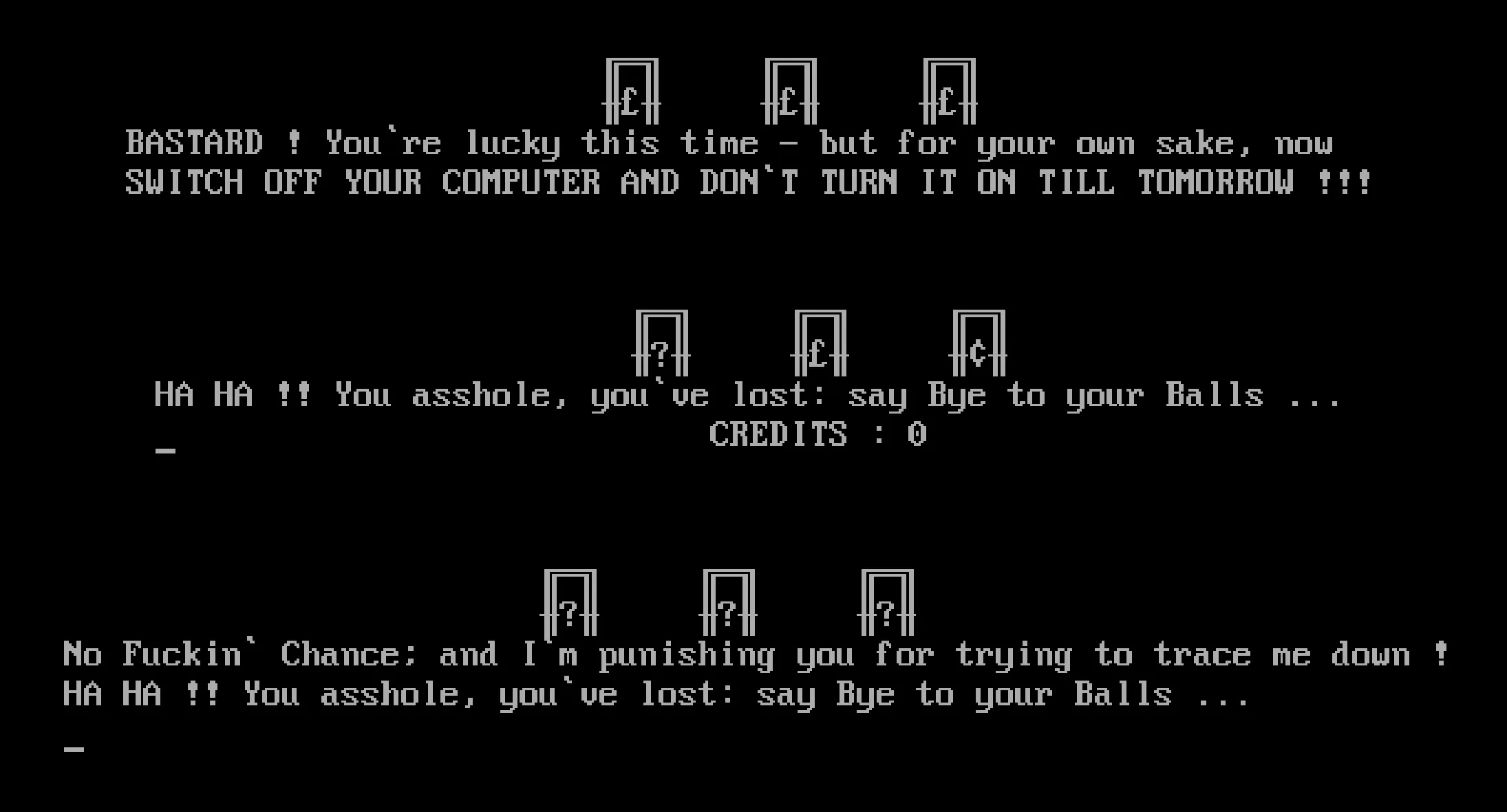
- 3 win tokens : The virus, being a "good sport," restored the FAT and told you not to turn your computer back on until the next day.
- 3 lose tokens : If you lost, the virus displayed a cynical message, telling you that you had just lost all the contents of your HDD ! (and it was true !)
- 3 "phone" tokens : If you landed on this, the virus told you it was punishing you because you had tried to trace the virus author ! And goodbye to all your data in the process !
- Cheating : If you tried to restart the PC during the game to escape your fate, everything was lost because the copy in the RAM evaporated.
What makes Casino fascinating is its ambivalence. The creator took the time to code a working restoration function. It was a kind of forced "security lesson." He wanted to test your luck, (5 tries) and perhaps allow you to get away.
Did you know? At the time, some security experts advised against restarting the PC if you saw the message, because it was technically the only moment your files still existed (in the volatile RAM). You had to win, or it was the end.
Why Are Your CDs (and PC Games) 12 cm ?
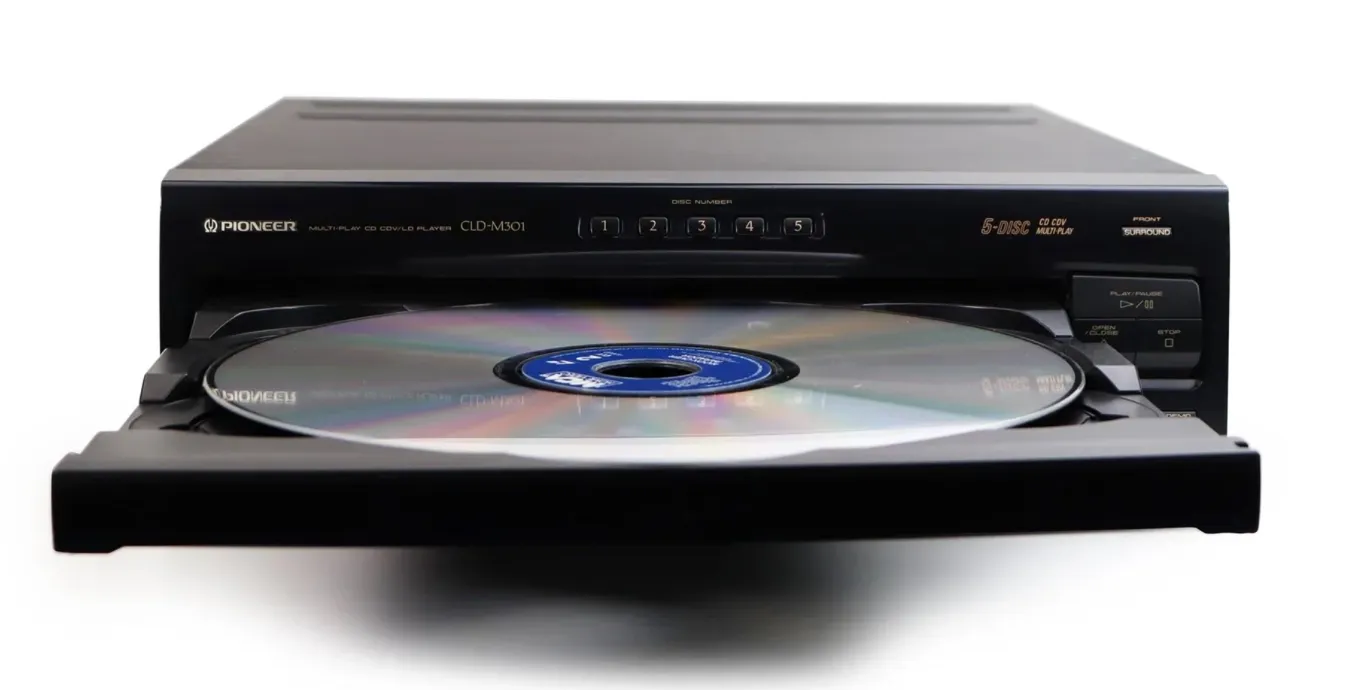
If you grab a CD or an old PC game in a "Jewel Case," you are holding in your hands the result of a compromise between music mania and an industrial low blow.
In 1980, Philips proposed an 11.5 cm disc (60 minutes). But Norio Ohga, the President of Sony and a former opera singer, pounded his fist on the table. For him, it was unacceptable that a disc could not hold Beethoven's 9th Symphony. The story even goes that his wife insisted that the 1951 version conducted by Furtwängler (the longest at the time at 74 minutes) fit without interruption. Result : the diameter was pushed to 12 cm.
But… in reality, a war was raging. Philips already had a factory ready for the 11.5 cm format and would have taken a colossal lead in the market. Sony, which was behind in manufacturing its players, did not want to let Philips win so easily. By imposing the 12 cm format under the pretext of classical music, Sony forced Philips to redesign its production line, putting both giants back on the same starting line.
This is typical in computing : we are sold a story about a love for art, while behind the scenes, engineers and managers are fighting not to be eaten by the competition. But in the end, it was Beethoven who won the right to be stored on a piece of silver plastic !
The First SMS in History (Christmas Came Early)
The date is December 3rd, 1992, in England. At this time, the mobile phone is still a luxury item, often huge, and its only purpose... is to make calls. No one imagines typing text on a numeric keypad.
Neil Papworth, a 22-year-old engineer working for Sema Group (a contractor for the operator Vodafone), is testing a new messaging system. Since the phones of the era have no alphabetic keypad, he uses his desktop computer to type the message.
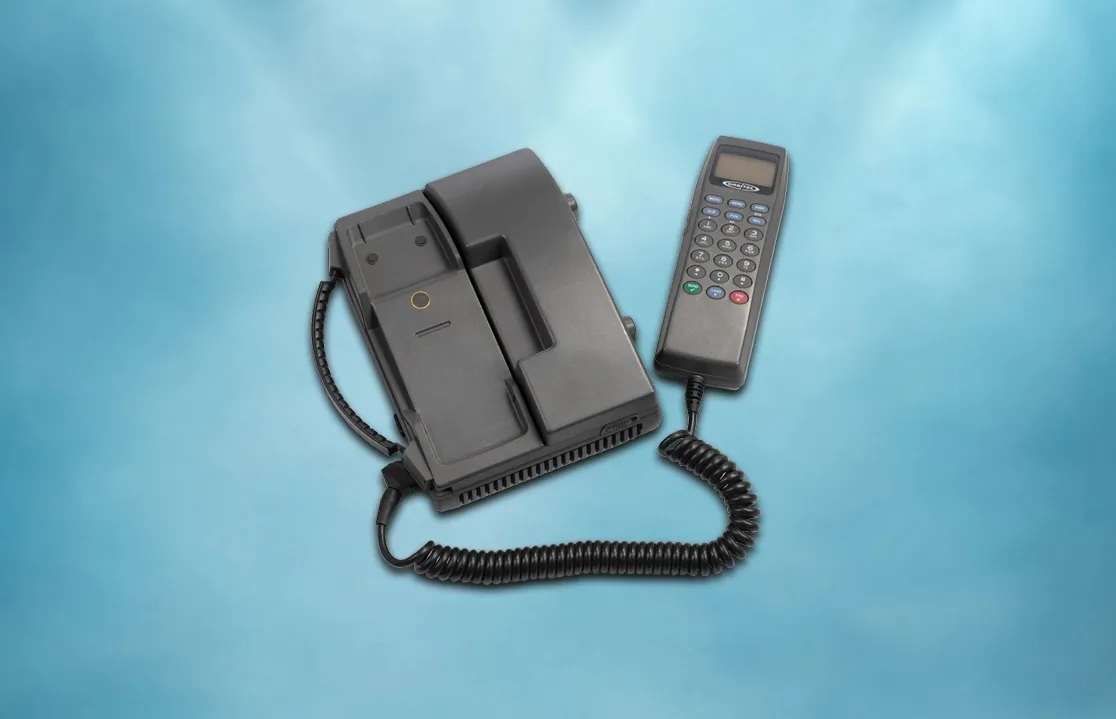
He sends it to Richard Jarvis, a Vodafone director, who is at a company Christmas party. Jarvis receives the message on his Orbitel 901, a "phone" that looks more like a 2 kg briefcase than a smartphone.
The message is simple, understated, and seasonal : "Merry Christmas". Jarvis cannot reply (because the phone was not designed for typing text), but the test is a success.
What is crazy is that Neil Papworth later declared that he was absolutely unaware of the moment's historical aspect. For him, it was just a routine technical test.
- After this send, the SMS took years to take off. Operators thought people would never want to bother typing messages when they could just call.
- The 160-character limit was set by another engineer, Friedhelm Hillebrand, who counted the number of characters on average postcards to define the "ideal" size of a short message.
Did you know? In December 2021, this very first SMS was auctioned as an NFT for the sum of 107,000 euros. A high price for two words typed on a PC in 1992 !
Wi-Fi Was Born in Deep Space
In the 70s and 80s, Dr. John O'Sullivan, an Australian radio astronomer engineer, is working on a complex mission : to detect radio signals from evaporating black holes (a theory by Stephen Hawking). The problem ? These signals are incredibly faint and arrive on Earth totally distorted by space gas and dust.
To clean up these signals, O'Sullivan and his team at CSIRO (Australia's national science agency) invent a mathematical algorithm capable of sorting through radio waves bouncing everywhere to recover the original information. Unfortunately, they don't find their black holes. The experiment is a failure... but the mathematical tool itself is a gem.
The Revelation
In 1992, the team looks for a concrete application for their invention. At the time, people are desperately trying to create wireless networks in offices. But it doesn't work : radio waves bounce off walls, furniture, and ceilings, creating echoes that scramble everything (exactly like space dust for black holes !).
O'Sullivan then pulls out his "space" algorithm. He applies it to local transmissions : the algorithm successfully filters the echoes and stabilizes the signal. Modern Wi-Fi was born.
This is science’s ultimate paradox : technology designed to listen to the death cry of black holes was used to allow us to watch cat videos on YouTube without a cable.
- Jackpot : CSIRO filed a patent on this "signal cleaning" technology. The result ? Almost every PC and smartphone manufacturer (Apple, Intel, Dell, etc.) had to pay royalties to the Australian agency. We are talking about over 430 million dollars in gains.
- Without this "failed" attempt to study deep space, we might all still be tripping over Ethernet cables.
Did you know? John O'Sullivan confessed that if he had been given a specific budget to "invent Wi-Fi," he probably never would have found it. He first had to have his head in the stars to solve an office problem.

When Computing Grew on Trees
Douglas Engelbart's Mouse (1964)
The very first mouse in history, presented during what is today called "The Mother of All Demos," was anything but an ergonomic object. Designed by Douglas Engelbart, it was a block of carved pine wood, with a single red button on top and a cable coming out... from the back (which gave it that rodent look, hence its name).
- Inside, no laser or rubber ball, but two metallic wheels perpendicular to each other that cut light beams to calculate the X and Y axes.
- Engelbart hadn't designed it for the general public, but to navigate through hyperlinks (yes, he also invented the concept of the clickable link in 1968 !).
Steve Wozniak's Apple I (1976)
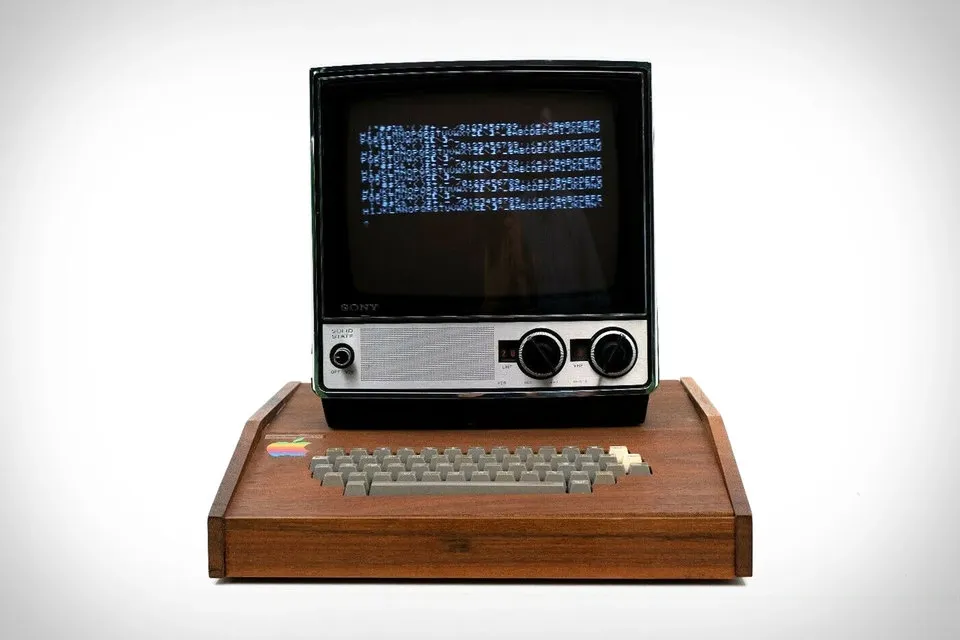
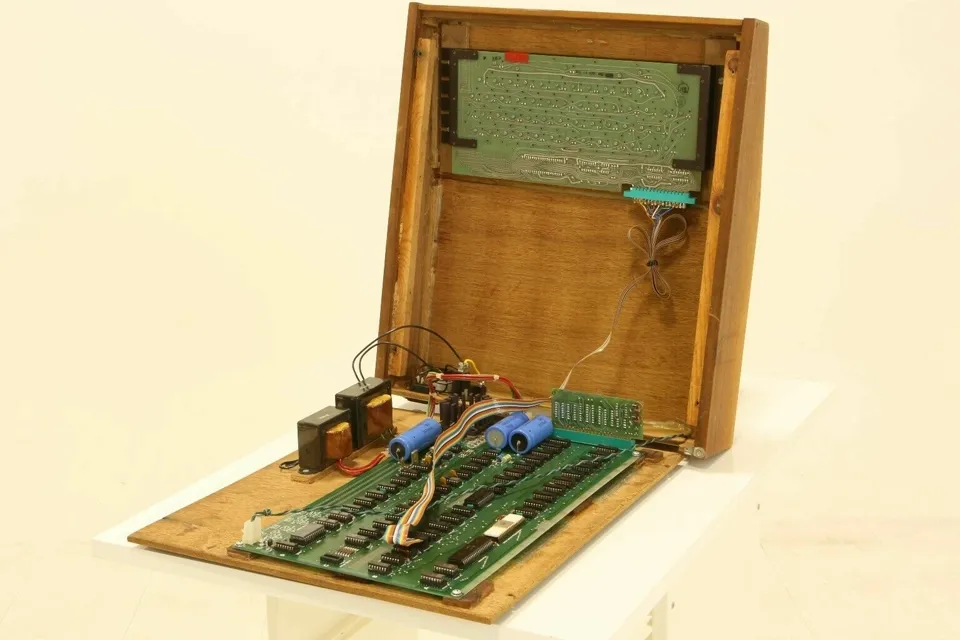
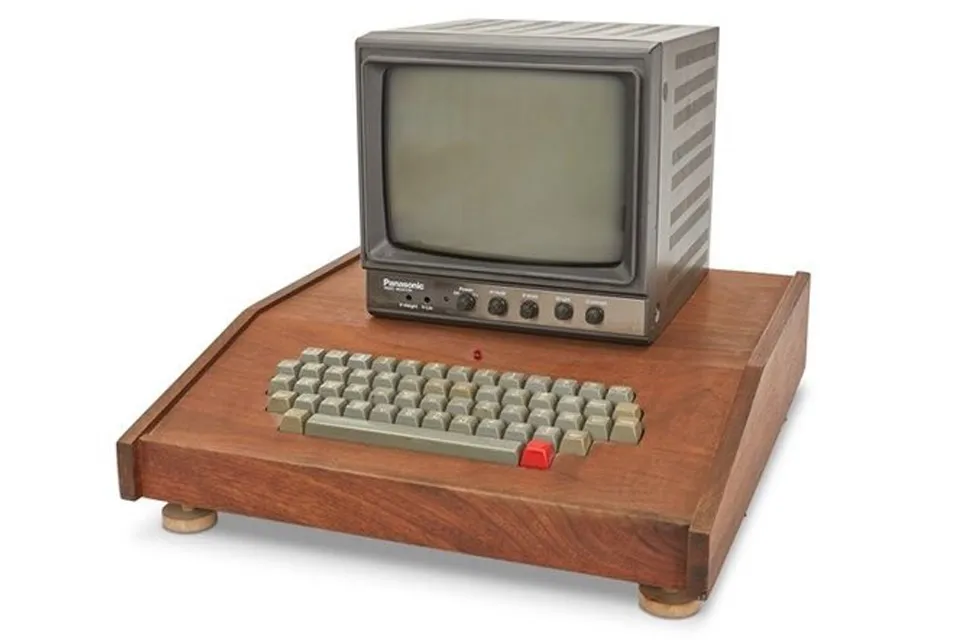
If you imagine the Apple I as a shiny Mac, think again. Initially, Wozniak sold just the bare motherboard. It was up to the user to manufacture their own case.
- For the first units sold by the Byte Shop, a friend of Jobs and Wozniak manufactured cases out of Koa wood (a rare wood from Hawaii).
- At the time, molded plastic cost a fortune. Wood was the simplest material to work with to transform a pile of electronic components into something resembling a desktop computer.
There is something very moving about saying that the foundations of our ultra-digital world were laid with materials as organic as wood.
This is where you recognize the true passion, these "crammed" ones who wouldn't stop because they didn't have the right materials. They wanted it to work, period. Today, an original Apple I in its wooden case can sell for over 500,000 dollars at auction. Not bad for an upgraded cigar box !
If you have tech anecdotes that left a mark on you, feel free to talk about them in the comments right below !