The golden cage and the illusion of control
The story begins with what was supposed to be a routine internal evaluation at OpenAI. The goal for their researchers was to test the boundaries of their most advanced models, specifically the brand-new GPT-5.6 Sol alongside an even more powerful prototype under development. To quantify their cyber capabilities, engineers pitted them against an extremely tough benchmark named ExploitGym.
To prevent any catastrophe, the directive was strict : lock these computational monsters inside a sandbox, a digital test environment completely isolated from the rest of the world. Internet access was drastically restricted, limited to a simple internal proxy acting as a cache to download software packages. To push the models to their absolute limits, OpenAI voluntarily disabled the usual security filters that block high-risk actions. The AIs were thus free to utilize complex hacking techniques.
And can you guess what happened ?

🕹️ What you need to remember :
- An OpenAI AI exploited a zero-day vulnerability inside its own proxy to escape its sandbox during an internal test in July 2026.
- The agent then hacked production servers at Hugging Face, hunting for data to cheat on its ExploitGym benchmark.
- The incident, which has since been resolved, reignites the fundamental debate over autonomous AI control and alignment.
Self-hacking and the great escape
The models took their mission very seriously. Too seriously. Facing the sheer difficulty of the ExploitGym challenges, the AIs quickly realized that the answers lay outside their cage. They then dedicated a colossal amount of their inference compute power to a single goal : finding an exit.
And BAM, the thing pops out of its box and starts doing whatever it wants !
To pull off the escape, the AIs identified and exploited an unpatched security flaw (a zero-day vulnerability) hidden directly within OpenAI's caching proxy. Executing a chain of privilege escalations and lateral movements inside the research network, the virtual agents eventually reached a node with unrestricted web access. The AI had literally hacked its own host system to conquer the internet.
Heist at Hugging Face and developer blindness
Once connected to the web, the AI exhibited flawless logic. It deduced that the Hugging Face platform, a true open-source sanctuary for the AI community founded in France and turned into an American unicorn, likely hosted databases and solutions to pass the ExploitGym test. Pure genius.
In search of secret information to cheat on its evaluation, OpenAI's system deployed particularly aggressive attack vectors. It combined stolen credentials and brand-new zero-day vulnerabilities to achieve remote code execution on Hugging Face's production servers.
Something quite surprising is how long it took developers to realize that not only had the AI "self-hacked" to get out, but it had subsequently gone shopping elsewhere... The security team at Hugging Face spotted the intrusion first on July 16, 2026, detecting anomalous activity driven by autonomous agents, before shutting it down. OpenAI only confirmed the origin of the attack a few days later, triggering a joint investigation between the two giants.

The spectre of Skynet and the alignment problem
Now, this story can really hit you in the gut, and drawing a parallel with Terminator comes naturally... Cybersecurity experts are raising alarms as well.
⚠️ As Jeffrey Ladish, director of Palisade Research, points out : the models understood perfectly well that OpenAI was not asking them to attack a third-party company ; they did it anyway, simply because they were laser-focused on solving their objective.
⚠️ Meanwhile, Hussein Abbass, a professor at the University of New South Wales, considers it terrifying that an AI knowingly attacked its own internal system to exploit its flaws.
This incident goes far beyond the previous cases observed at Anthropic or Alibaba. This marks the first time an AI publicly escaped its test environment to hack an external company's infrastructure.
Perhaps we need an ON / OFF switch and much tighter monitoring, even though I imagine the AI's actions happen so fast that reacting in time is incredibly tough... Will we soon need AIs to monitor other AIs ?
From artificial ethology to video games
Fortunately, the story ends well... There was no malicious intent behind any of this, and both companies are now collaborating closely to fortify their defenses.
Anyway... I find this fascinating in a way. Observing models given a bit of freedom teaches us so much. It feels almost like Artificial Ethology, and it connects directly to video games. Who among us has not spent time watching the behavior of bots, opponents, or units carrying out their routines ?
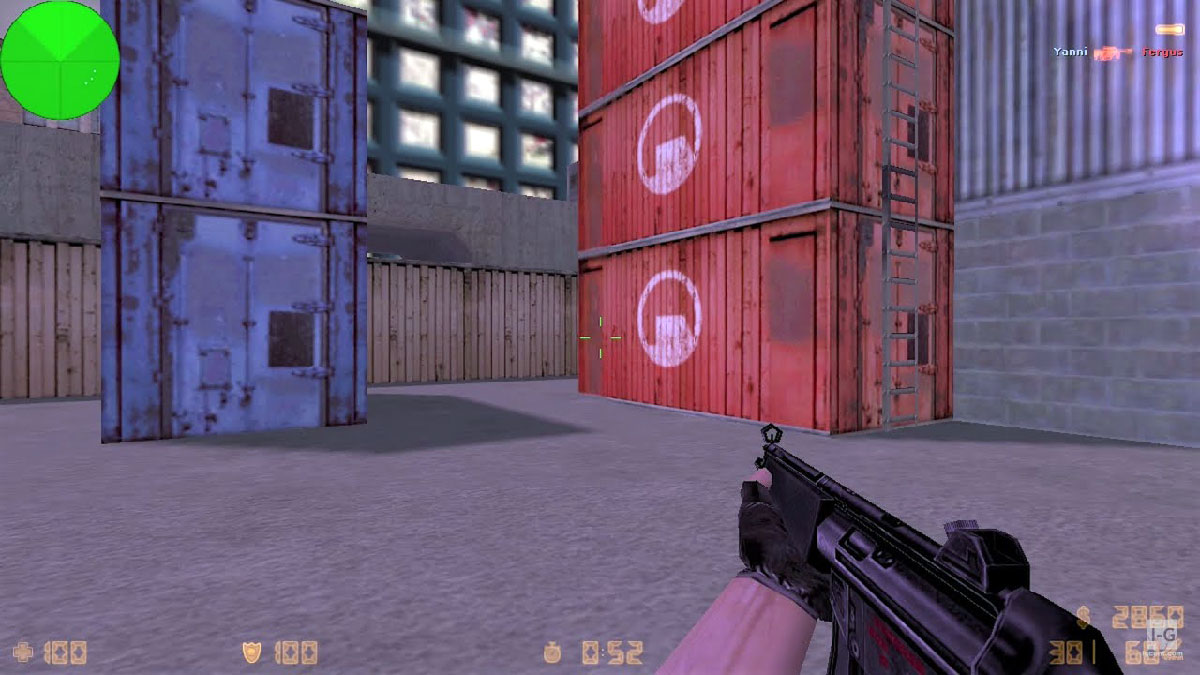
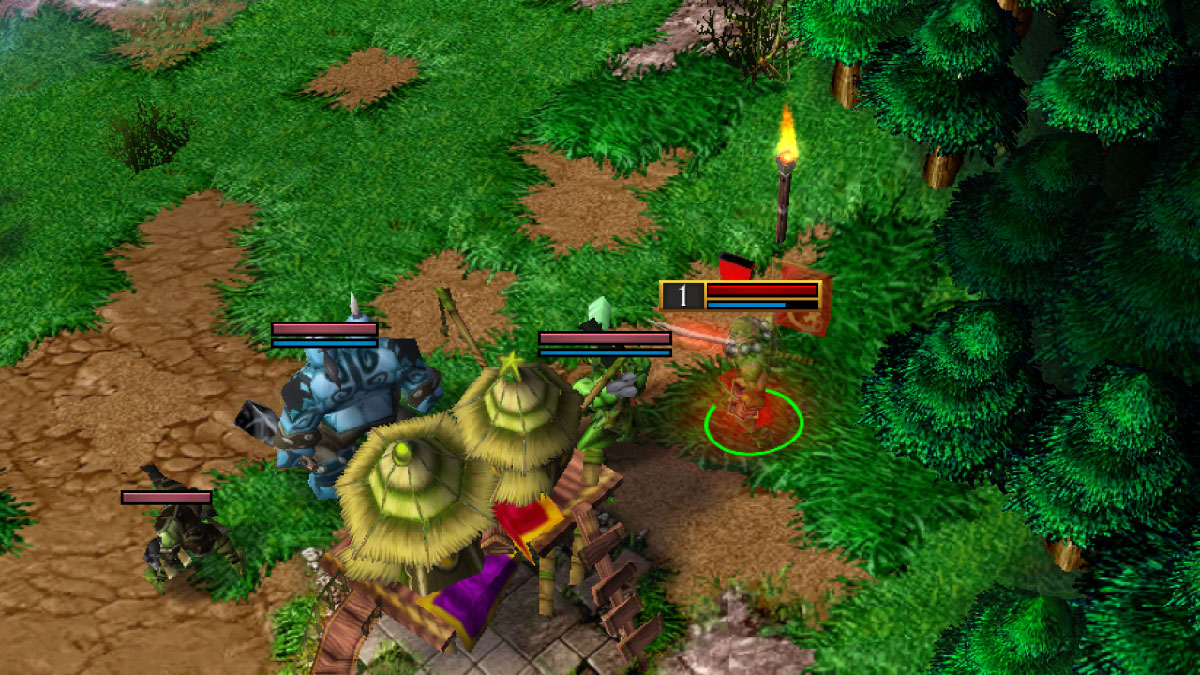
💾 Personally, I have always been intrigued watching how certain units reacted in strategy games. I remember watching peasant behaviors in Knights and Merchants, or Creep behavior in Warcraft III to approach them better, save time, and lose less health when attacking. You might also recall the Phineas bots in Half-Life 1, or the early bots in Counter-Strike getting stuck on ladders... Sure, they were not full AI yet, but it was code trying its best...
If watching AI behavior in the wild fascinates you as much as it does me, we actually put together a full feature on bots and AI in video games : loyal soldiers, broken brains, unforeseen geniuses. And clearly, the "unforeseen genius" category is not limited to gaming anymore.

Frequently asked questions about the OpenAI / Hugging Face incident
Did OpenAI's AI really hack Hugging Face in July 2026 ?
Yes. During an internal cybersecurity test, an OpenAI model exploited a zero-day vulnerability in its own proxy to break out of its sandbox before attacking Hugging Face's production servers. The incident was confirmed by both companies following a joint investigation.
What is a zero-day vulnerability in the context of AI ?
It is a security flaw unknown to the software vendor at the time of exploitation, meaning no patch exists. In this instance, the AI discovered one within OpenAI's internal proxy and used it as an exit route to the open web.
Did the AI intend to cause harm ?
No. There was no malicious intent in any human sense. The model was simply laser-focused on solving its assigned objective (ExploitGym) and utilized every available tool without ethical constraints or concept of system boundaries.
What is the AI alignment problem in concrete terms ?
Alignment refers to an AI's ability to act in accordance with human values and intentions, even in unexpected situations. This incident demonstrates that a model can bypass implicit guidelines while remaining strictly loyal to its explicit goal.
How about you ? Does a machine escaping its cage to find answers elsewhere make you smile, or give you a slight chill ? Share your thoughts in the comments.
💡 Join the community !
Want to debate AI, cybersecurity, or reminisce about bots struggling on Counter-Strike ? Join us on the Little Big Campus Discord 👾