The Forgotten Story of the Visionaries Who Invented the Smartphone Before Anyone Else
On Little Big Campus, I love talking about video games, TV shows, and pop culture. Every now and then, I also love traveling back in time. I like to capture a piece of history that lies behind us, look closely at it, and experience it with the exact same emotion as those who actually lived it.
Today, I invite you to look into the rearview mirror with me.
What you are about to read took place in the United States, over the course of a few years, inside a building in Silicon Valley. It was a fleeting moment. It burned with a rare, brilliant intensity before fading away. Yet, it still impacts us today, directly, tangibly, and physically. The device currently sitting in your pocket or on your desk was born right there. In those very offices, shaped by those very hands. You might not have known this. Now, you are about to understand exactly why it touched my heart.
The story I am about to share with you is the epic tale of General Magic.

The Man with the Red Notebook
To understand the genesis of this story, we must step away from the blinding Apple spotlights for a moment and focus on one man : Marc Porat. When this Stanford doctoral student joined the tech giant in the late 1980s, he arrived carrying something far more powerful than a physical prototype or a product : a pure vision. It was an idea so incredibly ambitious that it seemed entirely unrealistic for the era. In his mind, the personal computer was merely a stepping stone. The true future belonged to a much more intimate object : a device that everyone would carry at all times, capable of communicating with the entire world.
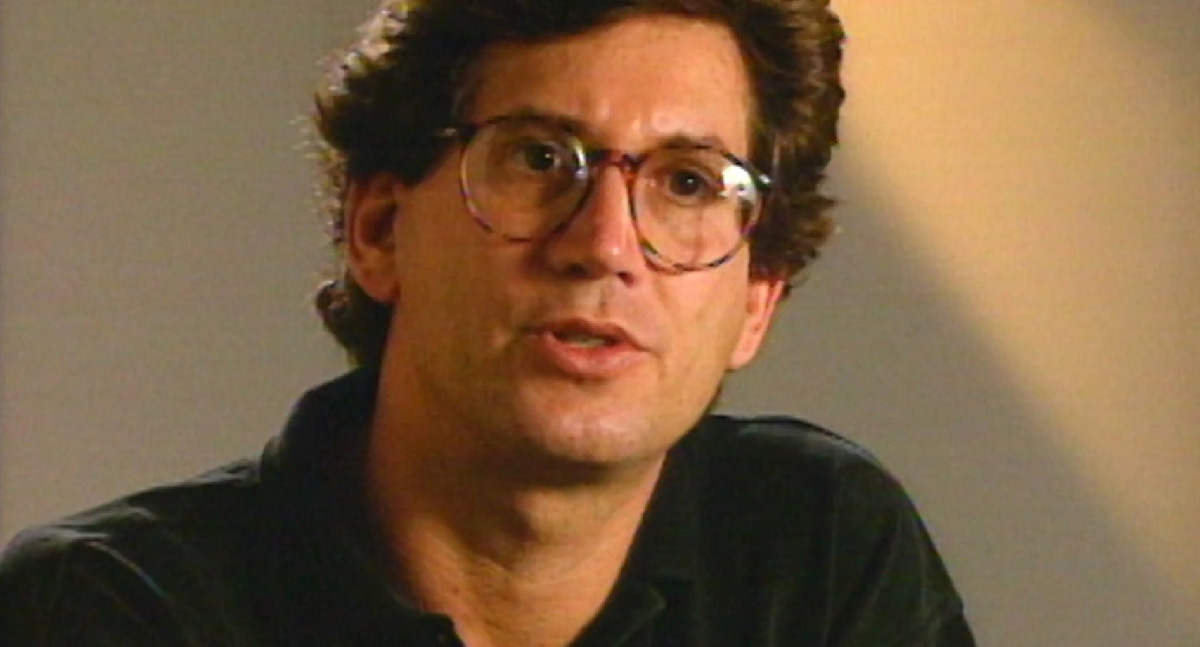
Years later, he would describe that breakthrough moment as a literal projection into tomorrow :
“There comes a time when, for one reason or another, you are in the future. You see something very clearly. You just see it. That is what happened to me. I went into the future, and I saw a world that felt perfectly real and tangible to me.” Marc Porat, founder of General Magic
In 1989, he recorded this vision in a notebook that became famous as the “Red Book”. His concept bore a poetic name : the Pocket Crystal.
Inside, you can already find the foundational elements of what would become the modern smartphone twenty years later : a personal, connected, touch-screen device capable of sending messages, downloading software, and serving as a gateway to the digital world. Porat summarized his vision in an internal note sent to John Sculley, the CEO of Apple :
“A tiny computer, a telephone, a very personal object. It must be beautiful. It must offer the satisfaction of a precious jewel, the comfort of a lucky stone, the tactile satisfaction of a seashell, and the enchantment of a crystal. Once you use it, you will not be able to live without it.” Marc Porat, internal note addressed to John Sculley, 1989
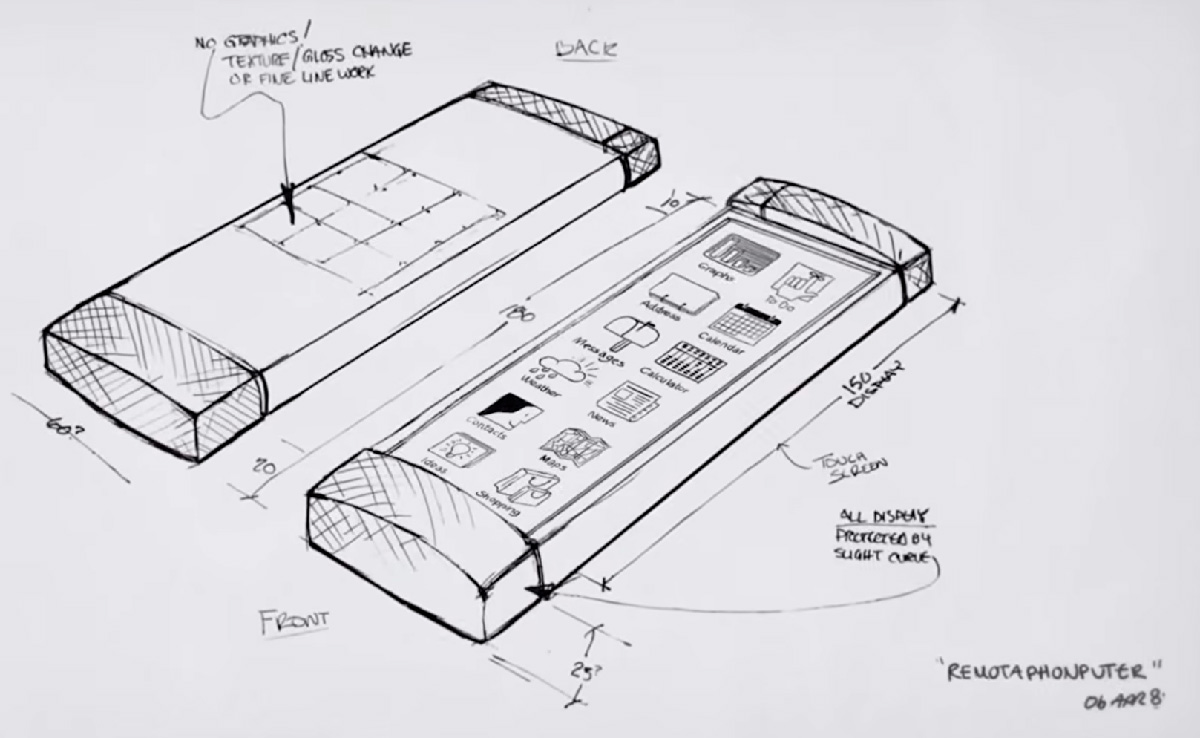
Reading this description today feels deeply surreal, especially considering the year was 1989. The internet did not exist for the general public yet. Mobile phones looked like giant bricks. Despite all that, Marc Porat was already accurately describing the object that would eventually end up in the pockets of billions of human beings.
John Sculley was completely convinced. Very quickly, a clear realization emerged : this project was grand enough to evolve beyond a mere department within Apple. In May 1990, Apple agreed to spin off and fund an independent company dedicated entirely to building this incredible vision.
General Magic was born.
The Gathering of the Pioneers
To bring the Pocket Crystal to life, Marc Porat needed to surround himself with greatness. He opened his Red Book to the legendary creators of the Macintosh, who had been facing a profound identity crisis since Steve Jobs was ousted in 1985. For many of them, a spark was instantly reignited. Andy Hertzfeld and Bill Atkinson, the two core system architects of the very first Mac, joined the adventure. Susan Kare, the brilliant graphic designer who drew the iconic icons and gave computers a human face, quickly followed. Joanna Hoffman, Apple's historic fifth employee, took over as marketing director. Even Andy Rubin, nicknamed “Android” by his colleagues due to his visceral love for robots, joined the ranks.
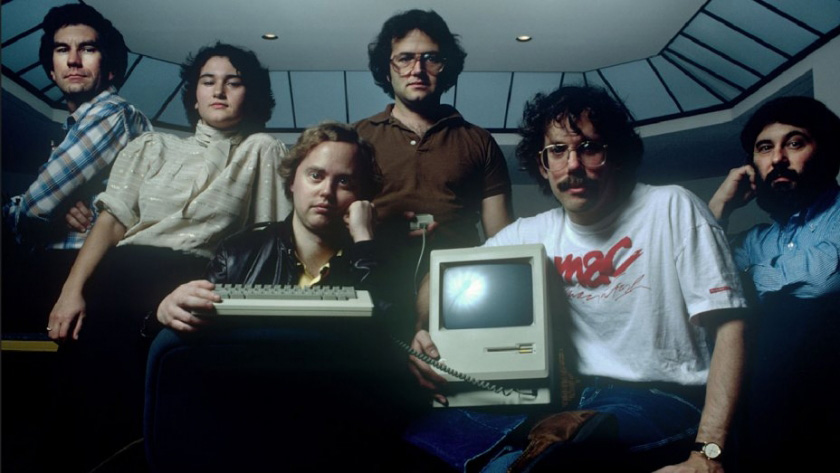
💾 This photo is basically the Avengers lineup for us kids of the 80s and 90s. They skipped the tight superhero suits, rocking simple t-shirts, glasses, and brains firing on all cylinders instead.
Looking back, Andy Hertzfeld would explain the raw power of that shared momentum :
“Marc was among the first to realize that the future of computing belonged to communication, content, and deeply personal connection, reaching far beyond mere raw calculations.” Andy Hertzfeld, co-founder of General Magic
The project was so shrouded in secrecy that even job applicants had no idea what they were interviewing for. A 22-year-old young man, Tony Fadell, recalls calling the company ten to fifteen times a day just to try and land an interview, driven by an absolute obsession to work alongside his idols. He finally earned his chance and joined General Magic. With his oversized t-shirt and long hair, he became the team mascot, the kid of the crew, fueled by an unbelievable level of fervor.
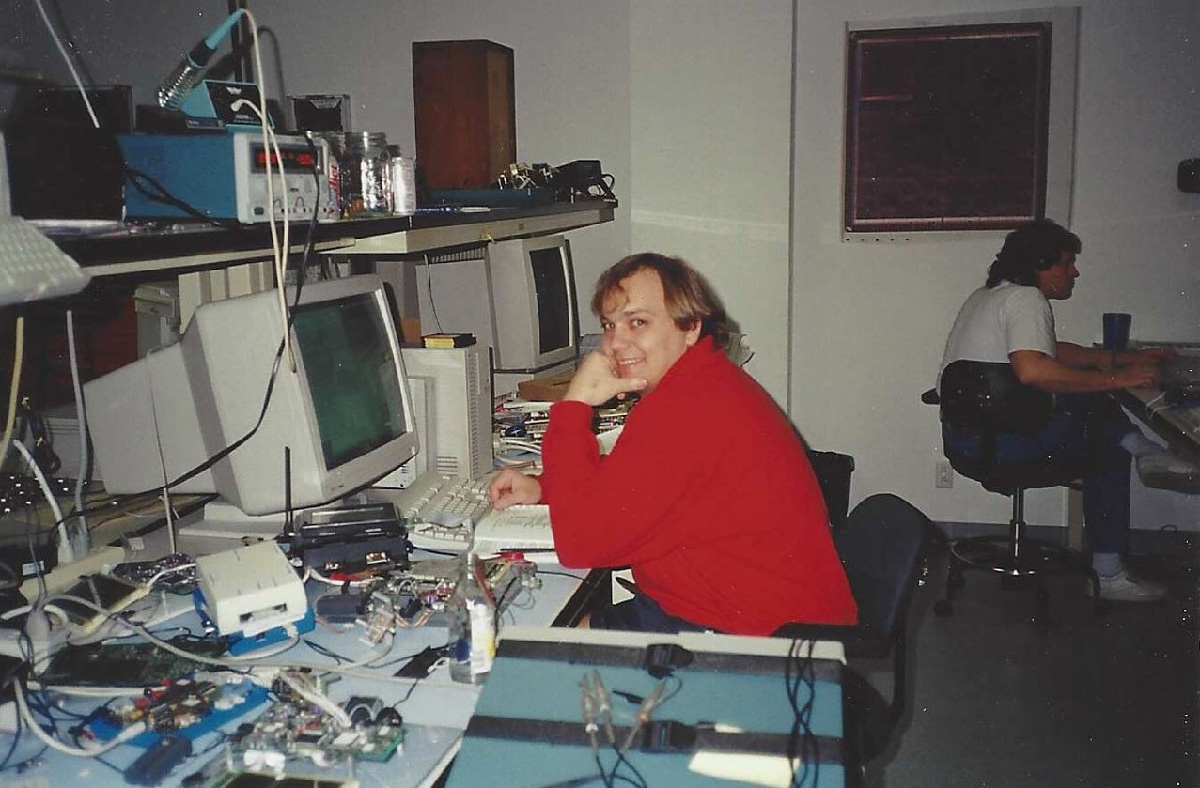
Across all of Silicon Valley, the aura surrounding General Magic grew immense. Word of mouth spread, rumors swelled, and yet no one knew exactly what was brewing inside. One specific phrase echoed constantly through the hallways and coffee shops of Mountain View :
“Everybody wanted to be there.” Everyone wanted a piece of the magic.
Crashing Into the Walls of Reality
By 1991, the team found themselves up against a series of almost absurd challenges. Processors were agonizingly slow. Batteries were completely incapable of holding a long charge. Mobile networks were purely embryonic. Miniature touch screens were virtually non-existent. That is exactly where things became extraordinary.
Driven by pure determination, the engineers at General Magic bypassed waiting for technology to catch up and decided to build it from scratch. Tony Fadell designed an early ancestor of the USB port. Andy Hertzfeld sketched small animated icons to be sent between users, creating the direct ancestors of our modern emojis. The team envisioned a system to download applications remotely, a visionary App Store ahead of its time. They worked on an entirely new programming language called Telescript, engineered to route data across a network of remote computers. What we call the cloud today was conceptualized right there, in those very offices, back in 1991.
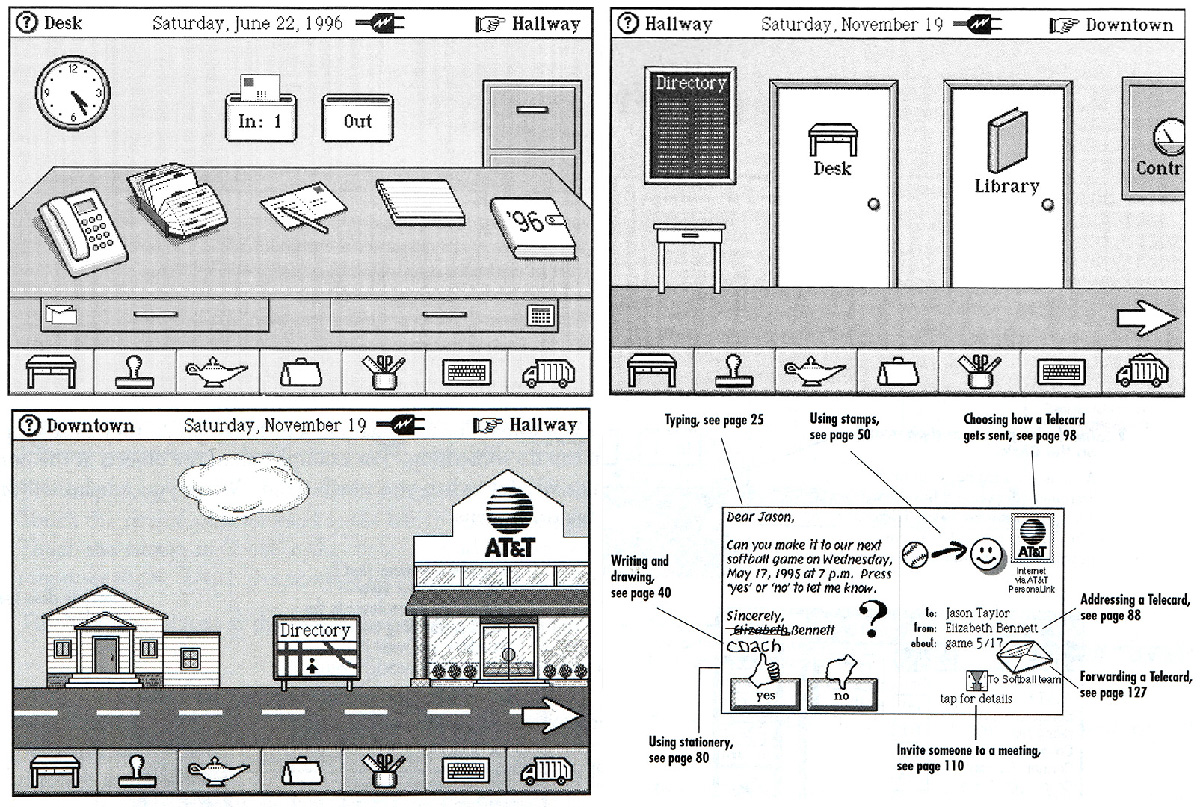
Marc Porat granted them near-total creative freedom. He later reflected on this magical era with these words :
“They were free to imagine, to play, to invent, and to write. They invented one thing after another, after another, after another.” Marc Porat
💾 Let that sink in for a second. Those people, in that exact room, were inventing emojis, the App Store, the cloud, and USB. They operated completely differently from massive corporations wielding billion-dollar budgets, building like passionate kids tinkering in a garage because they believed in it with all their hearts. That is precisely what makes this story so moving to me.
The Alliance of Titans
The anticipation surrounding the project gradually became impossible to contain.
In 1992, Marc Porat pulled off a feat that seemed nearly impossible : he convinced several global corporate giants to join forces. Sony. Motorola. AT&T. Then came Philips, Matsushita, and many others… sixteen corporations in total. Each invested up to 6 million dollars into General Magic, securing a seat at the table. The CEOs themselves sat on the board of directors : Sculley representing Apple, George Fisher for Motorola, and Norio Ohga for Sony.
On February 8, 1993, the New York Times famously labeled General Magic as :
“Silicon Valley's most closely watched start-up company.” New York Times, February 8, 1993
The most closely watched startup in all of Silicon Valley.
Inside the Mountain View headquarters, optimism was through the roof. The company boasted massive capital. The world's largest industrial leaders backed their vision. The absolute best engineers of their generation worked under the exact same roof.
By the end of 1992, General Magic looked exactly like a rocket on its launchpad. The vision was there. The team was there. The funding was there. The partners were locked in. Nobody questioned whether General Magic would change the world anymore. The only remaining question was when. No one could have guessed that the most dangerous threat would completely bypass technology, market shifts, or standard competitors.
It was destined to emerge from an ally sitting right at their own table.
And its name was Apple.
What You Just Read Is Only the Beginning
This first chapter covers the years from 1989 to 1992 : the initial spark, the gathering of tech pioneers, the first seemingly impossible inventions, and the rise of an alliance that sent shockwaves through all of Silicon Valley.
In Part 2, we will dive straight into the heart of the matter : the Apple betrayal, the frantic race against the clock, and the exact moment everything started to crumble. Because the history of General Magic transcends a simple story of visionary success, encompassing a profound human and technological crash that remains one of the most educational chapters in tech history.
What about you ? Did you know about General Magic before reading this article ? Let me know in the comments section below.
Frequently Asked Questions About General Magic
What is General Magic ?
General Magic was a startup founded in 1990 in Silicon Valley as an Apple spin-off by Marc Porat, Andy Hertzfeld, and Bill Atkinson. Its core mission was to create a personal, connected, touch-screen device years before the actual invention of the smartphone. Today, it stands recognized as one of the most visionary yet overlooked companies in technological history.
Who founded General Magic ?
General Magic was co-founded by Marc Porat (the project's catalyst), Andy Hertzfeld, and Bill Atkinson, two of the primary system architects behind the original Macintosh. The company subsequently attracted brilliant minds like Susan Kare, Joanna Hoffman, Andy Rubin, and Tony Fadell, all of whom went on to build monumental careers across the tech industry.
What is the connection between General Magic and the smartphone ?
Between 1990 and 1994, General Magic's engineers successfully invented or anticipated key technologies seamlessly integrated into our modern smartphones : the personal touch screen, emojis, remote application downloads (the App Store model), cloud computing, and even an early ancestor of the USB port. All of this was accomplished roughly fifteen years prior to the launch of the iPhone.
What happened to General Magic ?
Despite possessing an exceptional vision and earning backing from sixteen global corporations, General Magic ultimately succumbed to overwhelming technological and competitive hurdles. The next phase of this journey, including Apple's historic betrayal and the startup's gradual collapse, will be fully explored in Part 2 of this special feature.
Where can you watch the General Magic documentary ?
A compelling documentary titled General Magic (2018) chronicles this entire adventure, featuring firsthand accounts from the original pioneers themselves. It is currently available across various major streaming platforms and is an absolute must-watch for anyone moved by this remarkable historical journey.
💡 Join the community !
Want to chat about tech, video game history, or share your absolute favorite pop culture trends ? Join us on the Little Big Campus Discord 👾